— Ideas & inspiration
Southwestern warmth in a mountain setting
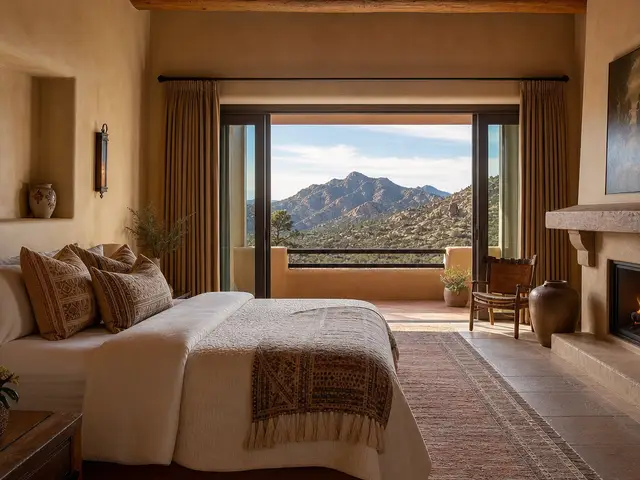
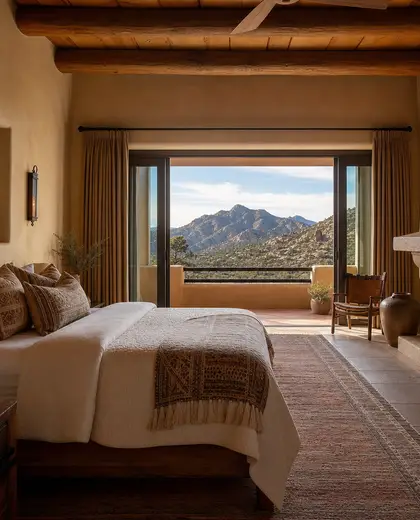
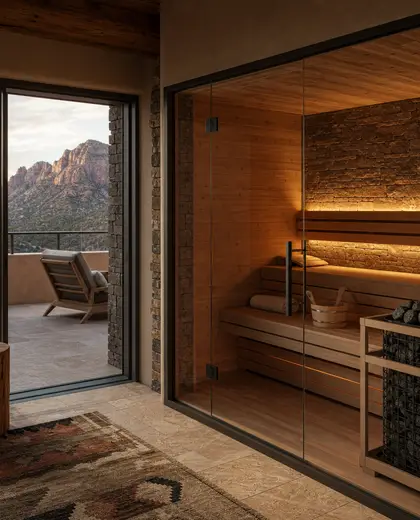
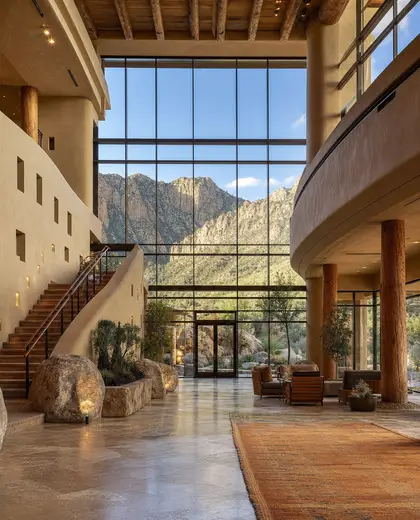
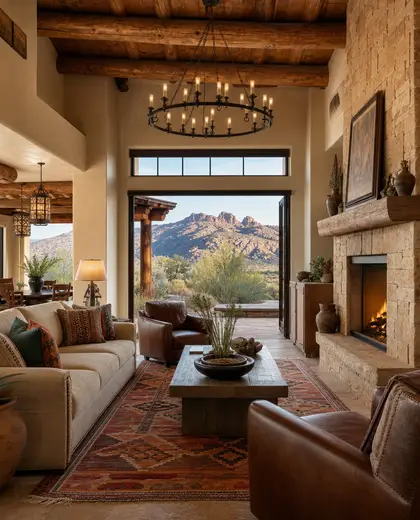
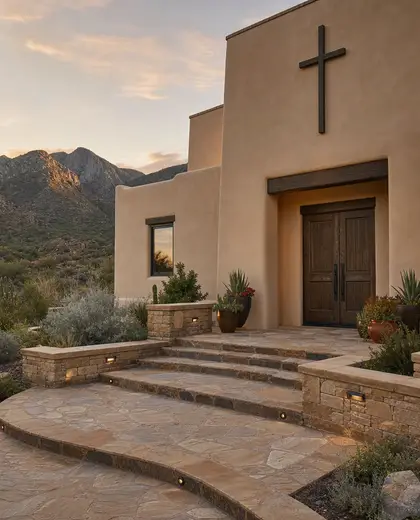
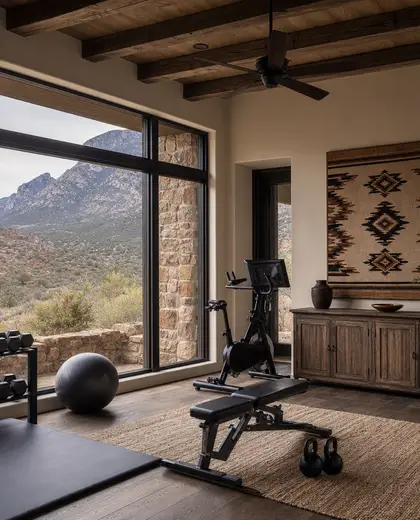
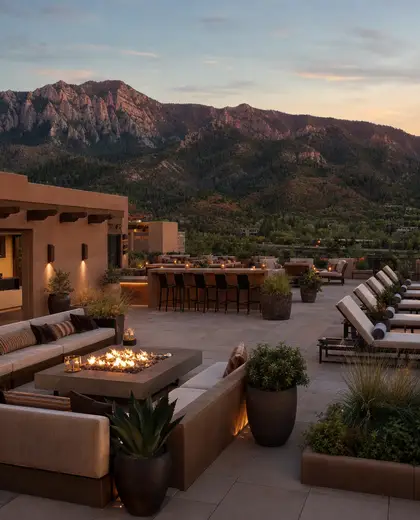
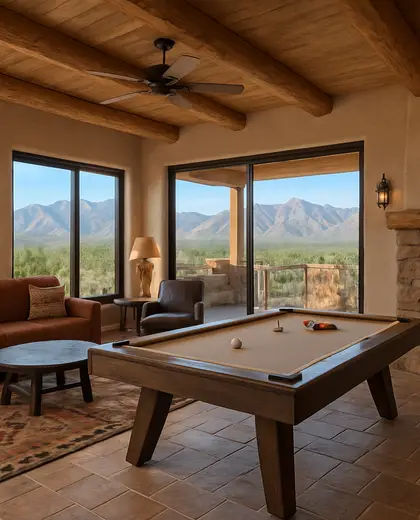
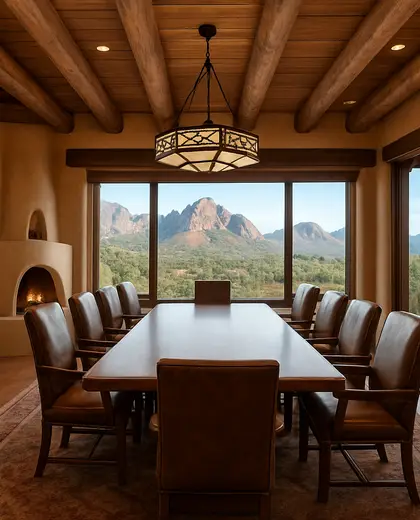
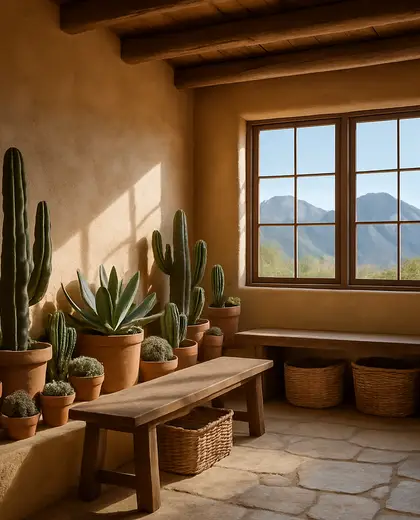
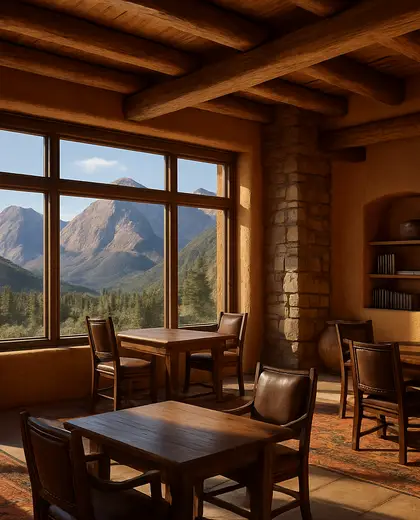
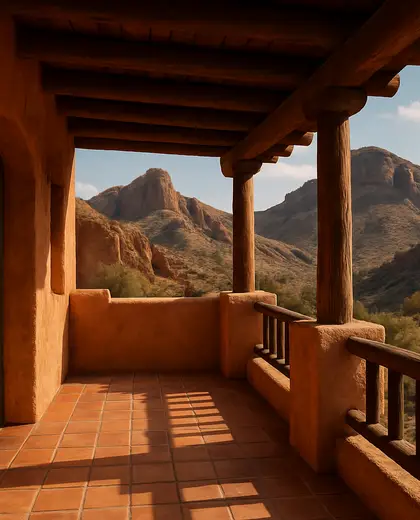
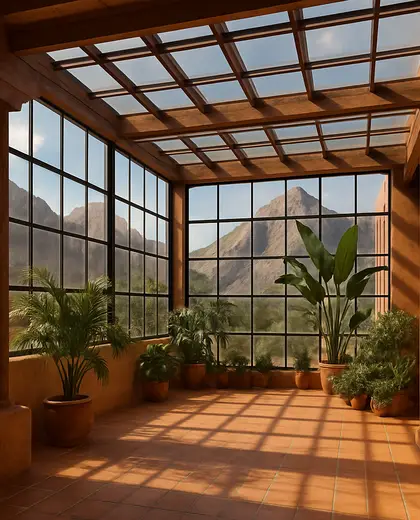
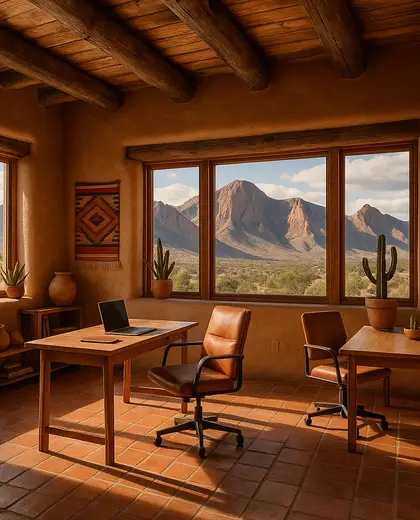
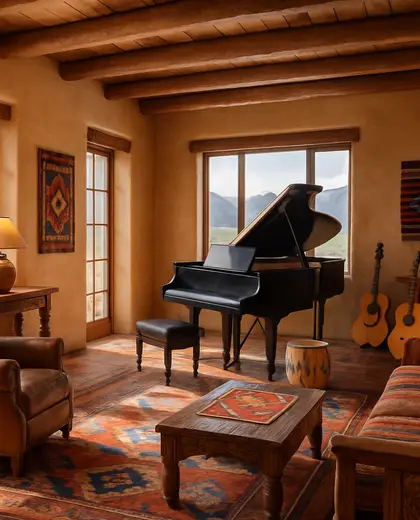
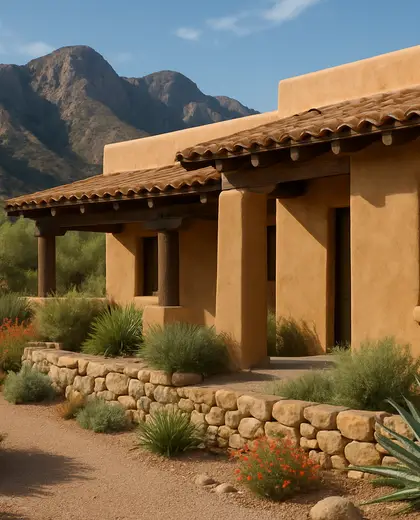
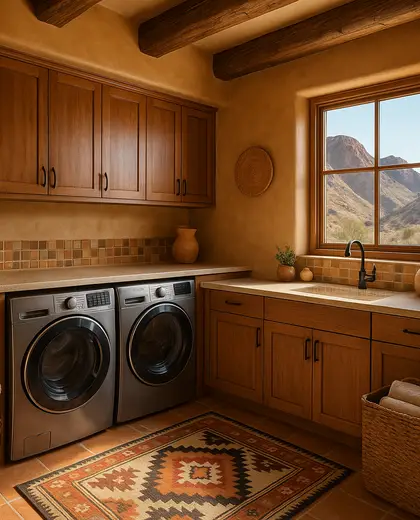
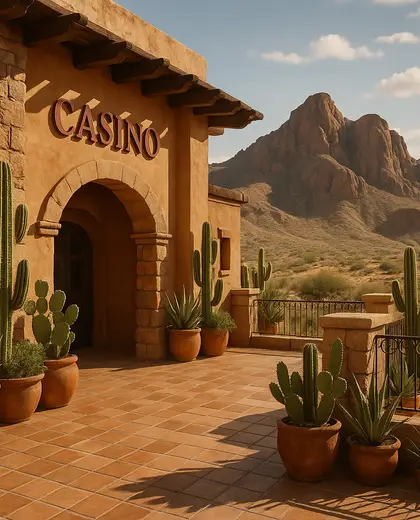
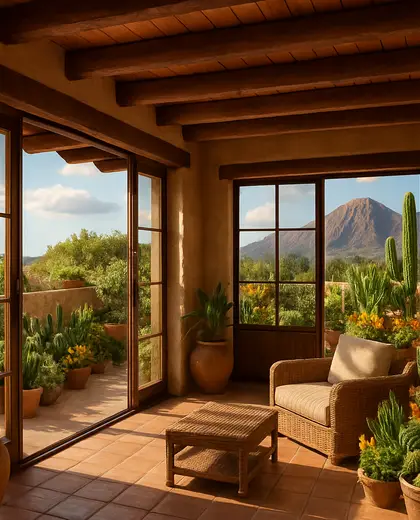
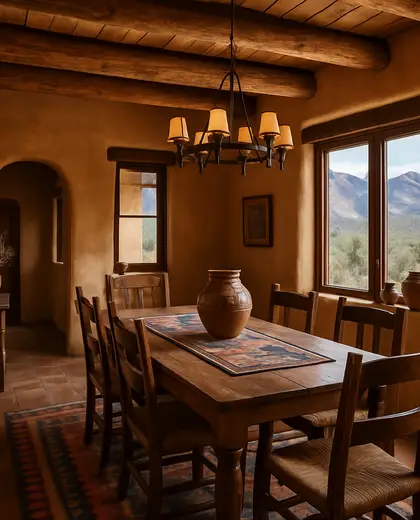
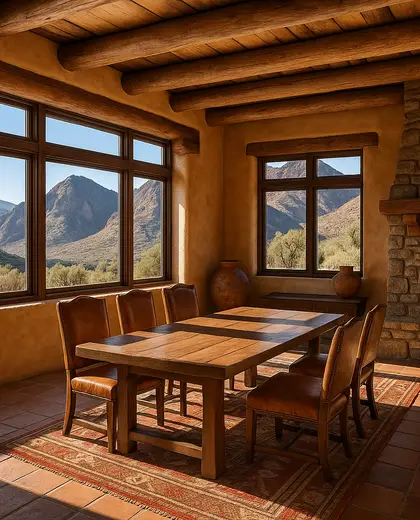
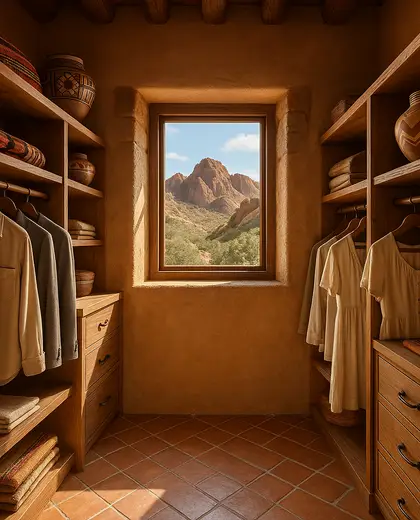
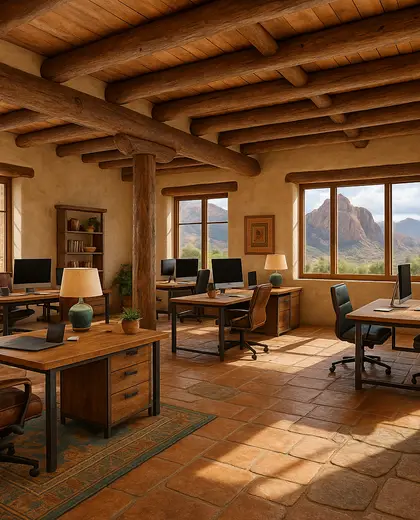
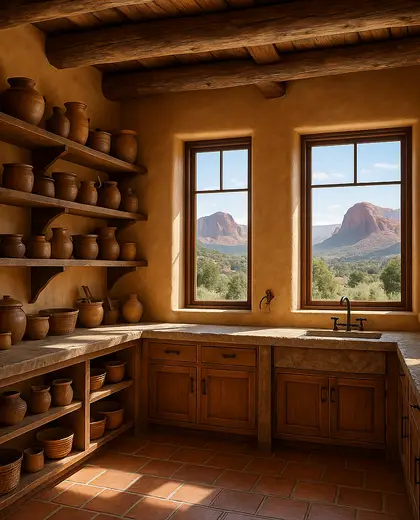
This composition combines adobe-like plaster, timber beams, stone walls, and low, grounded forms suited to rugged terrain. The palette leans on earth tones such as sand, clay, terracotta, brown, and muted charcoal, often softened with weathered wood and natural textiles. Key elements include heavy textures, deep window reveals, exposed structure, and a sheltered, sun-warmed feeling that fits mountain landscapes.
- southwestern
- mountain
— References
References to explore
Is this style suitable for a cold mountain climate?
Yes, when it is adapted with proper insulation, high-performance glazing, and roof details that handle snow and wind. The look can stay warm and earthy while the construction performs well in harsh conditions.
Does it have to use adobe or stucco?
No, but smooth or hand-troweled plaster is common because it gives the soft, sunbaked feel of the style. You can also use stone, board-formed concrete, or wood siding if the palette and proportions stay rooted in the landscape.
What interior finishes fit this composition?
Matte surfaces, exposed wood, textured rugs, leather, and stone or clay accents work well. Avoid overly glossy finishes so the rooms keep the grounded, weathered character.
— The style
What defines it
Plaster, stone, reclaimed wood, timber beams, clay tile, and textured textiles.
Sand, beige, terracotta, rust, warm brown, muted black, and dusted off-white.
Mountain massing, sloped roofs, deep overhangs, and rugged site materials like rock and timber.
— Professionals
Who has already built it
- maria mateaarchitects · London · 7 projectsView profile →
- kerem erbagci3d renderers · London · 9 projectsView profile →
- paquis norris group limitedbuilders · Reading · 3 projectsView profile →
- LoftRobejoiners · Guildford · 4 projectsView profile →
— Questions
Frequently asked questions
Is this style suitable for a cold mountain climate?
Yes, when it is adapted with proper insulation, high-performance glazing, and roof details that handle snow and wind. The look can stay warm and earthy while the construction performs well in harsh conditions.
Does it have to use adobe or stucco?
No, but smooth or hand-troweled plaster is common because it gives the soft, sunbaked feel of the style. You can also use stone, board-formed concrete, or wood siding if the palette and proportions stay rooted in the landscape.
What interior finishes fit this composition?
Matte surfaces, exposed wood, textured rugs, leather, and stone or clay accents work well. Avoid overly glossy finishes so the rooms keep the grounded, weathered character.