— Ideas & inspiration
Home office
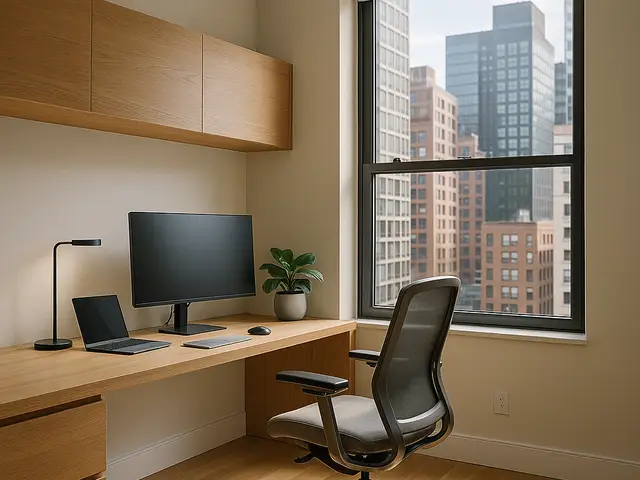
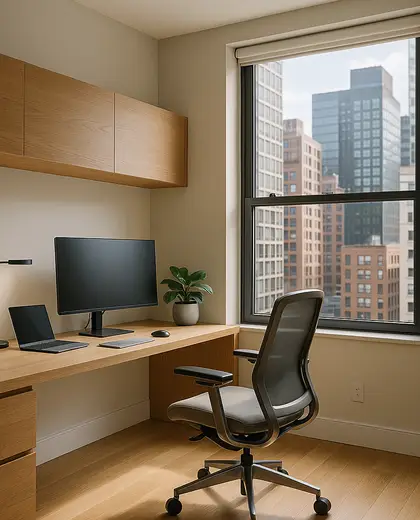
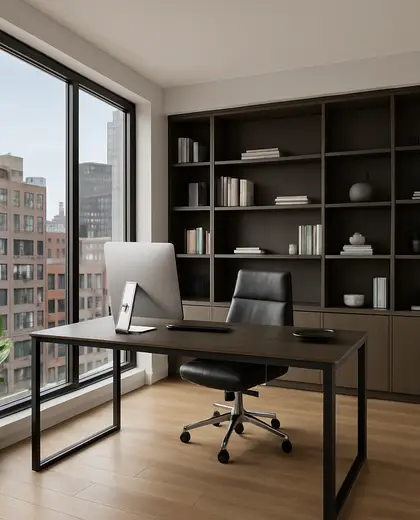
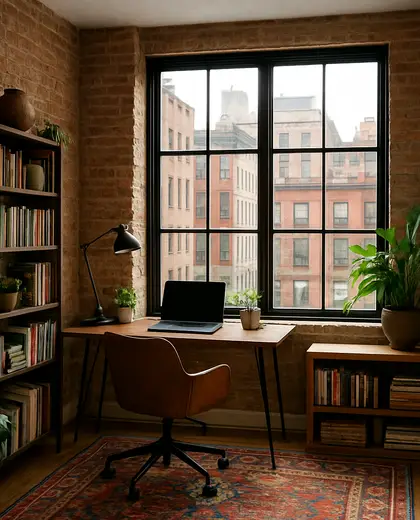
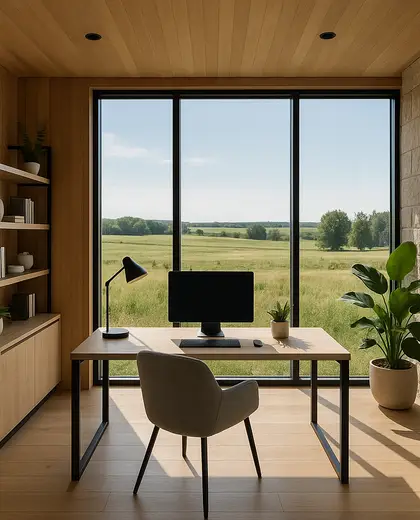
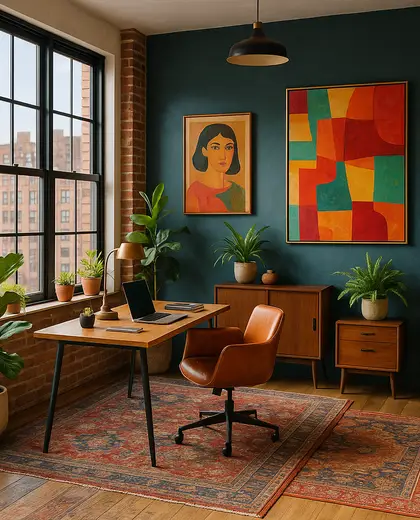
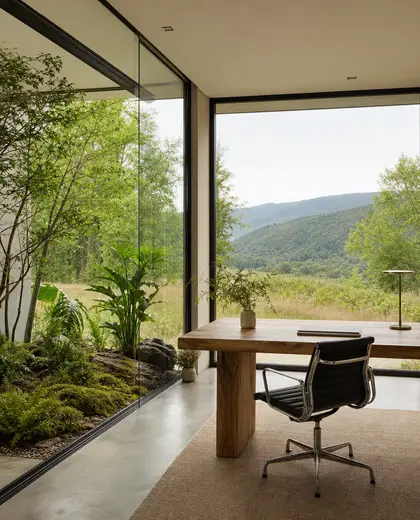
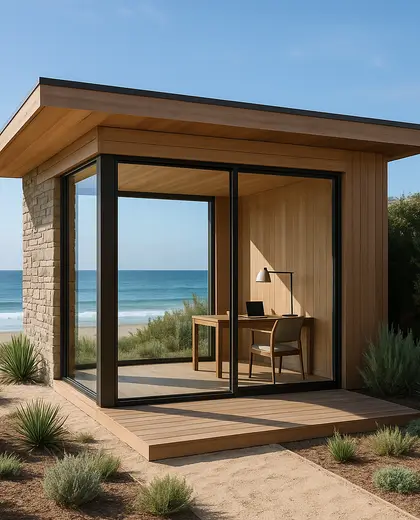
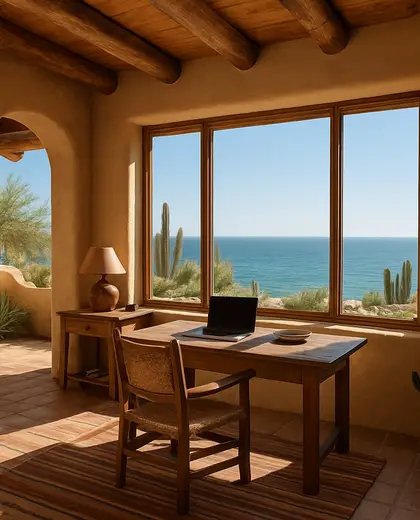
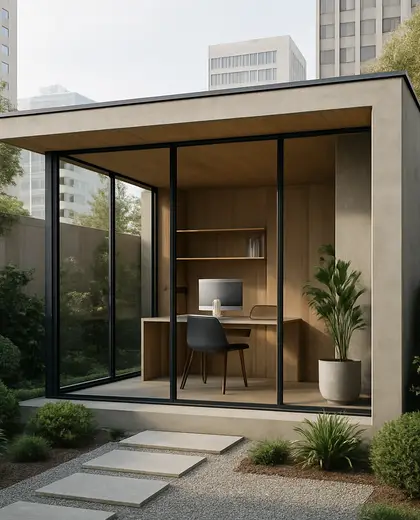
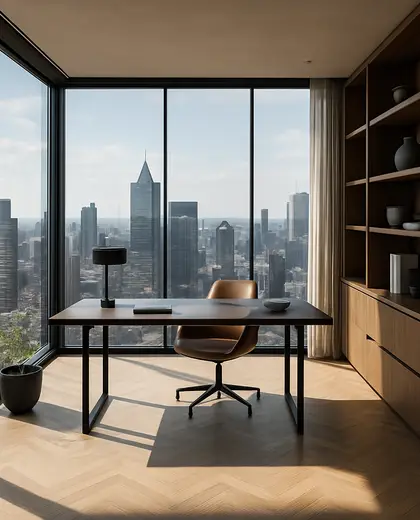
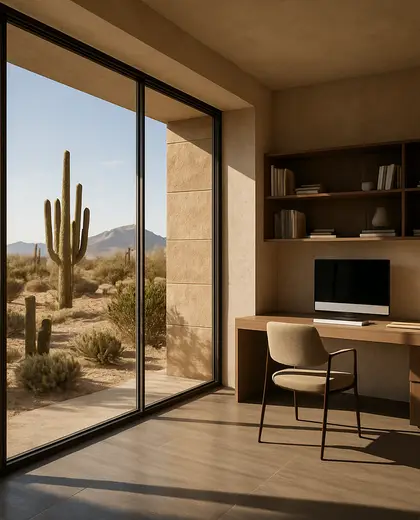
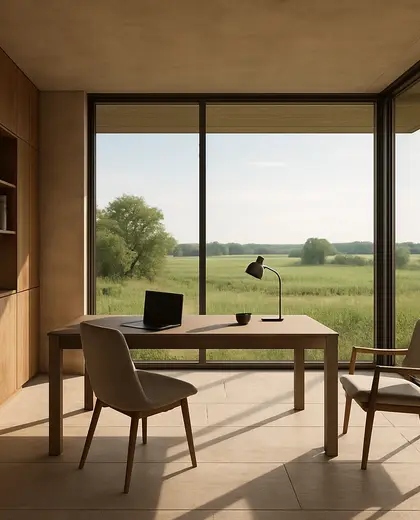
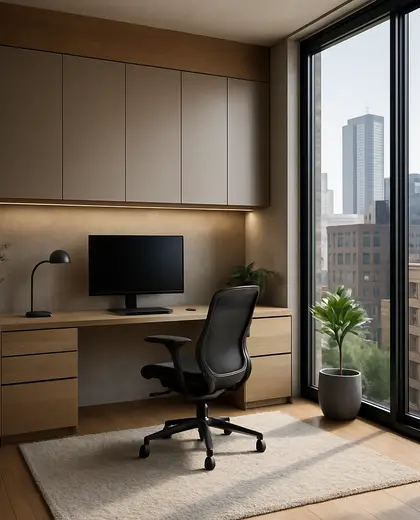
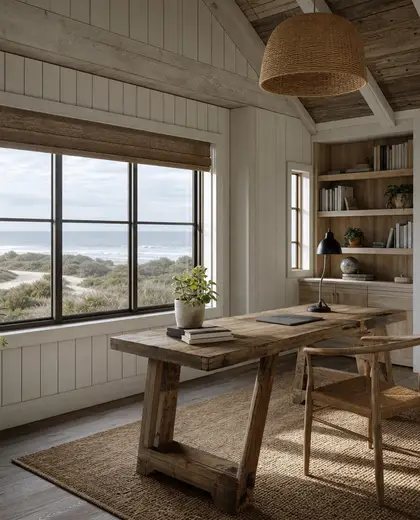
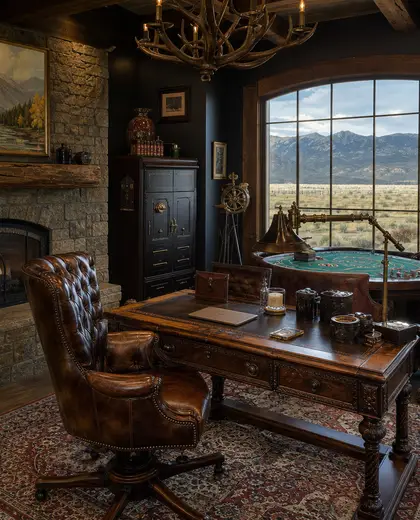
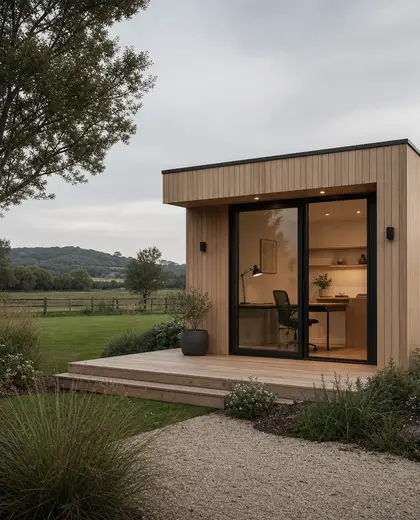
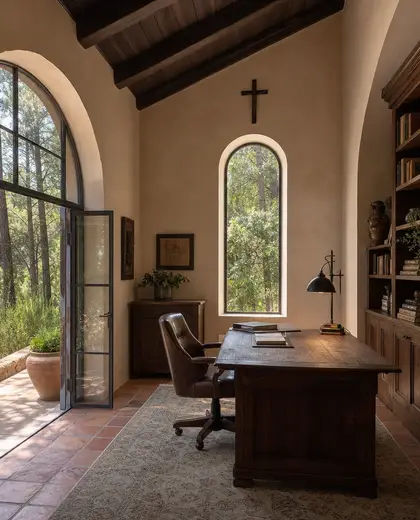
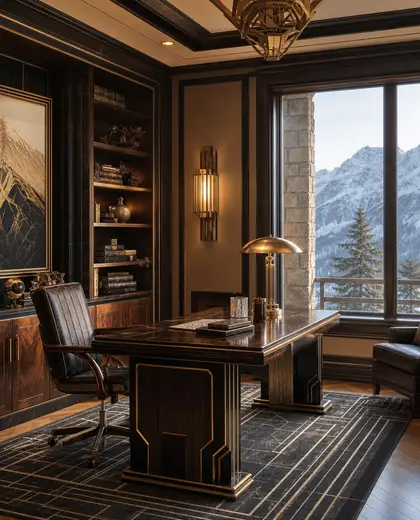
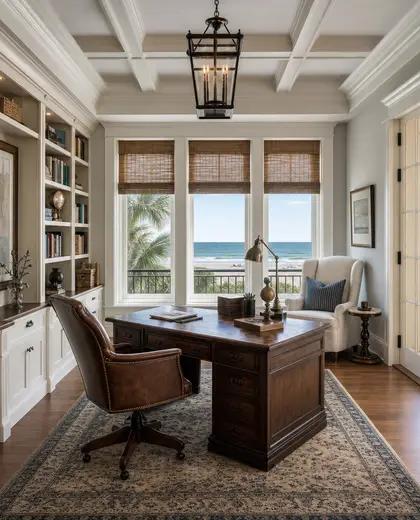
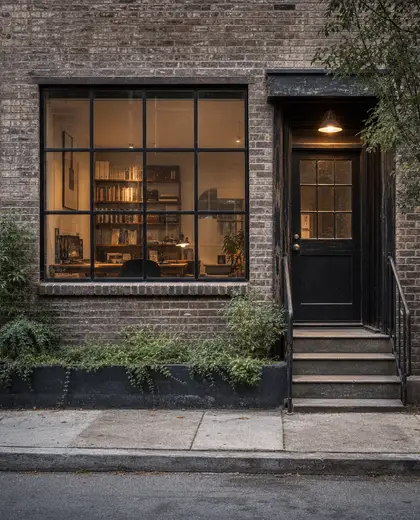
A home office is defined by a work-ready layout with a desk, task lighting, and storage that keeps the room clear and functional. It often uses durable surfaces such as wood, painted MDF, metal, and acoustic textiles, with finishes chosen for low glare and easy maintenance. The composition usually balances comfort and concentration through a simple layout, controlled cable management, and seating suited for long hours.
- home office
— References
References to explore
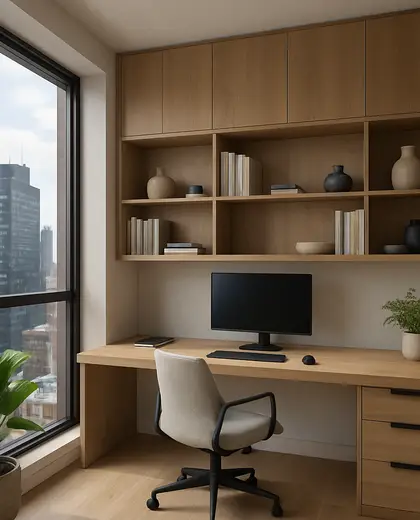
What makes a room feel like a real home office instead of a spare room?
A clear desk zone, enough storage for paper and equipment, proper lighting, and an ergonomic chair make the space function like an office.
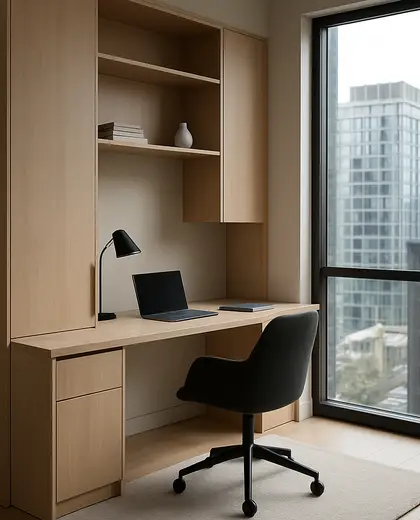
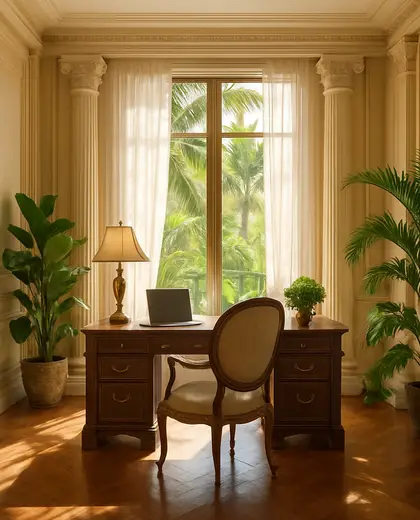
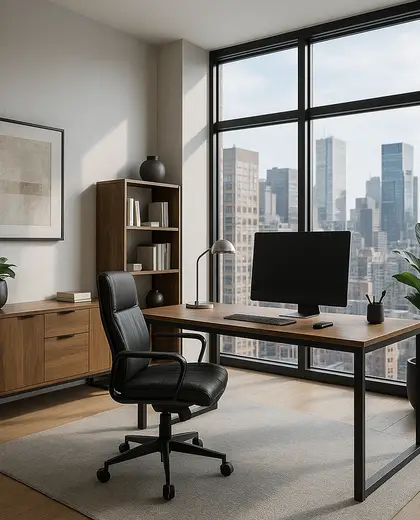
Which materials work best for a home office?
Durable, low-maintenance materials such as wood, laminate, metal, and upholstered panels are practical because they handle daily use and help control the visual clutter.
How should I choose the color palette?
Most home offices work best with calm neutrals and natural wood tones, since they reduce visual noise; stronger colors can be used in small amounts for focus or identity.
— The style
What defines it
Wood veneer, solid wood, powder-coated metal, laminate, glass, and felt or upholstered panels are common.
Neutral tones such as white, beige, gray, and warm wood are typical, sometimes accented by black or muted color for contrast.
It pairs well with built-in shelving, concealed storage, ergonomic chairs, acoustic panels, and natural light from a window.
— Professionals
Who has already built it
- elizabeth bee interior deinterior designers · 4 projectsView profile →
- slade slade design3d renderers · Bristol · 6 projectsView profile →
- maria mateaarchitects · London · 7 projectsView profile →
- paquis norris group limitedbuilders · Reading · 3 projectsView profile →
— Questions
Frequently asked questions
What makes a room feel like a real home office instead of a spare room?
A clear desk zone, enough storage for paper and equipment, proper lighting, and an ergonomic chair make the space function like an office.
Which materials work best for a home office?
Durable, low-maintenance materials such as wood, laminate, metal, and upholstered panels are practical because they handle daily use and help control the visual clutter.
How should I choose the color palette?
Most home offices work best with calm neutrals and natural wood tones, since they reduce visual noise; stronger colors can be used in small amounts for focus or identity.