— Blog · 11 August 2026 · 3 min read
5 atrium mistakes to avoid for a brighter, calmer home
Avoid the most common atrium planning mistakes and create a light-filled, practical space that feels calm rather than cold or echoey.
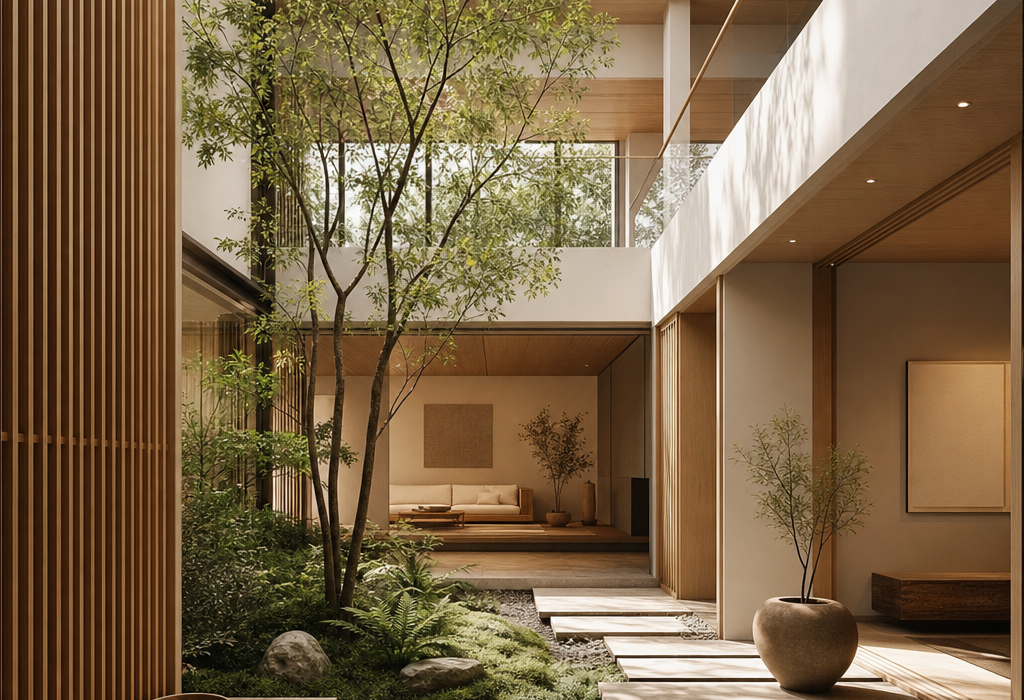
An atrium should feel like the heart of the home: light-filled, balanced and easy to live with. In a japandi scheme, that means keeping the space simple, natural and purposeful. These are the mistakes most likely to spoil the effect.
1. Blocking the light with heavy finishes
Dark stone, dense curtains and bulky joinery can make an atrium feel smaller than it is, especially if the roof light or glazed wall is the main source of daylight. Choose pale timber, matte plaster, limewashed walls and slim profiles for doors or balustrades. If you need privacy, use sheer blinds or fine linen rather than thick fabrics that swallow the light.
2. Ignoring glare and overheating
Lots of glass can create an atrium that is uncomfortable on bright days, with sharp reflections and too much heat in summer. Fit solar control glass where appropriate, add roof blinds or external shading, and think about the sun path before fixing seating or a dining table. A japandi palette works best when the light is softened, not fought against.
3. Choosing furniture that is too large
Oversized sofas, deep armchairs and heavy coffee tables can overwhelm the open volume and disrupt circulation around the atrium. Keep furniture low, lean and scaled to the footprint, leaving clear routes from one side to the other. A simple bench, a slender oak table or a pair of compact chairs often suits the space far better than a full lounge set.
4. Forgetting about acoustics
Glazed atriums can echo, making conversation, footfall and even a radio sound harsh. Add texture to absorb sound: a wool rug, upholstered seating, timber slats, soft blinds and a few fabric accents all help. If the atrium links several rooms, avoid making every surface hard and reflective, otherwise the space will feel lively in the wrong way.
5. Treating plants as an afterthought
An atrium without planting can feel bare, yet cramming in the wrong species leads to constant disappointment. Match the plant to the light level: olive trees, ferns, palms or structural evergreens can work well, but only if the conditions suit them. Use large pots in stone, ceramic or fibre cement, and leave enough breathing room so the planting feels curated rather than cluttered.
Handled well, an atrium becomes a calm transitional space that lifts the whole house. Keep the materials quiet, the layout clear and the detailing light, and the room will feel considered rather than overdesigned.
Find top professionals for your atrium project
Free and with no obligation / Takes under 5 minutes
Are you an architect or designer? Register for free! »