— Blog · 1 September 2026 · 3 min read
5 mistakes to avoid when planning a deck
A practical guide to the most common deck planning mistakes, with simple fixes that help you create a safer, smarter and more enjoyable outdoor space.
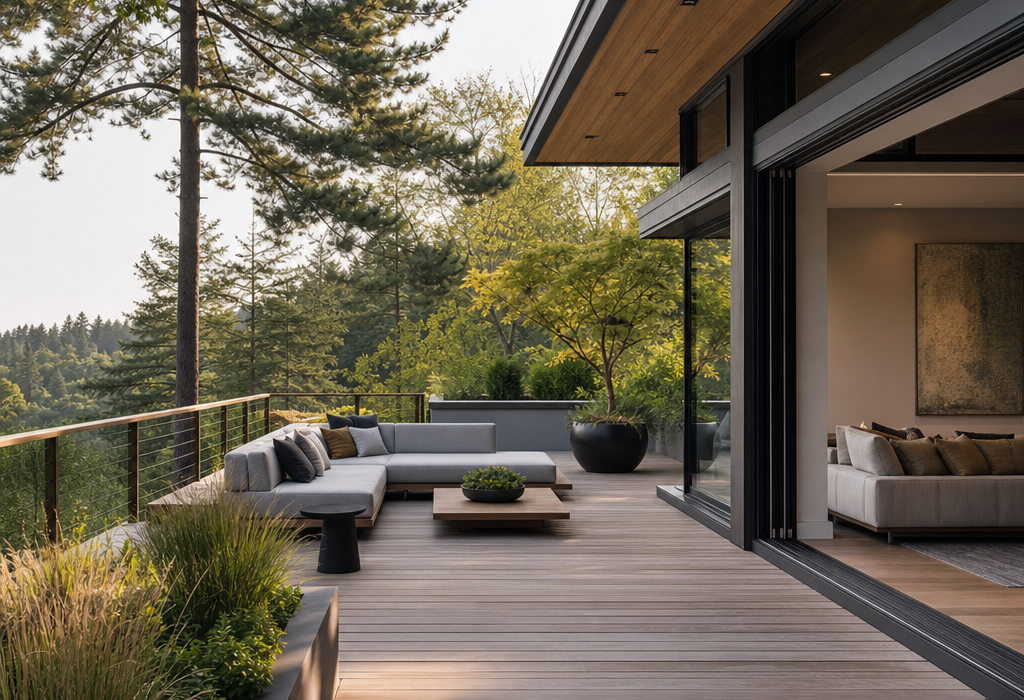
A well-planned deck should feel like a natural extension of the home, with materials, layout and detailing that suit everyday use as well as the British climate. Avoiding a few common errors early on can save money, improve safety and make the space far more comfortable year-round.
1. Ignoring drainage and water run-off
A deck that traps water soon becomes slippery, stained and harder to maintain, especially in the UK where rain and damp are frequent. Avoid flat detailing that lets water sit on the boards, and make sure the structure is designed with a slight fall away from the house and clear gaps between boards so water can drain properly. If the deck is low level, think carefully about ventilation underneath as well, because trapped moisture can shorten the life of timber and fixings.
2. Choosing the wrong material for the setting
Not every deck finish suits every garden or level of use. Softwood may look appealing at first, but without regular treatment it can weather quickly, while composite boards can be a better choice for busy family spaces if you want lower maintenance. For a contemporary look, keep the finish simple and consistent, and choose colours that work with the house brickwork, paving and boundary fencing rather than competing with them.
3. Getting the size and layout wrong
A deck that is too small feels cramped, while one that is oversized can dominate the garden and waste money. Before fixing the dimensions, think about how the space will actually be used: a dining table needs room to pull out chairs, circulation paths should stay clear, and a seating area should not block doors or steps. For a contemporary deck, clean lines and a straightforward shape often work best, but only if the proportions suit the garden.
4. Forgetting safety details around edges and levels
Changes in height, open edges and awkward steps can make a deck uncomfortable or risky, especially for children, older family members and guests after dark. Make sure steps are even and well lit, and consider balustrades or edge protection where the height or layout demands it. A subtle, contemporary handrail in powder-coated metal or timber can look neat while still doing its job, and non-slip finishes are worth considering in shaded or frequently wet areas.
5. Overlooking maintenance from the start
Decking always needs some level of care, but poor design can make upkeep far more difficult than it needs to be. If access is tight, leaves and dirt will build up in corners, and if boards are fixed too close to walls or planters, cleaning becomes awkward. Leave sensible gaps for maintenance, avoid packing furniture or planting too tightly against the edges, and choose finishes and fixings that suit the amount of care you are realistically prepared to give.
When a deck is planned with drainage, proportion, safety and maintenance in mind, it feels calmer, lasts longer and works better through every season. A contemporary approach is often the simplest path to a deck that looks sharp without becoming high maintenance.
Find top professionals for your deck project
Free and with no obligation / Takes under 5 minutes
Are you an architect or designer? Register for free! »