- home
- blog
- conference-hall-trends-to-watch-now-materials-layouts-and-smart-tech-that-are-shaping-2026-q6lcv0
— Blog · 25 August 2026 · 4 min read
Conference hall trends to watch now: materials, layouts and smart tech that are shaping 2026
A practical look at the latest conference hall trends, from quieter materials and flexible layouts to smarter tech, calmer colours and easy updates that do not require a full refurbishment.
Quieter, more tactile materials are taking over
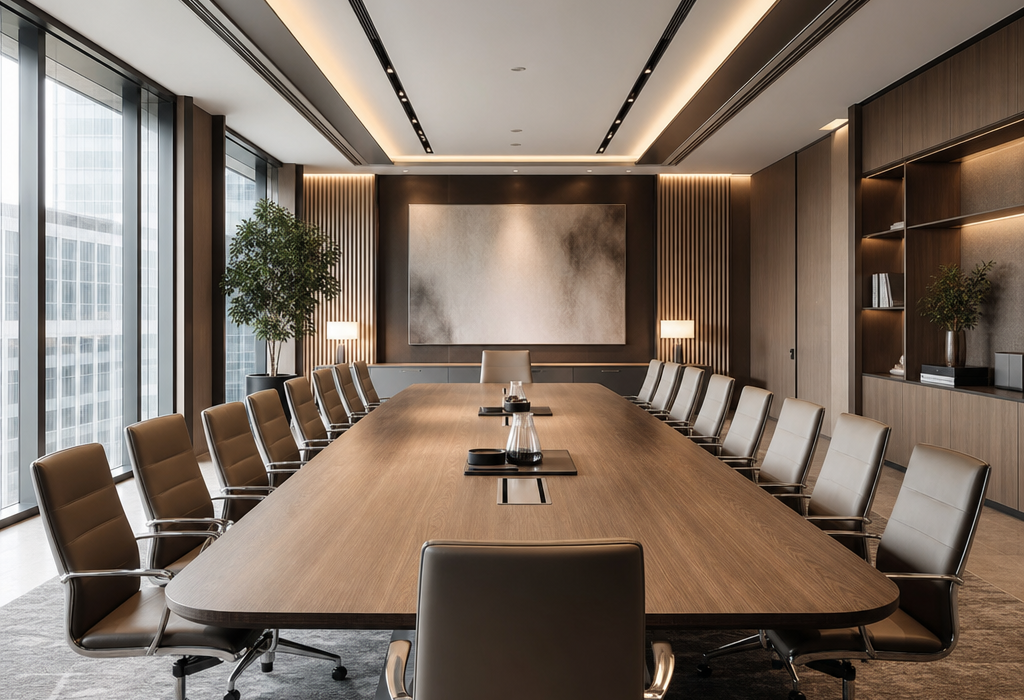
Conference halls are moving away from hard, echo-prone finishes and towards materials that soften sound as well as look considered. Timber slats, acoustic felt, upholstered wall panels and micro-perforated ceilings are all popular because they improve speech clarity without making the room feel clinical. In larger spaces, a mix of timber veneer, recycled carpet tiles and fabric-wrapped columns gives the hall a warmer, more contemporary feel while helping with durability. If you want the look without a full renovation, start with acoustic wall art, heavy curtains at glazed edges, or new chair upholstery in wool or recycled performance fabric.
Colours are becoming calmer and more architectural
The strongest colour trend is restraint. Rather than bright corporate branding everywhere, many conference halls now use soft stone, warm white, taupe, muted grey-green and inky blue as a backdrop, with colour introduced in controlled accents. This makes the room feel more timeless and helps screens, signage and presentation lighting stand out properly. A contemporary palette also works well with UK daylight, which can be variable and cool, because warmer neutrals stop the space feeling stark. To update an existing hall quickly, repaint feature walls, swap busy patterned soft furnishings for plain textured ones, and use darker skirtings or door details to ground the room.
Flexible layouts are replacing fixed rows of seating
The old rigid lecture setup is fading out unless the room is used for one very specific purpose. Today’s conference hall is expected to shift between keynote talks, breakout sessions, networking and hybrid presentations. That means stackable chairs, lightweight tables on lockable castors, movable presentation screens and clear circulation routes are all in demand. Practical layouts often leave generous aisles and allow at least one accessible route that feels integrated rather than added as an afterthought. If you are not starting from scratch, simply re-spacing chairs, introducing modular furniture and using portable room dividers can make the hall feel much more adaptable.
Technology is becoming visible only when it needs to be
Smart tech is now expected, but the design trend is to make it as discreet as possible. Good conference halls are being fitted with integrated sound systems, ceiling microphones, high-quality projection or LED walls, and simple hybrid-meeting setups that are easy to operate without a technician. Cable management, hidden charging points and neatly housed control panels matter just as much as the headline equipment, because clutter instantly makes a room feel dated. Older podiums, tangled AV cabling and oversized fixed lecterns are definitely on the way out. A low-cost upgrade can be as simple as adding flush desk power modules, improving Wi‑Fi coverage and choosing one elegant screen rather than multiple mismatched displays.
What is fading out, and the easiest ways to modernise without rebuilding
Heavy matching furniture sets, glossy laminate finishes, overdecorated feature walls and harsh all-over downlighting are losing favour in conference halls because they can feel dated and inflexible. So are interiors that rely on pure white surfaces with no texture, as they tend to feel flat on camera and tiring in person. The easiest way to modernise without a full fit-out is to work in layers: replace a few large pieces rather than everything, introduce dimmable lighting where possible, add acoustic treatments in the most reflective zones, and use rugs or carpet tiles to define areas. Even a small number of changes can shift the room towards a more contemporary, calm and useful space.
How to create a polished contemporary feel on a realistic budget
A successful conference hall does not need to be flashy; it needs to feel comfortable, adaptable and professionally finished. In practical terms, that means choosing durable materials that can handle frequent use, keeping the colour palette coherent, and making sure the furniture layout supports different event formats. If you are refreshing rather than refurbishing, focus on the elements people notice first: the acoustic quality, the lighting temperature, the visual clutter and the comfort of the seating. A few well-chosen updates in timber, fabric and matte finishes can make an older hall feel current while still being easy to maintain and suitable for long working days.
Find top professionals for your conference hall project
Free and with no obligation / Takes under 5 minutes
Are you an architect or designer? Register for free! »