— Blog · 7 July 2026 · 4 min read
Kitchen renovation budget guide: what a realistic UK refit costs
A practical UK budget guide for renovating a kitchen, covering realistic cost bands, what affects the price, where to spend or save, and the hidden extras people often miss.
What a realistic UK kitchen budget looks like
For a typical UK kitchen renovation, a simple cosmetic refresh can start from roughly £5,000 to £10,000 if the layout stays the same and you keep existing services in place. A mid-range refit often lands between £10,000 and £25,000, while a larger, contemporary scheme with better appliances, bespoke joinery and more structural work can move well beyond £25,000. The biggest difference is usually whether you are simply replacing finishes or fully reworking the room.
What pushes the price up or down
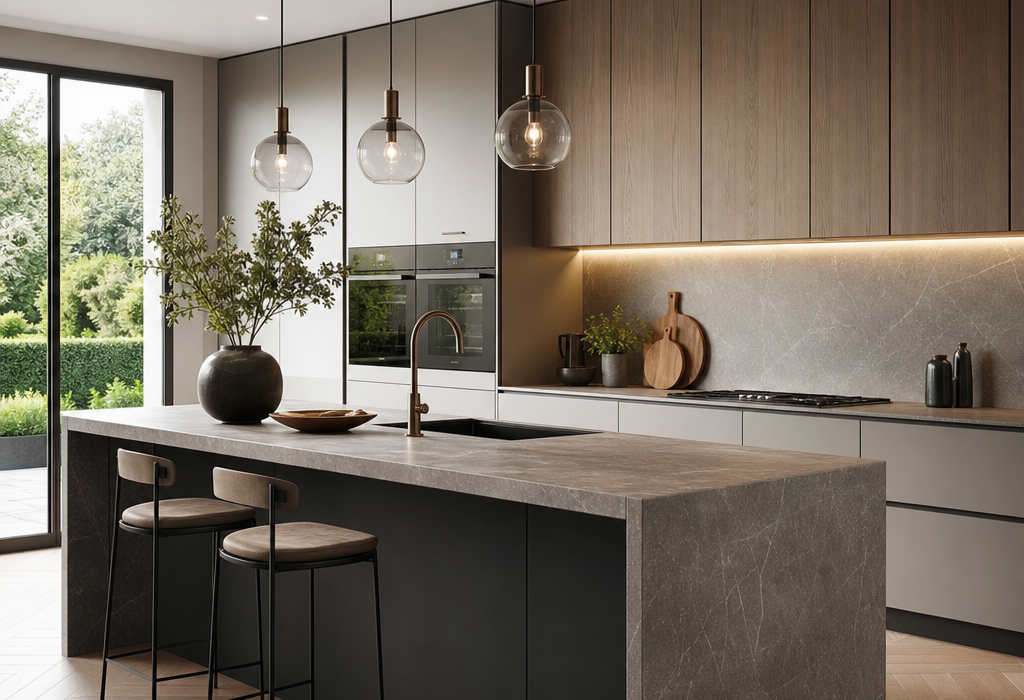
Layout changes are one of the main cost drivers. Keeping the sink, hob and dishwasher in the same positions helps control plumbing and electrical work, while moving them across the room adds labour and materials. Cabinet choice also matters: flat-pack or modular units are far cheaper than made-to-measure joinery. Worktops can range from budget laminate to quartz, solid timber or porcelain, and the jump in price can be significant. Appliance choices, flooring, lighting and the amount of plastering or decorating needed will also affect the total. In a contemporary kitchen, clean-lined cabinetry and integrated appliances can look simple, but the finished cost depends heavily on the quality of the carcasses, doors and fittings behind that pared-back appearance.
Where it pays to invest
Spend more on the elements you use every day and anything difficult to change later. Good cabinets with strong hinges and drawer runners are worth the extra outlay, as they affect storage and longevity. Worktops are another sensible place to invest, especially around the sink and hob, where durability and heat resistance matter. If your budget allows, a properly planned lighting scheme is also worthwhile: task lighting over preparation areas, softer ambient lighting and under-cabinet lights make the room easier to use and more polished. A well-chosen extractor and reliable appliances can improve day-to-day comfort far more than decorative extras. For a contemporary look, it is usually better to keep the palette restrained and put money into excellent finishes rather than lots of surface detail.
Where you can save without spoiling the result
You can often save by keeping the existing layout, reusing sound flooring, and choosing standard-size units instead of bespoke cabinetry. Laminate or compact laminate worktops can look smart if paired with neat edging and careful installation. A simple splashback in ceramic tiles, rather than an expensive slab of stone or glass, can still feel fresh if the tile size and grout lines are kept consistent. Handles, taps and pendant lights are easy places to control spend, provided the overall finish is coherent. Painting the walls yourself and retaining radiators in the same position can also help. The trick is to save on items that are easy to change later, not on things that affect the kitchen’s structure or daily use.
The hidden costs people often forget
Many kitchen budgets are blown by the less glamorous parts of the job. Waste removal, skip hire and disposing of old appliances can add up quickly. Electrical upgrades may be needed if the existing consumer unit or wiring is outdated, and older homes sometimes need extra plastering once units and tiles are removed. Flooring changes can reveal uneven subfloors, and replacing units may expose areas that need skirting, boxing-in or decorating. Delivery charges, fitting fees, minor plumbing parts, sealants, trims and finishing materials are easy to overlook. If you are ordering a contemporary kitchen with integrated appliances, remember that housing, filler panels and bespoke infills are often essential to achieve that seamless look, and they are not always included in the headline price.
How to keep your budget realistic from the start
Set a clear total before you fall in love with finishes, then divide it into rough bands for cabinets, worktops, appliances, labour and contingency. It is sensible to keep a reserve for unexpected issues, especially in older UK homes where hidden repairs are common. Ask yourself what matters most: more storage, a better hob, a hardwearing work surface or a stronger visual style. If your priority is a contemporary kitchen that feels calm and uncluttered, choose fewer materials, keep the colour palette tight and invest in good proportions, durable hardware and careful installation. That approach usually delivers a better result than spreading the budget too thinly across too many upgrades.
Find top professionals for your kitchen project
Free and with no obligation / Takes under 5 minutes
Are you an architect or designer? Register for free! »