— Blog · 23 June 2026 · 3 min read
Modern raised garden bed ideas: how to get the look
A practical style guide to creating a clean, architectural raised garden bed with crisp lines, smart materials and a restrained modern planting scheme.
Start with a clean, architectural form
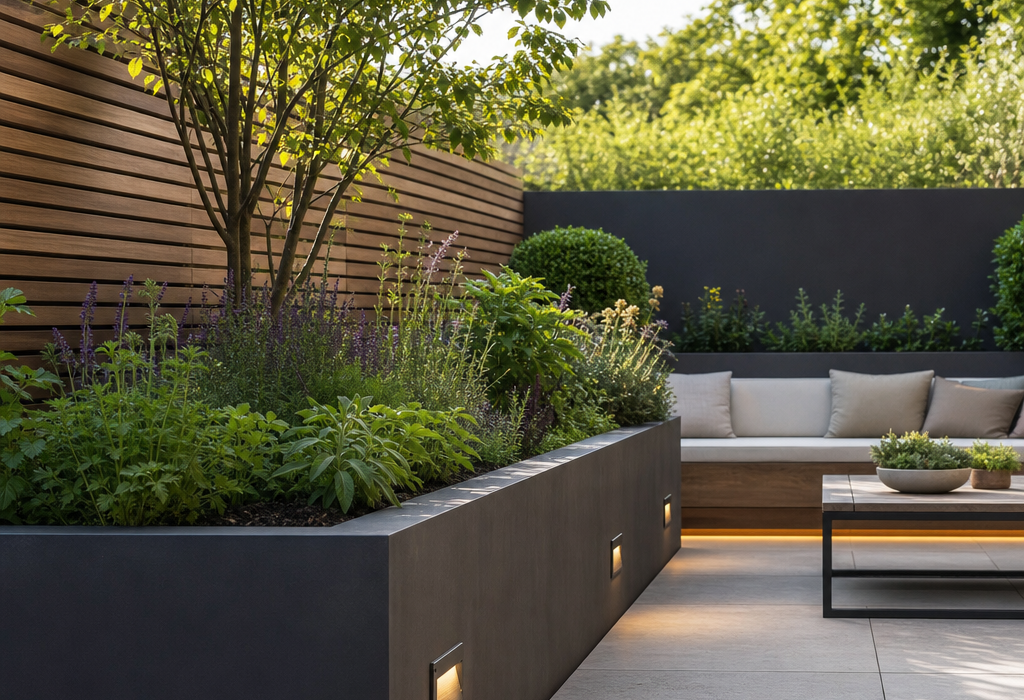
A modern raised garden bed works best when the shape feels deliberate and uncluttered. Choose simple rectangles or long linear runs rather than fussy curves, and keep the proportions balanced with the surrounding path or patio. A bed around knee height is usually comfortable for planting and maintenance, while lower tiers can be useful if you want to create a layered terrace effect. The key is to make the structure look purposeful, almost like part of the architecture of the house.
Choose materials with a crisp, honest finish
For a modern look, favour materials that read as sleek and durable rather than rustic or decorative. Powder-coated steel, smooth rendered blockwork, charred timber details, or large-format concrete units all suit the style well. If you prefer timber, use straight-edged boards in a dark stain or pale natural finish, with neat junctions and hidden fixings where possible. Avoid ornate edging or visibly patched repairs; the finish should feel tidy, low-maintenance and precise.
Keep the palette restrained and calm
A modern raised garden bed usually looks best in a narrow palette of greys, charcoal, black, warm timber tones and soft greens from the planting itself. In UK gardens, these tones sit comfortably against brick, stone and render, while helping the planting stand out. If you add colour, keep it intentional and limited, such as deep terracotta pots, a single rust-coloured metal accent, or flowering plants in white, purple or lime-green tones. Too many colours will weaken the architectural feel.
Use planting as structure, not clutter
Modern planting should feel composed, with repeated forms and clear spacing. Think grasses, clipped evergreens, architectural herbs, and perennials with strong silhouettes such as alliums, salvia, euphorbia or verbena. Keep the soil surface neat with gravel, fine bark or a mineral mulch, and avoid overcrowding the bed. Repetition is important: a few plants repeated along the length of the bed will look more polished than a mixture of everything from the garden centre. Leave breathing room so each plant reads clearly from a distance.
Add discreet details that make it feel finished
The small touches sell the modern look. Conceal irrigation if you are using it, use slim edging to define the bed from the lawn or paving, and keep joints and corners sharply aligned. Lighting should be subtle rather than theatrical: low-level bollards, recessed step lights, or a simple wash of warm-white light grazing the bed at night. If you include seating nearby, choose simple slatted benches or powder-coated metal furniture with clean lines. The overall effect should feel easy to live with, neat in all seasons, and quietly contemporary rather than showy.
Find top professionals for your raised garden bed project
Free and with no obligation / Takes under 5 minutes
Are you an architect or designer? Register for free! »