— Ideas & inspiration
Art deco elegance in the bathroom
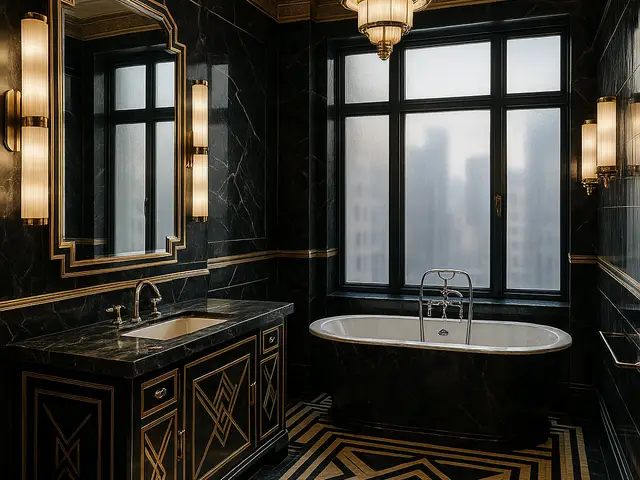
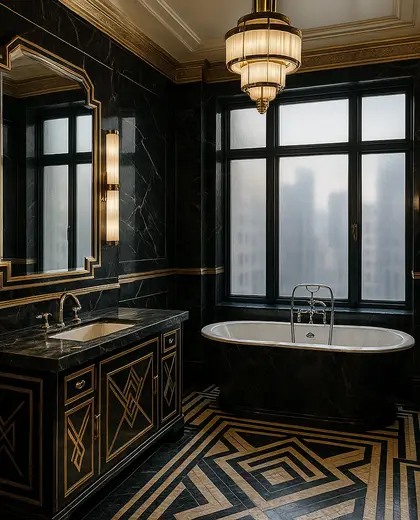
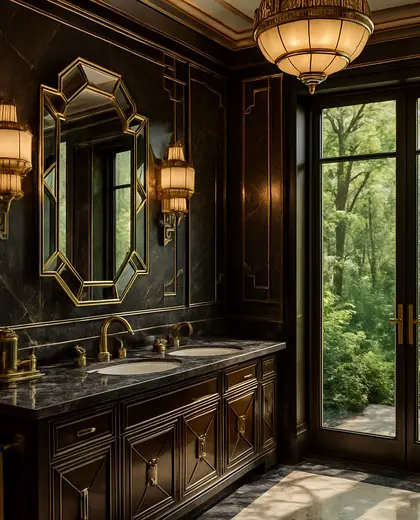
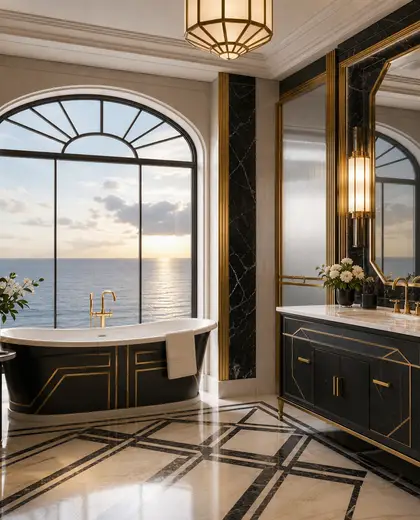
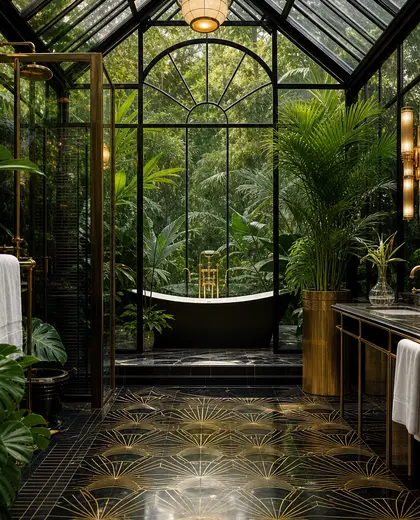
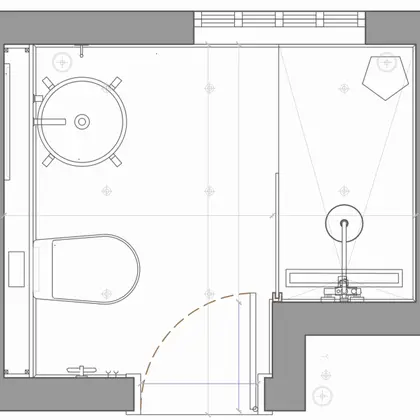
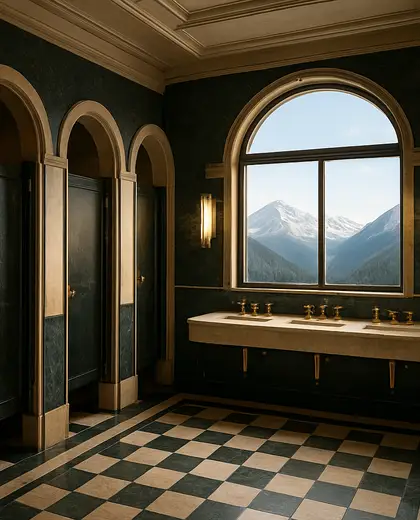
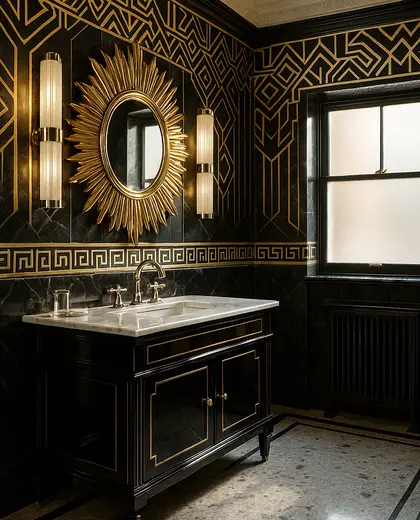
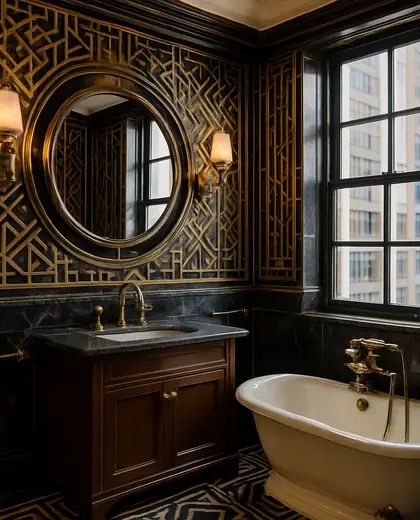
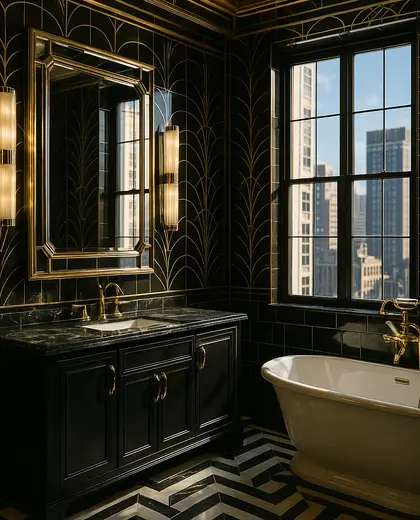
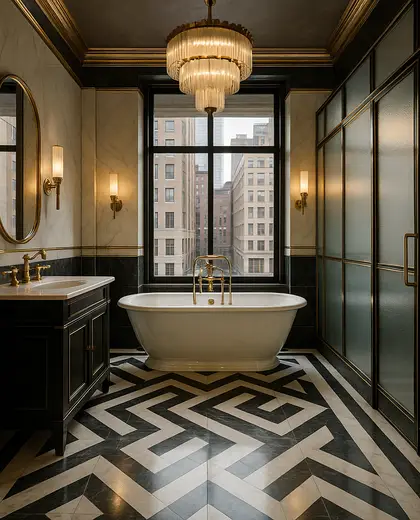
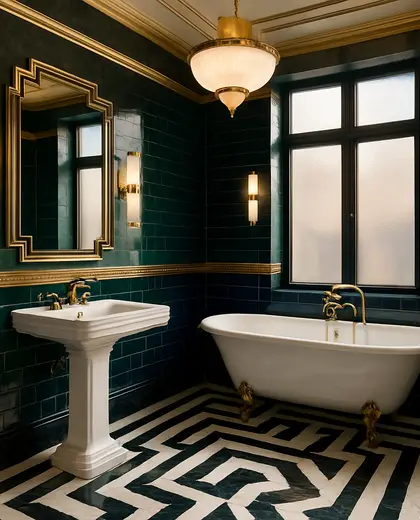
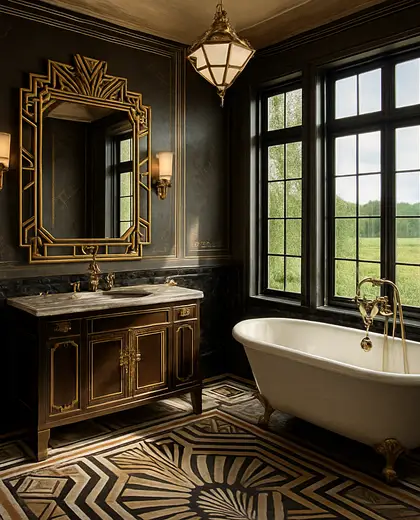
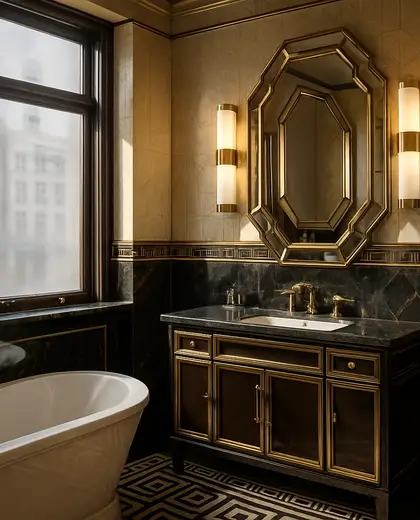
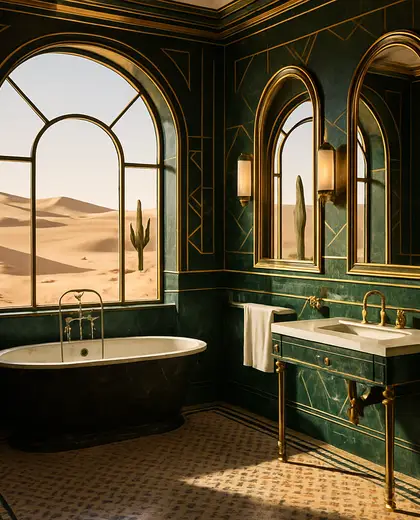
An art deco bathroom is defined by strong geometry, reflective surfaces, and polished finishes. Common materials include marble, brass, chrome, lacquered wood, and glazed tile, often arranged in symmetrical layouts with stepped details, fluted forms, and bold contrast. The palette typically leans toward black, white, cream, emerald, navy, and metallic accents.
- bathroom
- art deco
— References
References to explore
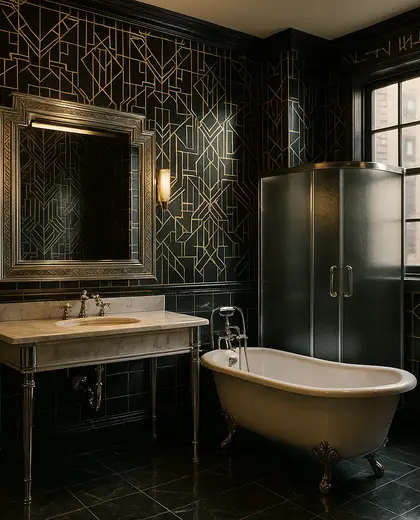
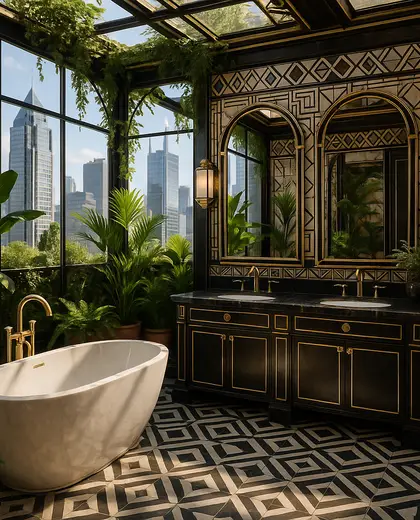
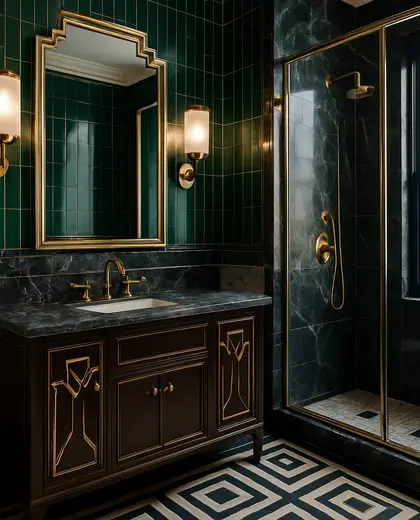
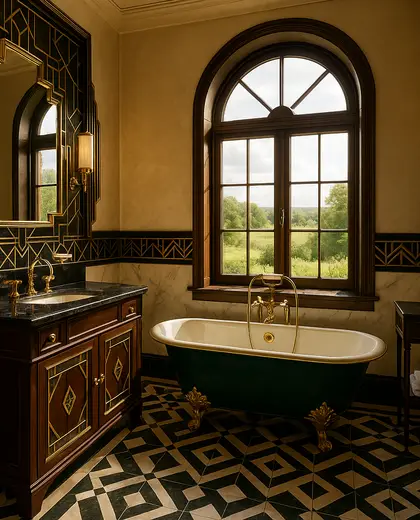
What makes a bathroom feel art deco rather than just vintage?
Art deco relies on symmetry, geometric detailing, and polished materials, not just old-fashioned fixtures. Look for stepped shapes, fan motifs, fluting, and strong contrast in the finishes.
— The style
What defines it
Marble, brass, chrome, mirrored glass, lacquered cabinetry, and glossy ceramic or zellige-style tile.
Black and white are classic, often softened with cream, emerald, deep blue, or blush plus gold or chrome accents.
Modern plumbing, streamlined storage, vintage-inspired lighting, geometric tile patterns, and decorative mirrors.
— Professionals
Who has already built it



- paquis norris group limitedbuilders · Reading · 3 projectsView profile →
- LoftRobejoiners · Guildford · 4 projectsView profile →
- Beneito Faurelighting designers · 2 projectsView profile →
- Lusso Stonetile suppliers · Stocktonontees · 7 projectsView profile →
— Explore
Keep exploring
— ARTICLES
Related reading
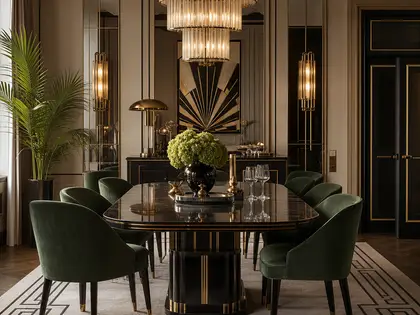
Art deco dining room: how to bring the look home
A practical style guide for creating an Art Deco dining room with rich materials, elegant geometry and glamorous finishing touches.
Read article →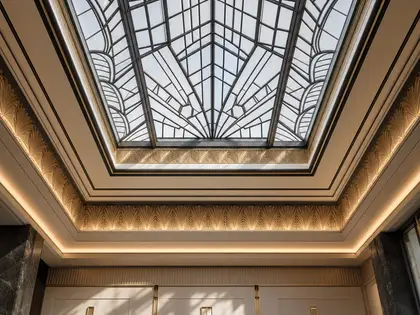
Art Deco roof ideas: how to get the look
A practical style guide to creating an Art Deco roof with elegant geometry, luxurious materials and crisp detailing.
Read article →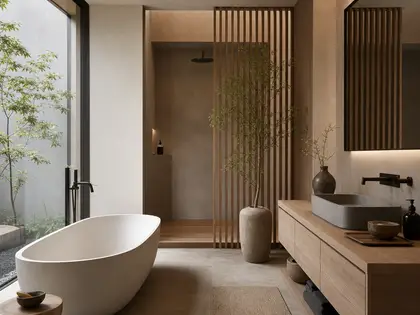
7 practical tips for a calmer, smarter bathroom
A practical bathroom tip list for creating a calm, uncluttered room that looks refined and works well every day.
Read article →— Questions
Frequently asked questions
What makes a bathroom feel art deco rather than just vintage?
Art deco relies on symmetry, geometric detailing, and polished materials, not just old-fashioned fixtures. Look for stepped shapes, fan motifs, fluting, and strong contrast in the finishes.
Which finishes work best in an art deco bathroom?
Glossy tile, marble, brass or chrome hardware, and mirrored surfaces are the most typical. Matte finishes can work too, but they usually need to be balanced with something reflective to keep the look sharp.
Can art deco work in a small bathroom?
Yes, if you keep the palette tight and use a few key details rather than many patterns at once. A statement mirror, bold sconces, and one geometric tile feature can capture the style without overwhelming the room.