— Ideas & inspiration
Eclectic spirit in a rural setting
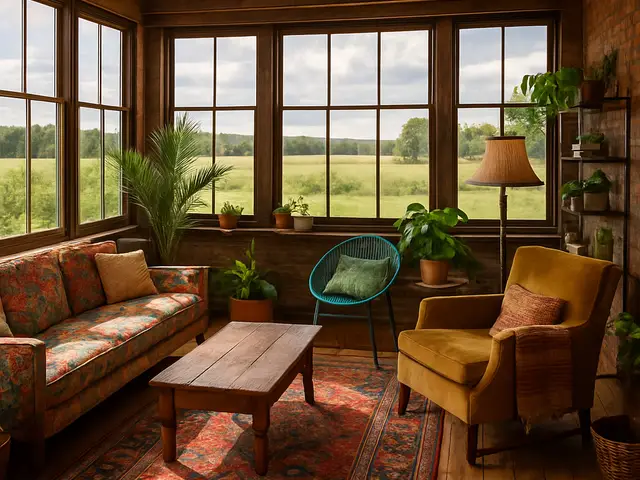
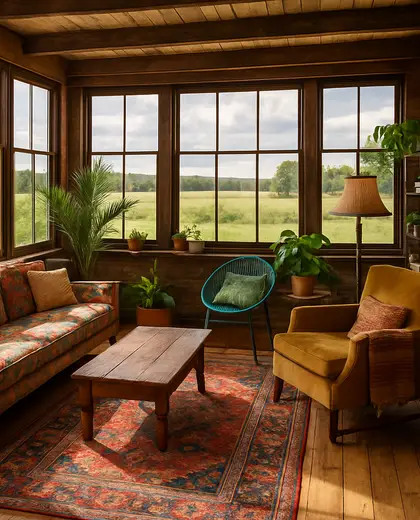
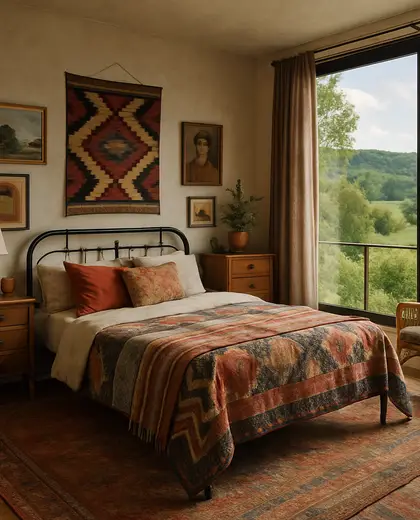
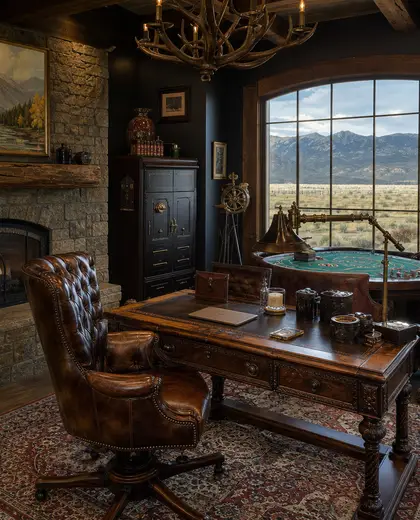
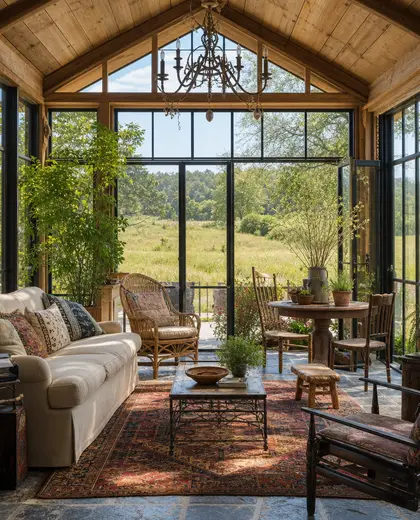
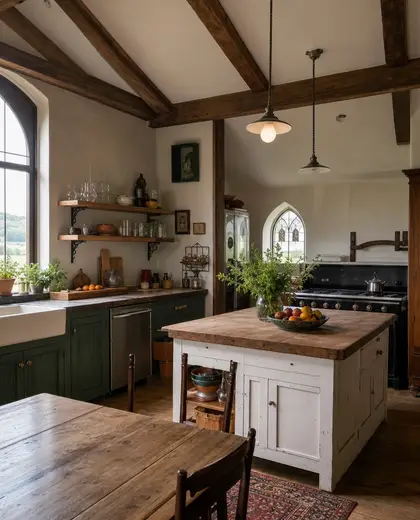
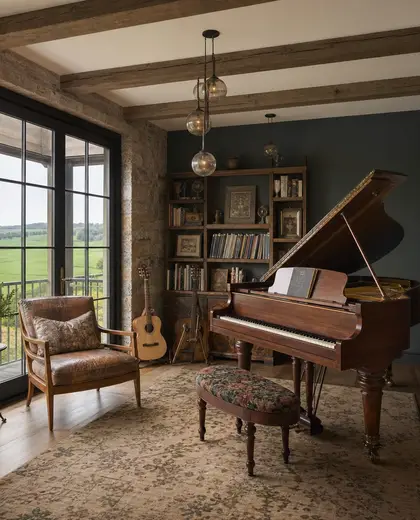
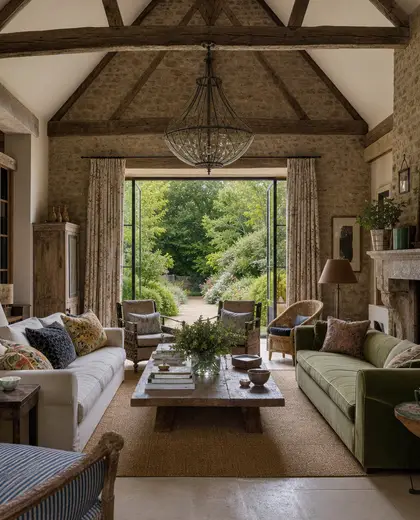
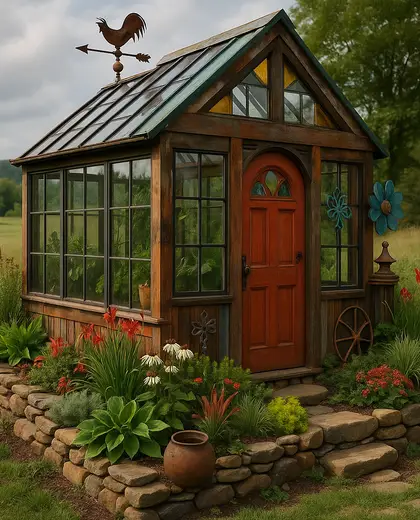
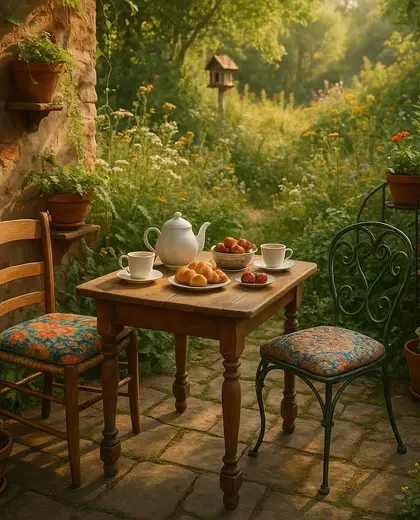
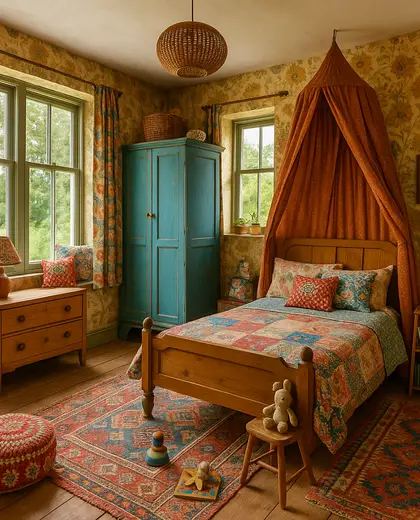
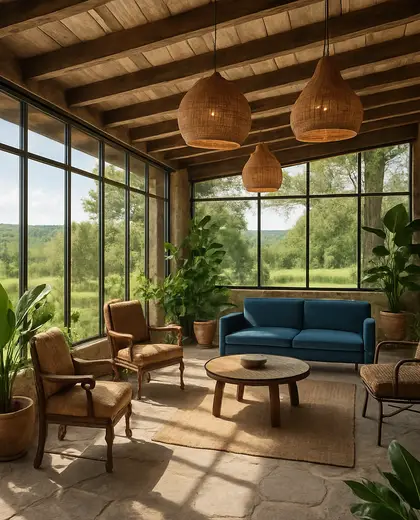
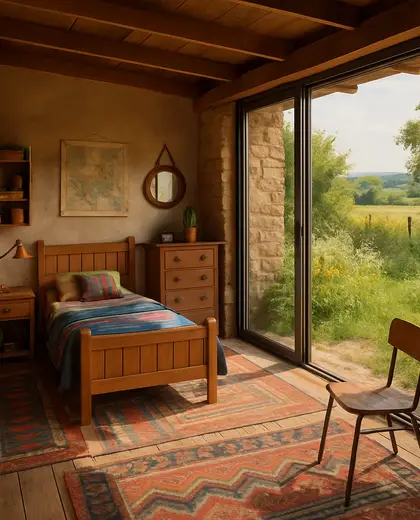
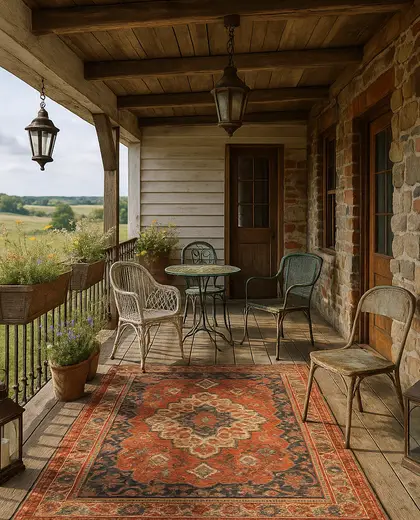
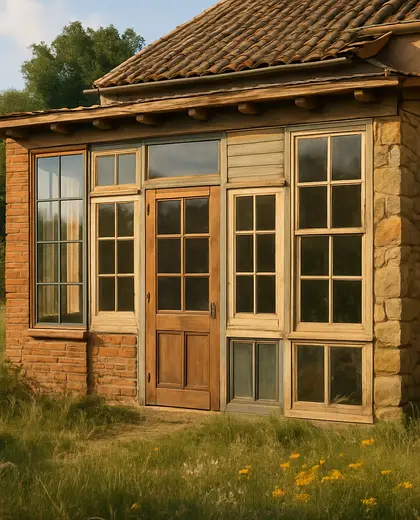
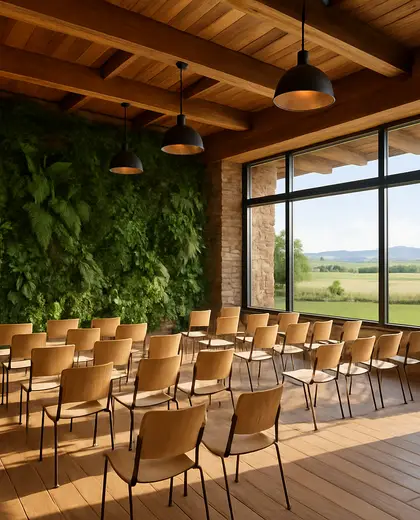
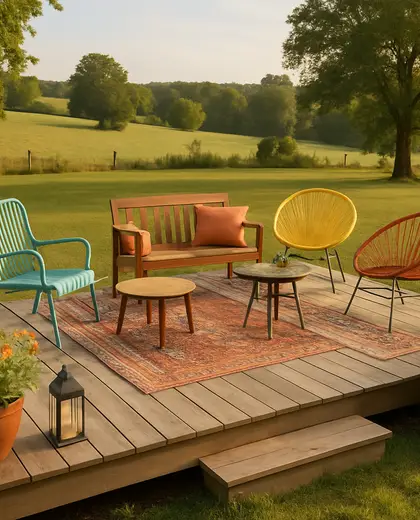
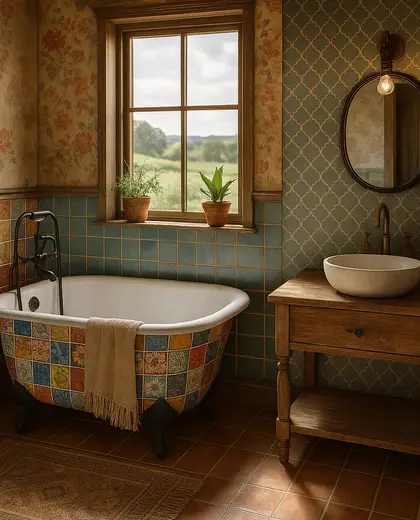
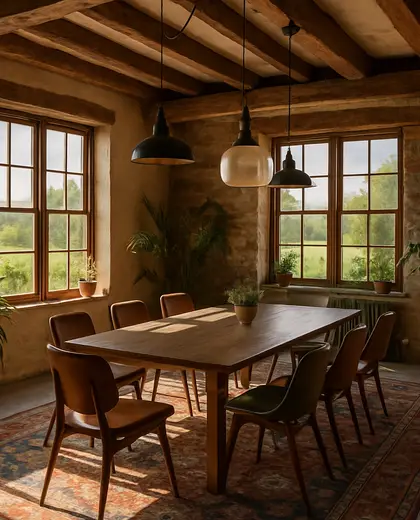
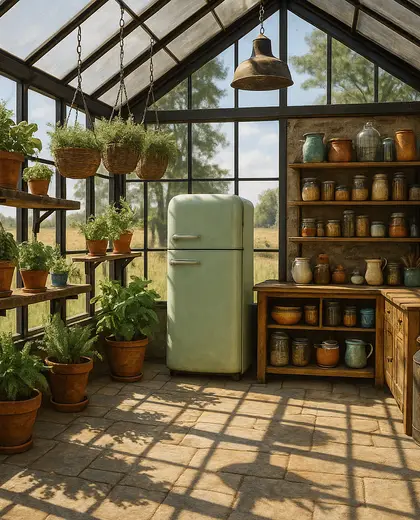
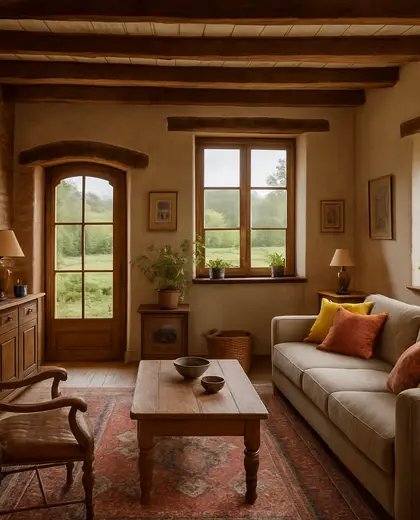
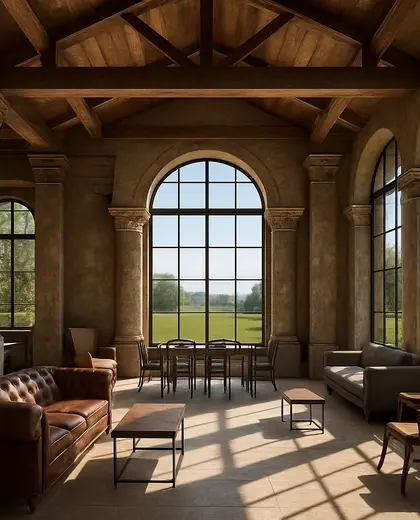
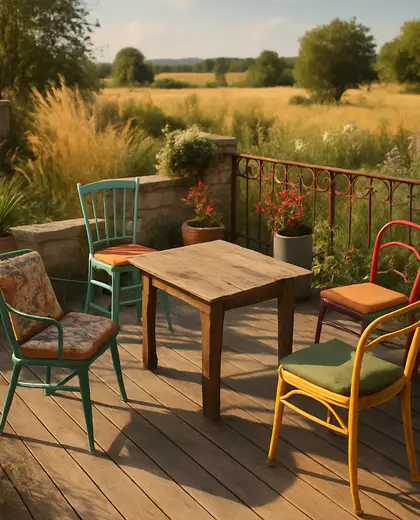
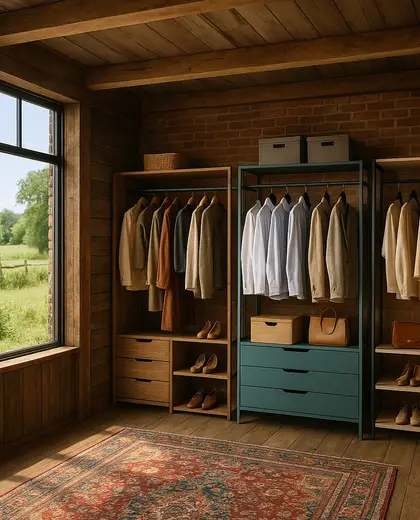
This composition mixes layered, collected details with the simplicity of countryside architecture. It often uses wood, stone, linen, aged metal, and handmade finishes, paired with a muted base and a few unexpected colors or patterns. The result feels relaxed, personal, and rooted in natural materials.
- eclectic
- rural
— References
References to explore
How is eclectic rural different from plain rustic style?
Rustic style usually stays more consistent and restrained, while eclectic rural adds more contrast, mixed eras, and decorative variety. You may see antique furniture beside modern lighting or bold textiles alongside simple farmhouse finishes.
What kind of house suits this composition best?
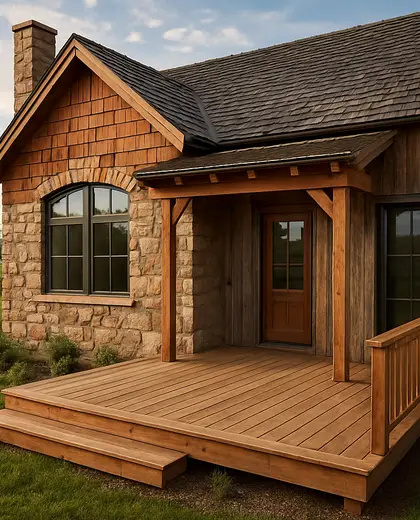
It works well in countryside homes, farmhouses, cottages, and renovated old houses with exposed structure or natural materials. It can also be adapted to newer homes if the finishes and furniture lean tactile and lived-in.
How do I keep it from feeling chaotic?
Use a calm base of natural materials and a limited core palette, then layer in only a few strong accents. Repeating one or two finishes, such as wood tone or metal color, helps the mix feel intentional.
— The style
What defines it
Weathered wood, natural stone, plaster, linen, rattan, and patinated metal are common, often with vintage or handcrafted pieces.
Earthy neutrals usually lead: warm whites, beige, clay, olive, brown, and charcoal, with occasional richer accent tones or patterned textiles.
It pairs rustic rural architecture with collected furnishings, global influences, antique finds, and a more playful mix of forms and eras.
— Professionals
Who has already built it

- paquis norris group limitedbuilders · Reading · 3 projectsView profile →
- LoftRobejoiners · Guildford · 4 projectsView profile →
- Beneito Faurelighting designers · 2 projectsView profile →
- Lusso Stonetile suppliers · Stocktonontees · 7 projectsView profile →
— Questions
Frequently asked questions
How is eclectic rural different from plain rustic style?
Rustic style usually stays more consistent and restrained, while eclectic rural adds more contrast, mixed eras, and decorative variety. You may see antique furniture beside modern lighting or bold textiles alongside simple farmhouse finishes.
What kind of house suits this composition best?
It works well in countryside homes, farmhouses, cottages, and renovated old houses with exposed structure or natural materials. It can also be adapted to newer homes if the finishes and furniture lean tactile and lived-in.
How do I keep it from feeling chaotic?
Use a calm base of natural materials and a limited core palette, then layer in only a few strong accents. Repeating one or two finishes, such as wood tone or metal color, helps the mix feel intentional.