— Blog · 21 August 2026 · 4 min read
City of Bristol: where heritage, innovation and liveable urban design meet
A practical guide to Bristol for anyone planning a building or design project, from its architectural landmarks and urban trends to typical construction costs.
Welcome to City of Bristol
City of Bristol is one of the UK’s most distinctive urban centres, with an estimated population of around 470,000 people. It combines a strong sense of place with a lively creative economy, making it attractive for homeowners, developers and anyone planning a new build, extension or refurbishment. Bristol’s appeal lies in its balance of historic character, independent culture and forward-looking design, with a deep pool of local talent including architects who understand how to work within the city’s varied streetscapes and planning context.
The city is notable for its hills, waterfront setting and mix of Georgian terraces, Victorian terraces, industrial buildings and contemporary interventions. That variety gives project owners a broad design palette, but it also means that good local knowledge is valuable when navigating conservation areas, tight urban plots and neighbourhood expectations.
Architectural Highlights
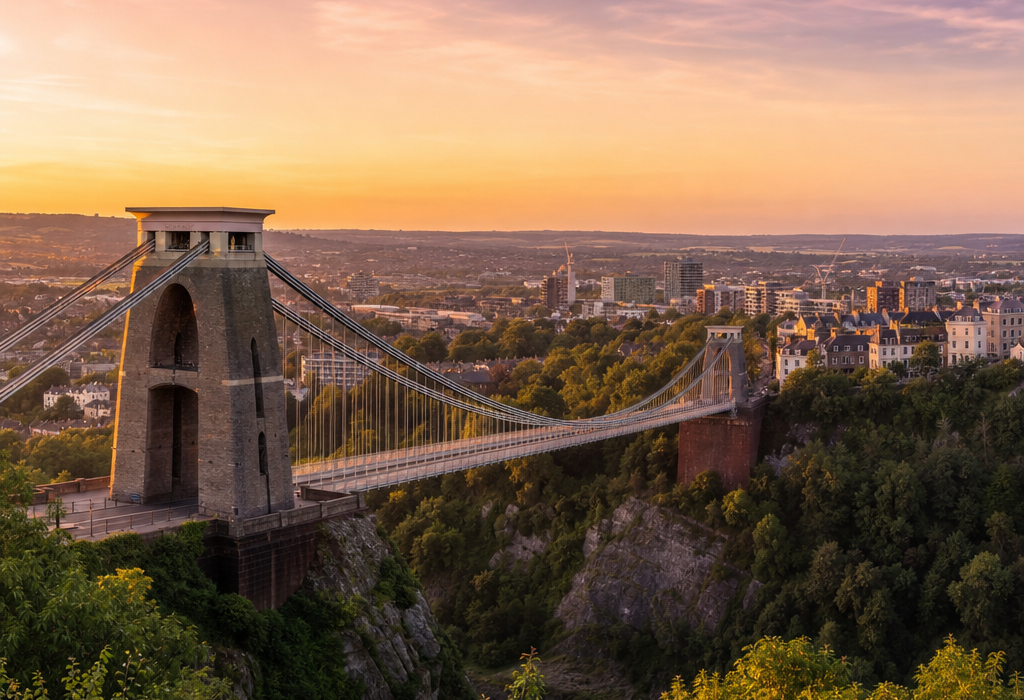
Bristol’s architecture tells the story of a prosperous port city that has continually reinvented itself. Historic highlights include the elegant Georgian terraces of Clifton, the grandeur of the Royal York Crescent, and the city’s many listed merchant houses and ecclesiastical buildings. The Clifton Suspension Bridge remains one of the area’s most iconic engineering and architectural landmarks, defining the city’s identity as much as any civic building.
In the central districts, you’ll find a rich mix of Victorian commercial streets, former warehouses and dockside buildings that reflect Bristol’s maritime past. The Harbourside has become a showcase for adaptive reuse, while modern landmarks such as the M Shed, the We The Curious building and the striking contemporary additions around Temple Quay demonstrate how older urban fabric can sit alongside newer forms. Bristol also has a strong reputation for inventive street art and experimental public realm design, which adds to its character and creative energy.
A notable historical fact is that Bristol was badly damaged during the Second World War, and post-war rebuilding reshaped parts of the city centre. That legacy, combined with later regeneration, means Bristol is especially interesting architecturally: it has layers of history, but also a city-centre identity that is still evolving.
Construction Costs & Trends
For a typical residential project in Bristol, a broad working estimate for construction costs is around £2,200 to £3,200 per square metre, depending on specification, access, structure, finishes and whether the scheme is a new build, extension or complex refurbishment. High-quality or bespoke work can exceed this range, particularly where specialist detailing, constrained sites or conservation requirements are involved. For homeowners and project planners, it is wise to allow contingency for planning changes, ground conditions and design development.
One of Bristol’s most important urban trends is continued regeneration and densification, especially around transport corridors, the waterfront and former industrial or commercial sites. There is also sustained demand for energy-efficient homes, sensitive retrofit and better use of brownfield land. In a city with strong environmental credentials and a competitive housing market, design quality and sustainability are not just nice-to-haves; they are central to value, planning success and long-term liveability.
Why City of Bristol is Perfect for Your Project
Bristol is an excellent place to build, renovate or redesign because it offers both character and opportunity. The city’s varied housing stock means there are possibilities ranging from careful period restoration to bold contemporary extensions and new homes. Its creative reputation also supports ambitious design thinking, while local infrastructure, universities and professional networks help bring together the right expertise for complex projects.
For project owners, Bristol’s main advantage is that well-considered architecture is genuinely valued here. Whether you are working on a terrace in Clifton, a family house in Redland, a dockside conversion or a plot closer to the city edge, the best outcomes usually come from balancing the area’s historic context with modern expectations for comfort, sustainability and space. That makes Bristol particularly rewarding for anyone who wants a home or development that feels rooted in place but thoroughly fit for contemporary life.
Find top professionals for your project in City of Bristol
Free and with no obligation / Takes under 5 minutes
Are you an architect or designer? Register for free! »