— Blog · 3 November 2026 · 3 min read
formal dining room ideas shaping 2026 interiors
A practical look at the latest formal dining room trends, from richer materials and softer lighting to smarter layouts and easy updates that do not require a full renovation.
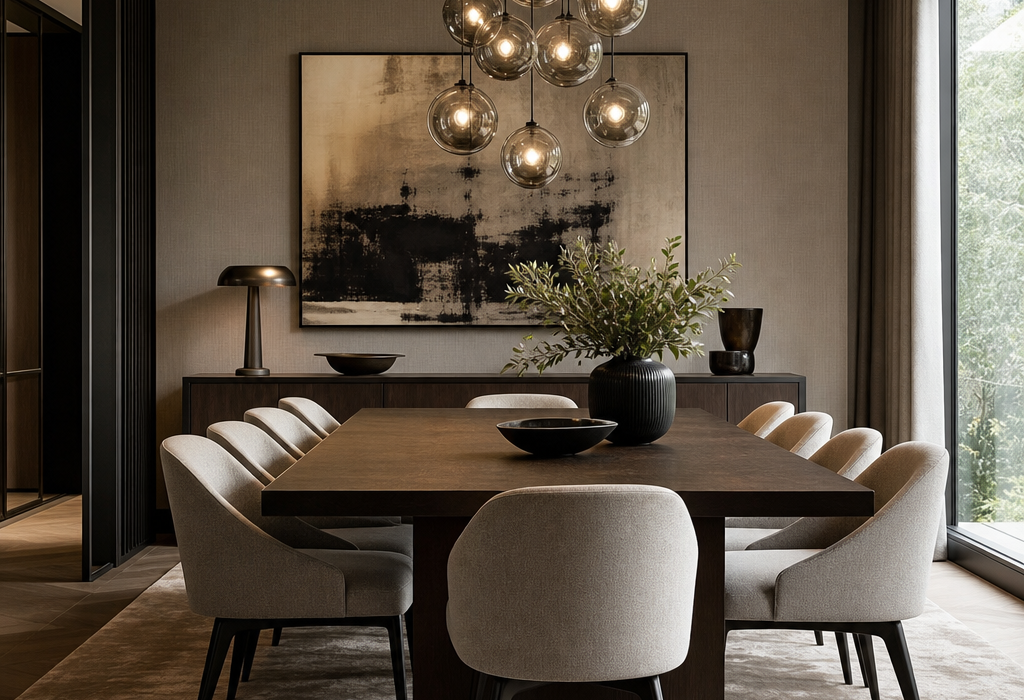
Material choices are getting warmer and more tactile
In a contemporary formal dining room, the strongest material trend is away from glossy perfection and towards surfaces that feel grounded and inviting. Think veneered timber, smoked oak, walnut, fluted wood panelling, honed stone and textured plaster rather than high-shine laminates or overly polished finishes. Upholstery is also becoming richer: wool blends, bouclé, linen-look fabrics and leather in muted tones all help the room feel comfortable without losing its sense of occasion. If you are updating a table, a timber top with a matt lacquer or a stone insert gives a more current look than a heavy, ornate finish.
Colour is moving towards depth and softness
Formal dining rooms are no longer dominated by stark white or heavy heritage reds. Current palettes favour earthy neutrals, charcoal, inky blue, olive, warm taupe and mushroom, often lifted with one deeper accent rather than lots of competing colour. In the UK, these shades work especially well in north-facing rooms, where richer paint colours can make the space feel cocooning rather than cold. A useful rule is to keep the main room colour calm and use contrast through joinery, chairs, artwork or a rug, so the dining room still feels refined but not overdone.
Layouts are becoming more flexible and less ceremonial
The traditional oversized dining suite is fading out. Instead, people are choosing layouts that allow the room to work for everyday life as well as hosting. A rectangular table around 180 cm to 240 cm long is often more practical than a very large statement piece, especially if the room also needs clear circulation. Leave roughly 90 cm around the table where possible so chairs can be pulled out comfortably. Bench seating on one side, a compact sideboard against the wall and fewer, better-proportioned chairs can make a formal dining room feel elegant without becoming cramped or overly staged.
Lighting and technology are becoming quieter but smarter
Lighting is one of the biggest shifts in the formal dining room. Oversized chandeliers are giving way to layered schemes with dimmable pendants, wall lights and discreet table lamps on a sideboard. Warm-white LEDs at around 2700K tend to suit dining spaces best, because they flatter food and faces without feeling harsh. Hidden technology is also increasingly expected: flush floor sockets for table lamps, discreet speaker placement and simple smart dimming controls that let the room switch from dinner party to homework space with ease. The aim is a room that feels atmospheric, not gadget-heavy.
What is fading out, and how to update without a full renovation
Heavy matching furniture sets, over-ornamented drapes, shiny finishes and formal pieces that are used only once a year are all losing favour. The new approach is more layered and personal, with a mix of old and new rather than a perfectly coordinated set. You can adopt the trend without renovating by repainting in a deeper shade, changing seat covers, adding a textured rug, swapping bright bulbs for dimmable warm light and introducing one statement material such as a fluted sideboard or marble tray. Even small changes, like replacing stiff window dressings with lined linen curtains or adding a lower, more contemporary pendant, can bring a formal dining room up to date while keeping its sense of ceremony.
Find top professionals for your formal dining room project
Free and with no obligation / Takes under 5 minutes
Are you an architect or designer? Register for free! »