— Ideas & inspiration
An indoor garden shaped by the desert
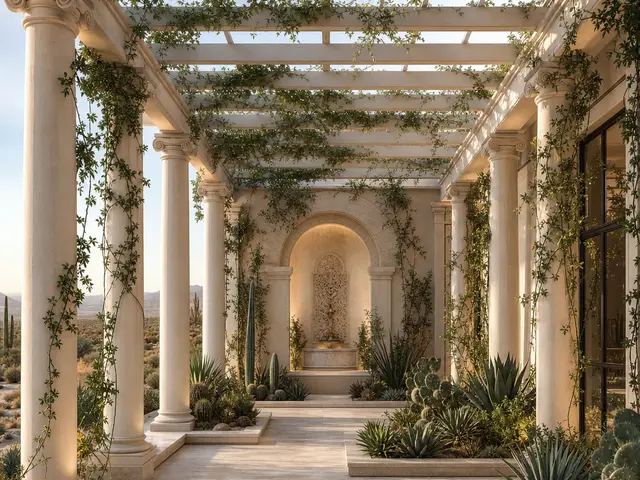
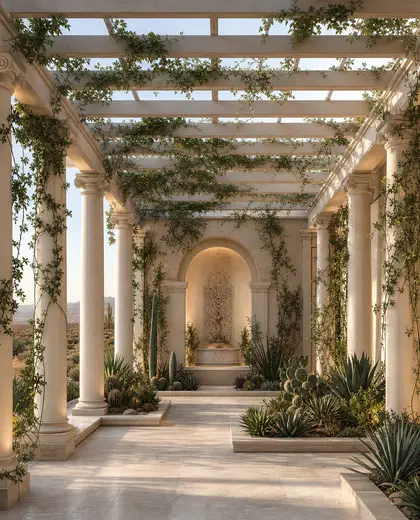
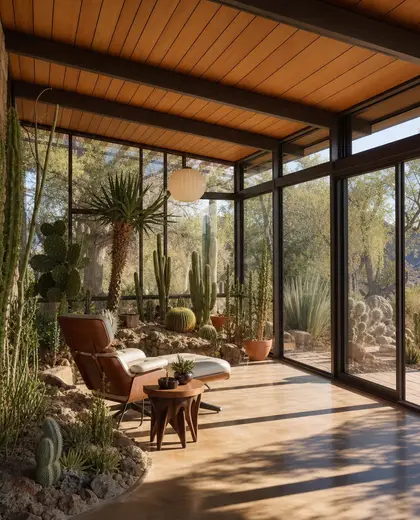
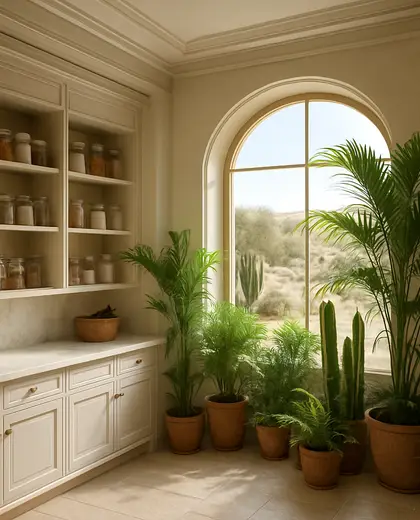
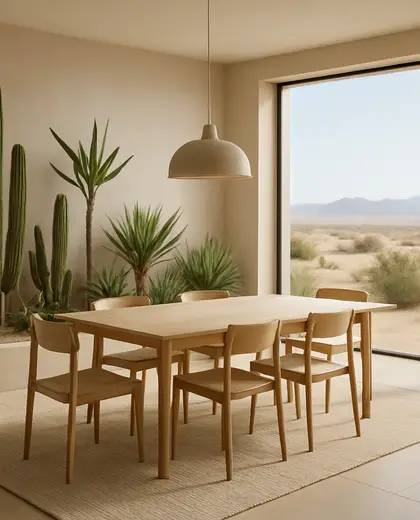
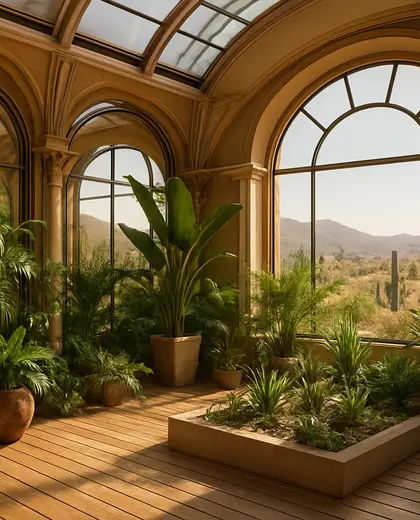
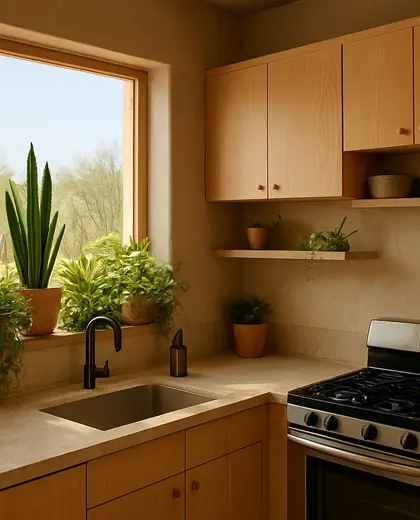
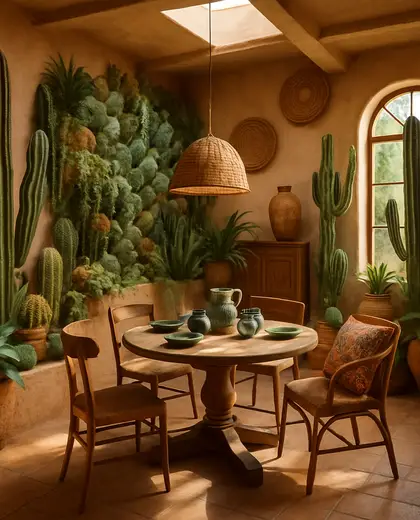
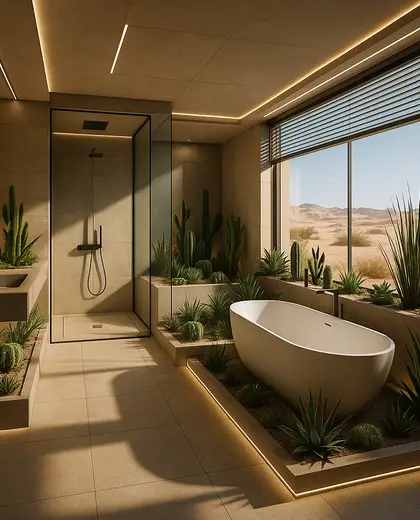
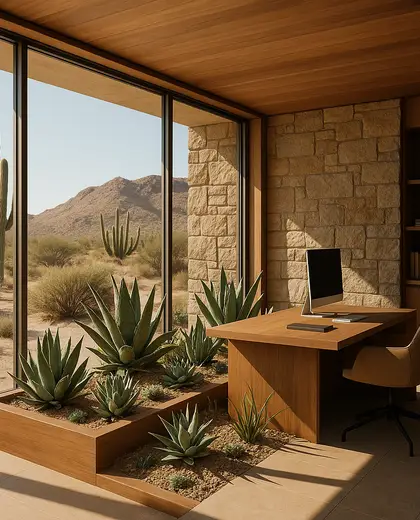
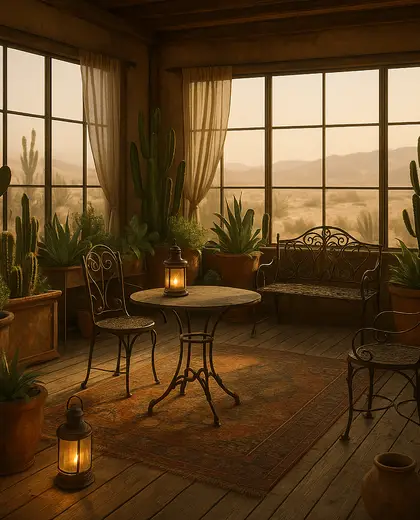
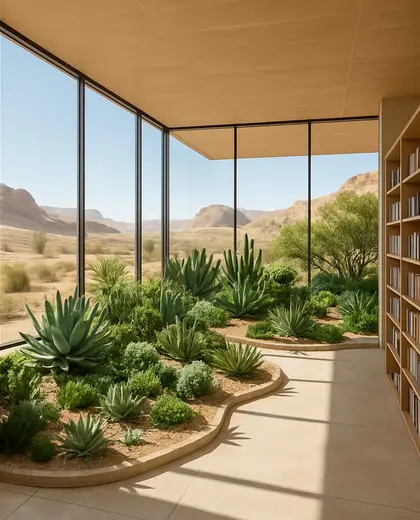
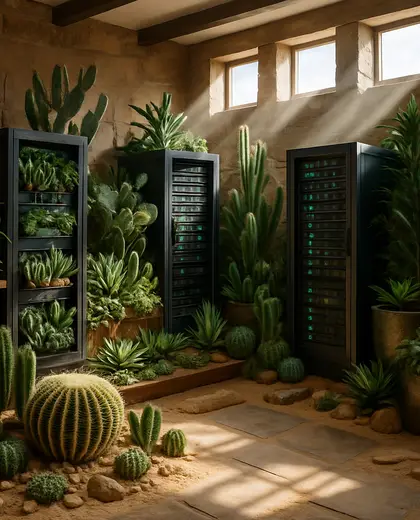
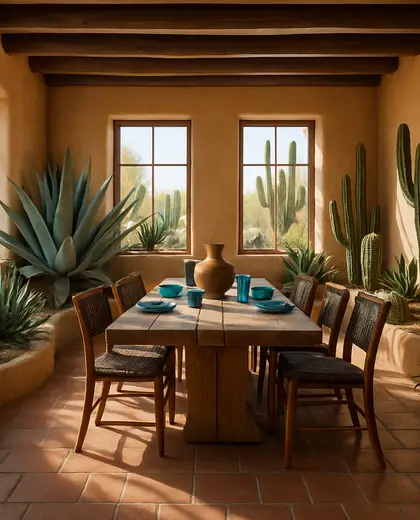
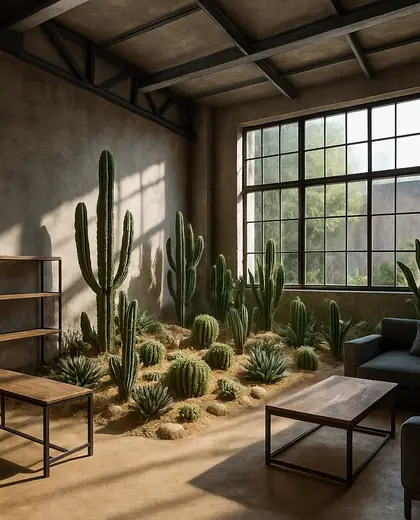
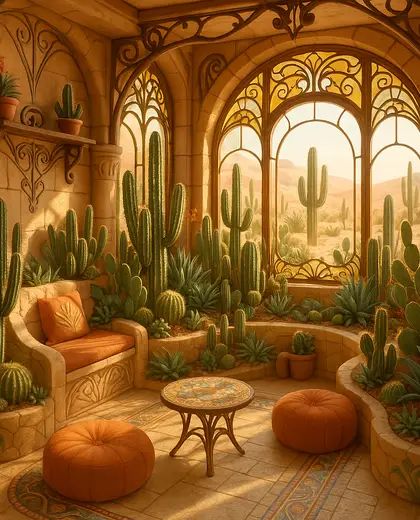
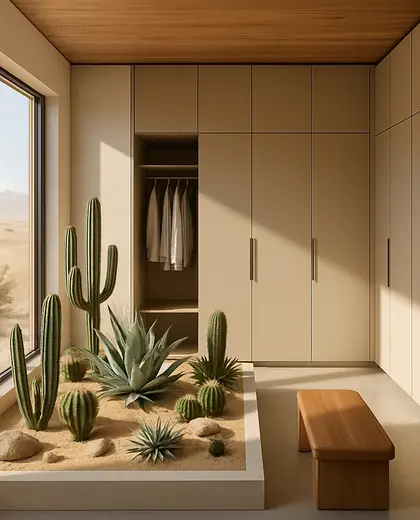
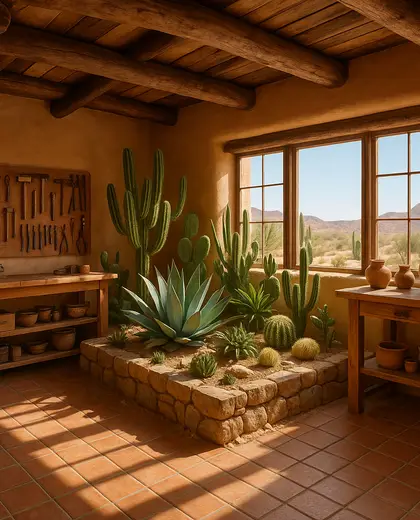
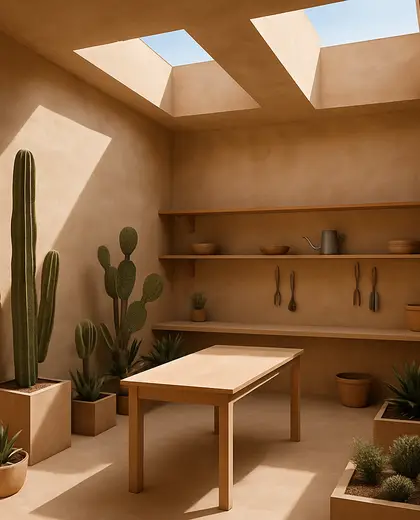
This composition pairs drought-tolerant planting with warm, arid finishes such as clay plaster, sand-toned stone, terracotta, and timber. It is defined by sculptural cacti, succulents, gravel, and sparse greenery set against bright light, open floor area, and simple low furniture. The result is a calm interior with a dry, sun-washed palette and a planted focal point.
- indoor garden
- desert
— References
References to explore
What plants work best for an indoor garden in a desert style?
Cacti, succulents, aloe, euphorbia, and other low-water plants fit the look well. If you want more softness, add a few drought-tolerant grasses or trailing plants in restrained quantities.
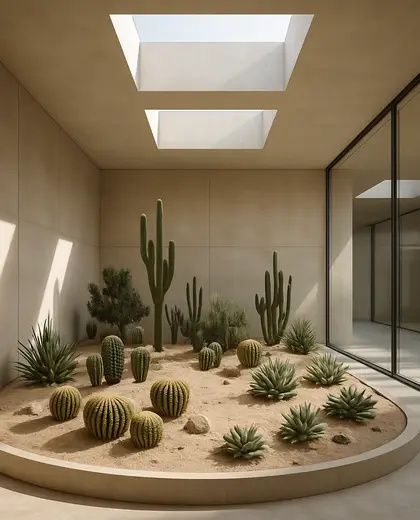
Does this style need a lot of sunlight?
It usually works best with strong natural light, but it can be adapted to moderate light with careful plant selection. The design should still feel airy and sunlit, even if the room is not south-facing.
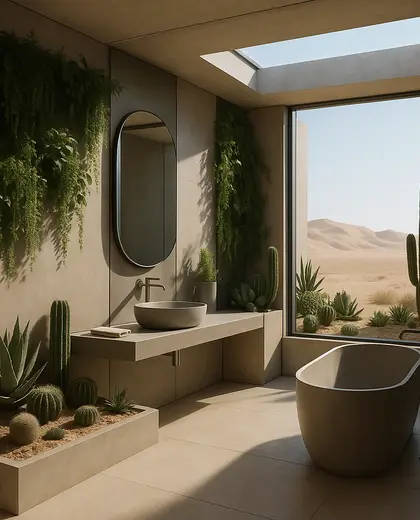
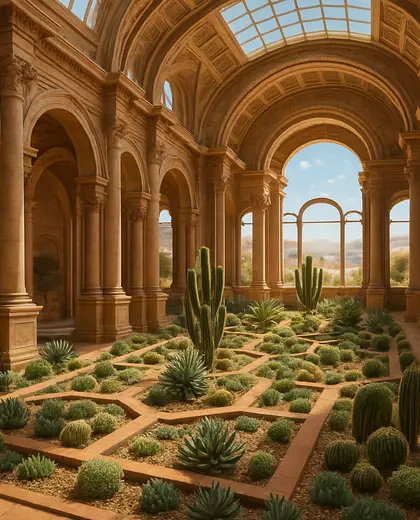
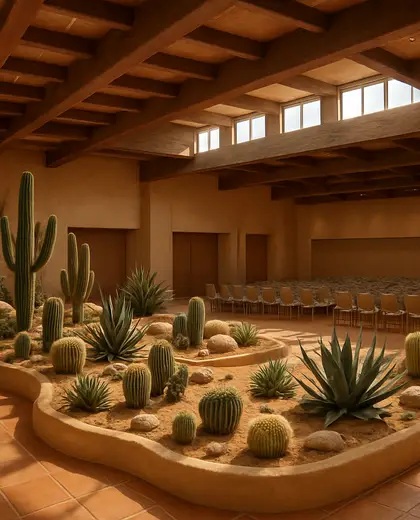
How do I keep it from feeling too sparse or harsh?
Use layered textures, rounded pots, and a few warmer materials like wood, linen, or clay. Keeping the planting clustered and adding one or two softer forms helps balance the dry, minimal character.
— The style
What defines it
Clay plaster, terracotta, limestone or travertine, textured wood, gravel, and ceramic planters.
Sand, beige, ochre, rust, muted green, and chalky white with very little visual contrast.
Indoor planting, natural daylight, simple seating, and desert-inspired surfaces and textures.
— Professionals
Who has already built it
- slade slade design3d renderers · Bristol · 6 projectsView profile →
- marcela tossiinterior designers · London · 6 projectsView profile →
- maria mateaarchitects · London · 7 projectsView profile →
- paquis norris group limitedbuilders · Reading · 3 projectsView profile →
— Questions
Frequently asked questions
What plants work best for an indoor garden in a desert style?
Cacti, succulents, aloe, euphorbia, and other low-water plants fit the look well. If you want more softness, add a few drought-tolerant grasses or trailing plants in restrained quantities.
Does this style need a lot of sunlight?
It usually works best with strong natural light, but it can be adapted to moderate light with careful plant selection. The design should still feel airy and sunlit, even if the room is not south-facing.
How do I keep it from feeling too sparse or harsh?
Use layered textures, rounded pots, and a few warmer materials like wood, linen, or clay. Keeping the planting clustered and adding one or two softer forms helps balance the dry, minimal character.