— Ideas & inspiration
Indoor garden
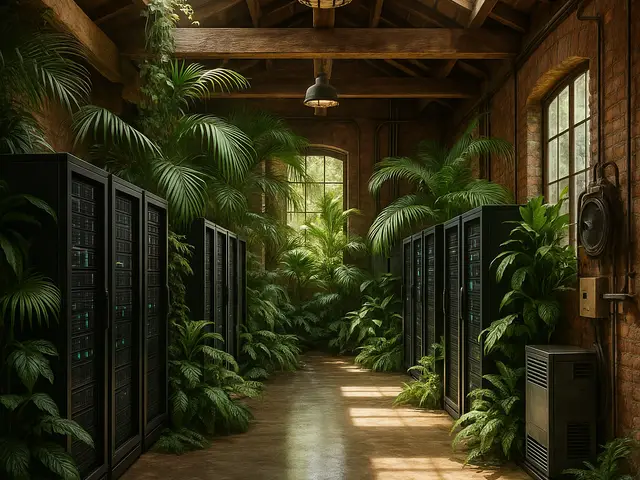
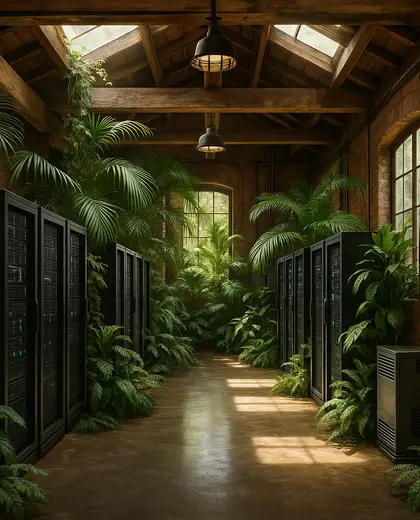
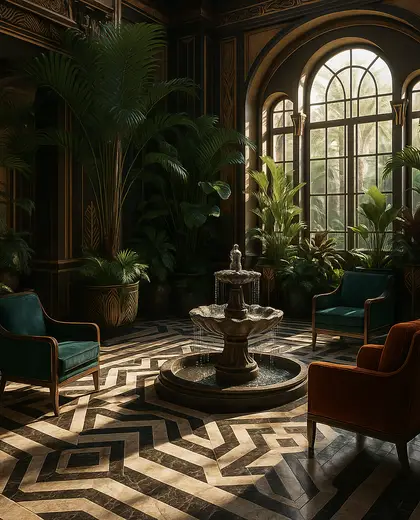
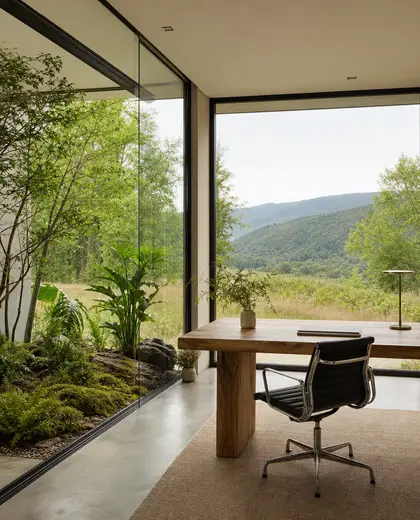
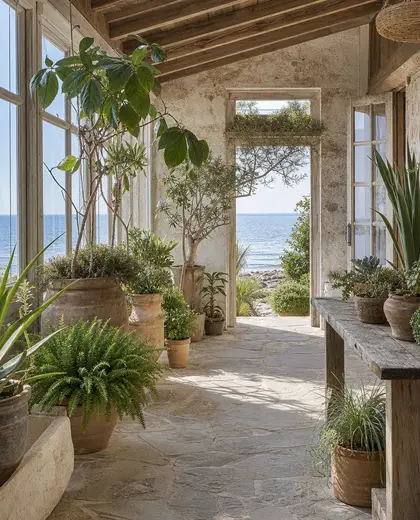
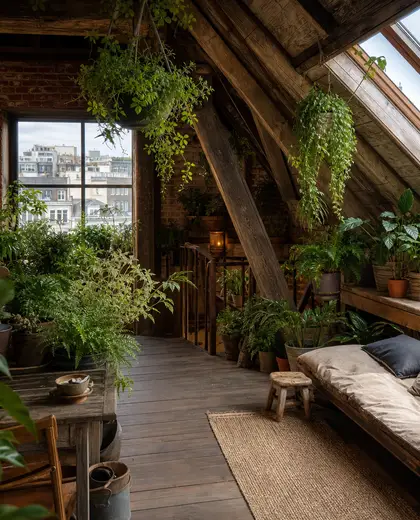
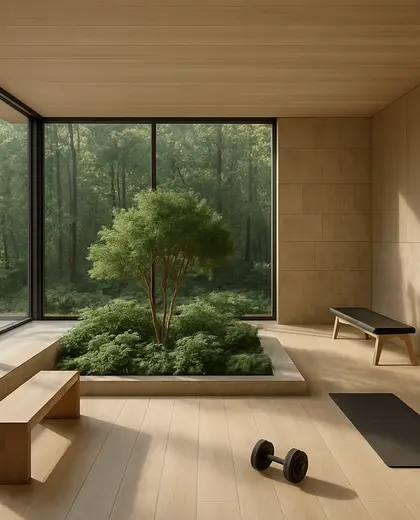
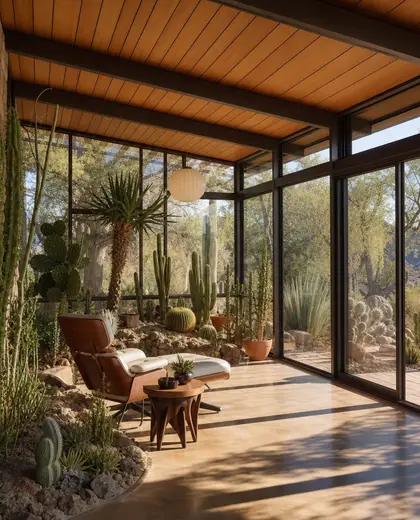
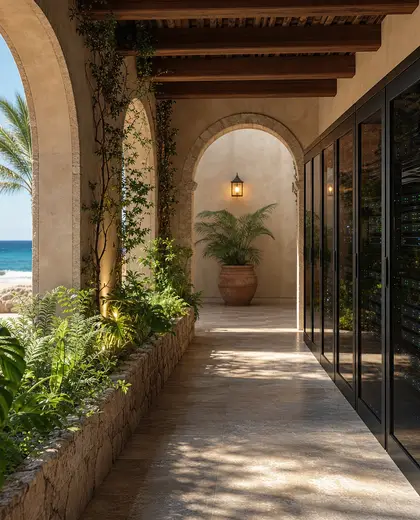
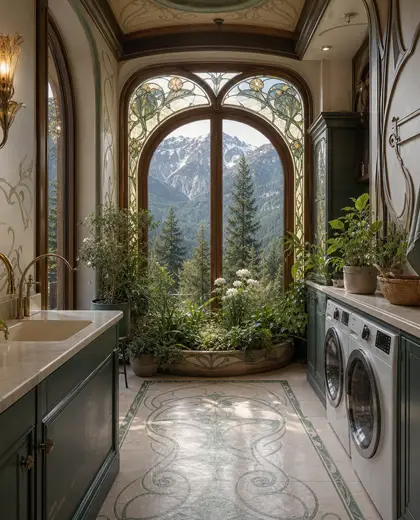
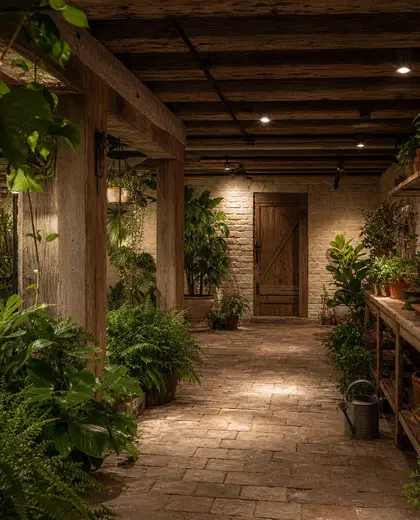
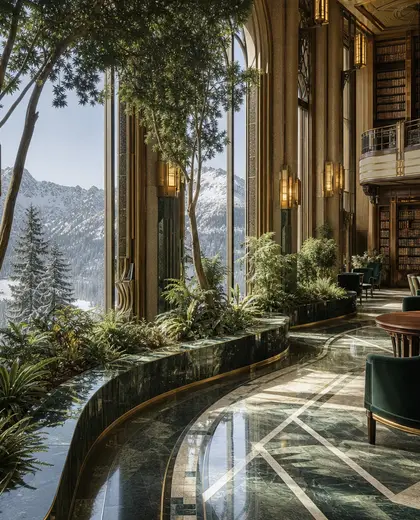
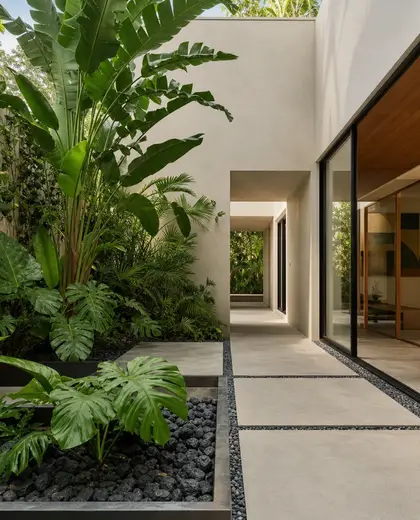
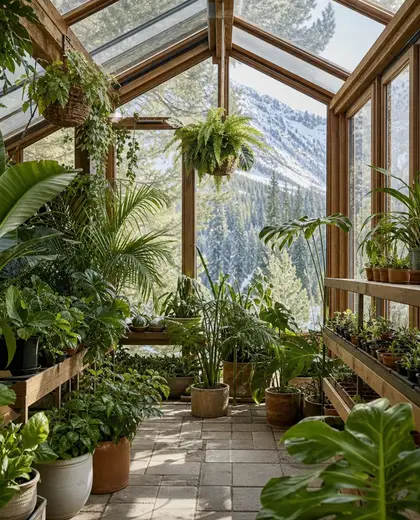
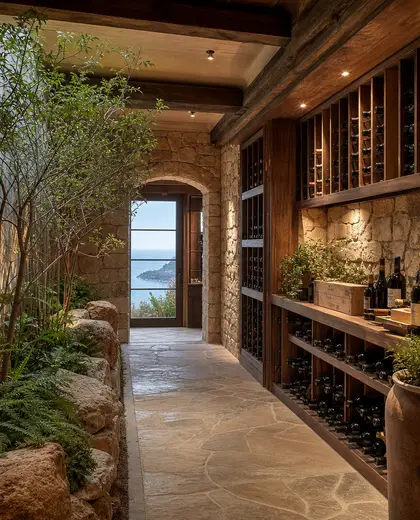
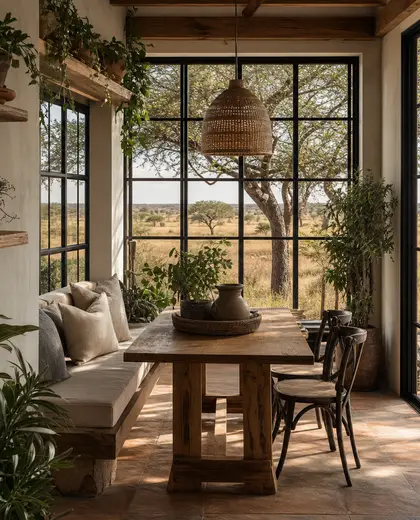
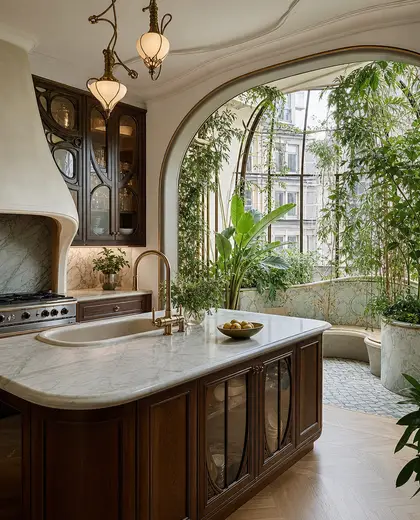
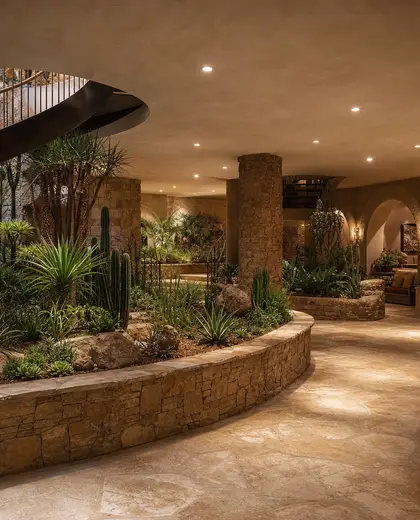
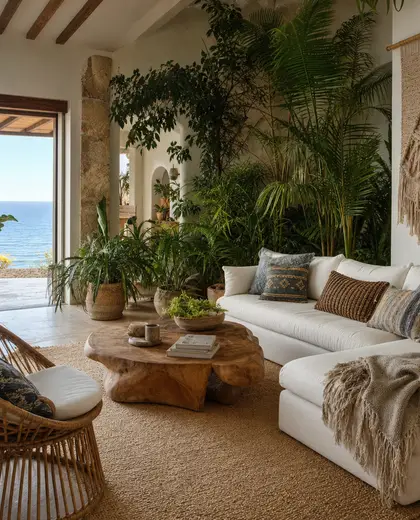
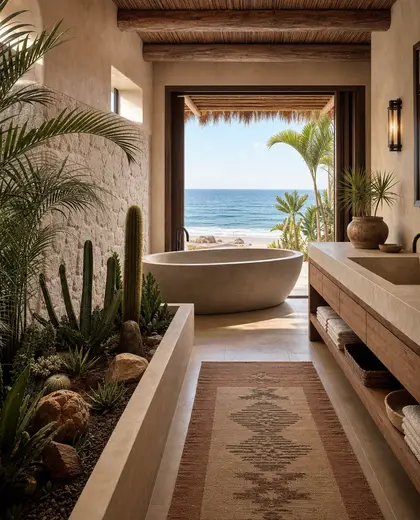
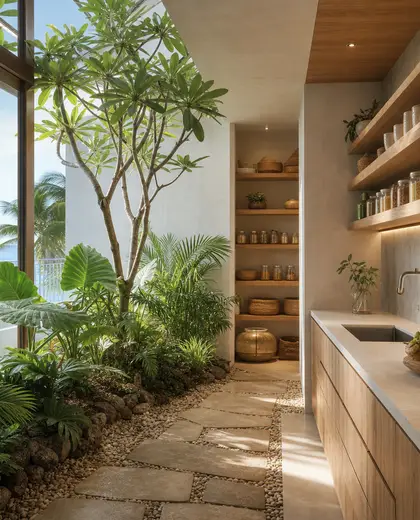
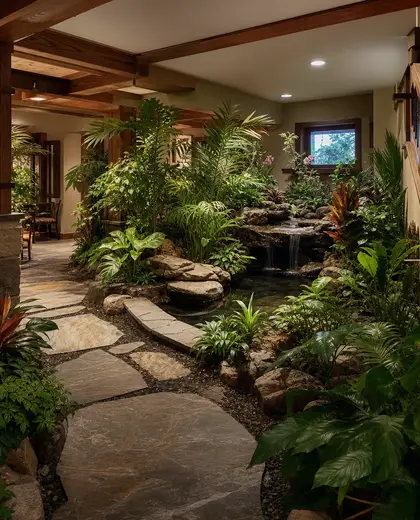
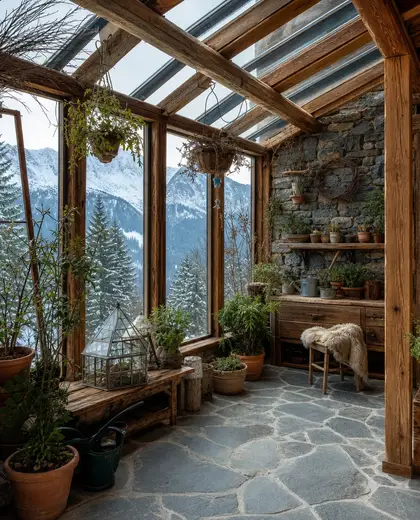
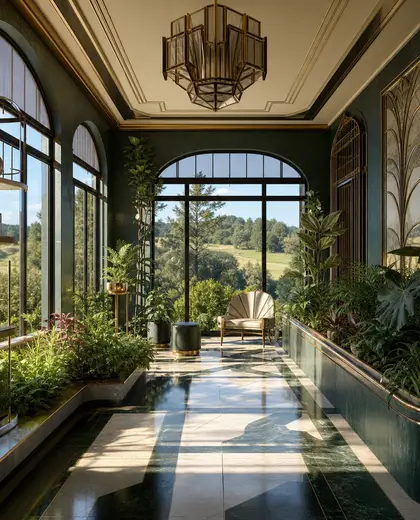
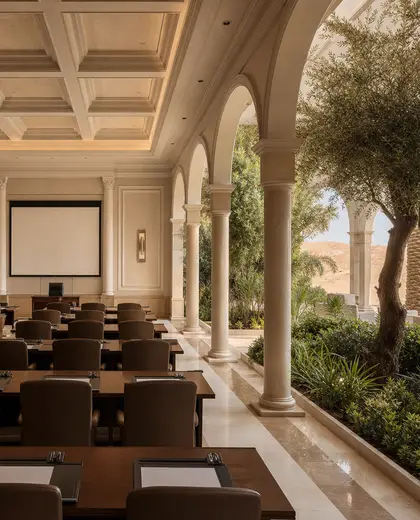
An indoor garden is a planted composition brought inside through living trees, large potted plants, moss, stone, and moisture-tolerant finishes. It typically uses natural materials such as timber, terracotta, concrete, metal planters, and glass, with a palette centered on greens, earth tones, and soft neutrals. The space is defined by daylight, ventilation, and a clear relationship between planting, flooring, and surrounding walls.
- indoor garden
— References
References to explore
Do I need a lot of natural light for an indoor garden?
Most indoor gardens need good daylight, but the amount depends on the plants you choose. Shade-tolerant species can work in brighter indirect light, while sun-loving plants usually need direct sun or a skylight.
What materials hold up best around indoor planting and moisture?
Surfaces that tolerate occasional water are important: sealed stone, concrete, tile, treated timber, and corrosion-resistant metal. It also helps to use waterproof liners and proper drainage under planters.
Can an indoor garden work in a small home?
Yes, as long as the planting is scaled carefully. A narrow lightwell, a corner grouping of pots, or a built-in planter can create the effect without taking over the room.
— The style
What defines it
Terracotta, stone, timber, concrete, glass, and metal planters; often paired with moss, gravel, and moisture-resistant surfaces.
Green foliage with warm earth tones, off-white, sand, charcoal, and muted brown; accents stay subdued so the planting reads clearly.
Works well with courtyards, skylights, sunrooms, minimalist interiors, biophilic layouts, and calm natural finishes.
— Professionals
Who has already built it
- vorbild architecturearchitects · 6 projectsView profile →
- kerem erbagci3d renderers · London · 9 projectsView profile →
- paquis norris group limitedbuilders · Reading · 3 projectsView profile →
- LoftRobejoiners · Guildford · 4 projectsView profile →
— Questions
Frequently asked questions
Do I need a lot of natural light for an indoor garden?
Most indoor gardens need good daylight, but the amount depends on the plants you choose. Shade-tolerant species can work in brighter indirect light, while sun-loving plants usually need direct sun or a skylight.
What materials hold up best around indoor planting and moisture?
Surfaces that tolerate occasional water are important: sealed stone, concrete, tile, treated timber, and corrosion-resistant metal. It also helps to use waterproof liners and proper drainage under planters.
Can an indoor garden work in a small home?
Yes, as long as the planting is scaled carefully. A narrow lightwell, a corner grouping of pots, or a built-in planter can create the effect without taking over the room.