— Blog · 22 July 2026 · 3 min read
A calm Japandi living room: how to create the look at home
Discover how to design a Japandi living room with soft materials, low furniture, quiet colour, and the small details that make the room feel serene and intentional.
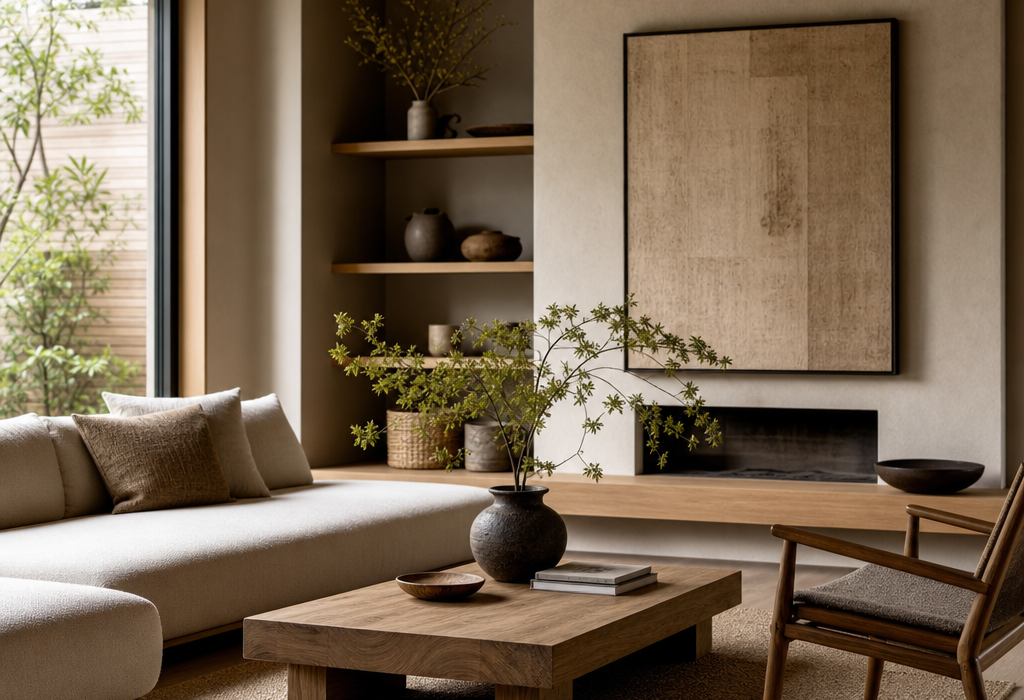
Start with the Japandi mindset
Japandi blends Japanese restraint with Scandinavian warmth, so the key is to edit rather than add. A successful living room feels calm, uncluttered and purposeful, with only the pieces you genuinely use. Think low visual noise, honest materials and a layout that leaves generous breathing room around sofas, tables and walkways. In a typical UK living room, that means resisting the urge to fill every corner and instead letting the architecture, natural light and texture do the work.
Choose a quiet palette and tactile materials
Keep the colour scheme soft and grounded: warm white, greige, oatmeal, stone, muted taupe and deep charcoal all work well, with occasional accents in sage, ink blue or weathered black. Walls painted in a matte or flat finish help soften light and hide imperfections, which is useful in older British homes. For materials, favour oak, ash, walnut, linen, wool, paper, ceramic and stone. A pale timber floor, natural jute or wool rug, and linen cushions will instantly bring the look together without making the room feel themed.
Select furniture with low, simple lines
Furniture should feel light in profile and comfortable in use. Choose a sofa with clean lines, slim arms and understated upholstery in woven linen or textured cotton; a two- or three-seater is often enough for a modest living room, paired with one relaxed armchair rather than a bulky corner suite. Coffee tables work best in wood, stone or a mix of the two, with rounded edges that soften the room. Storage should disappear into the background, so look for sideboards, shelves or cabinets in timber with plain fronts, minimal handles and well-proportioned legs.
Layer lighting for softness and atmosphere
Japandi lighting should feel warm, low-glare and relaxed. Use a combination of ceiling light, floor lamp and table lamp rather than relying on one harsh fitting. Paper lanterns, simple fabric shades and slim timber or black metal bases all suit the style. In the evening, choose warm-white bulbs and position lighting so it washes the walls and highlights texture rather than shining directly into the room. If your living room has a fireplace or alcove, a small lamp or discreet LED strip can add a gentle glow without disturbing the calm mood.
Finish with restrained details that feel lived-in
The final layer is all about quiet detail. Add one large artwork rather than several small pieces, and keep frames slim and simple. A handmade ceramic vase, a single branch in water, woven baskets for throws, and a couple of well-chosen cushions are usually enough. Curtains in washed linen, woven blinds or plain Roman blinds keep the window treatment soft and natural. Aim for a space that looks collected over time, not decorated all at once: a Japandi living room should feel serene, practical and slightly imperfect in a way that makes it inviting.
Find top professionals for your living room project
Free and with no obligation / Takes under 5 minutes
Are you an architect or designer? Register for free! »