— Blog · 22 September 2026 · 3 min read
Japandi sauna calm: how to create a serene, pared-back retreat
A practical Japandi style guide for a sauna: natural timber, calm proportions, soft lighting and the small details that make the space feel quietly luxurious.
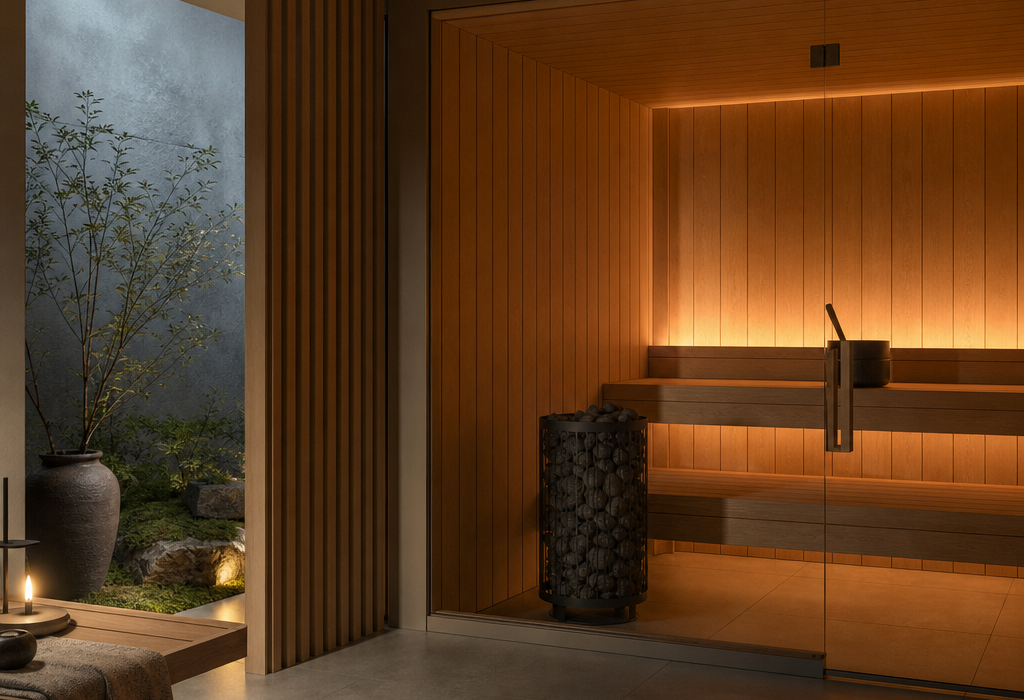
Keep the sauna calm, simple and beautifully balanced
Japandi works so well in a sauna because it combines the warmth of Scandinavian timber with the restraint of Japanese-inspired simplicity. The look should feel uncluttered, meditative and honest: no over-decoration, no visual noise, just clean lines, natural textures and a sense of quiet order. Aim for a space that feels restorative the moment you step inside, with every element doing a practical job as well as looking considered.
Choose honest materials with a soft, tactile finish
For the cladding, benches and backrests, light-toned timber is the foundation of the look. Aspen, alder and thermally treated woods are popular choices because they stay comfortable to the touch and suit the pale, soothing palette. Keep the grain visible rather than heavily stained, and avoid glossy finishes. If you want a slightly darker note, introduce charcoal or smoked timber sparingly, perhaps on a feature wall or the lower bench, so the space still feels airy rather than heavy.
Work with a muted palette of warm neutrals
The Japandi palette should stay close to nature: pale oak, sand, stone, oat, soft grey and muted black accents. In a sauna, the safest approach is to let the wood lead and use colour in the smallest possible doses. A dark handle, a black-stained accessory shelf or a slim bronzed detail can give definition without breaking the calm. If the sauna opens onto a wash area or changing space, carry the same tones through so the transition feels seamless and composed.
Keep seating low, simple and carefully proportioned
Benches should feel light in profile and generous in use, with straight or gently rounded edges and no fussy joinery. A two-tier layout can work well if the room height allows, giving the option of a cooler lower seat and a warmer upper level, but the overall effect should remain visually quiet. Leave enough space to move comfortably between benches and heater, and keep the layout open so the room breathes. Built-in timber headrests, neat step stools and slim backrests help the sauna feel intentional rather than overfurnished.
Use lighting and small details to complete the mood
Lighting in a Japandi sauna should be soft, indirect and discreet. Choose warm, dimmable light behind bench backs, under seating or tucked behind timber fins so the glow is gentle and glare-free. Frosted glass, slatted screens and concealed fittings suit the style better than anything decorative. Finish with restrained details that feel crafted: a simple ladle and bucket in natural wood, a linen or felt robe hook outside the hot zone, a stone tray for essential oils and a tidy, hidden storage niche. The result is a sauna that feels serene, timeless and deeply relaxing.
Find top professionals for your sauna project
Free and with no obligation / Takes under 5 minutes
Are you an architect or designer? Register for free! »