— Ideas & inspiration
A contemporary indoor garden
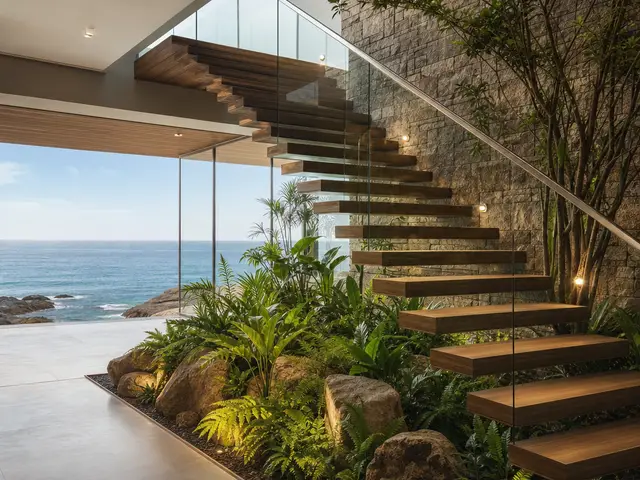
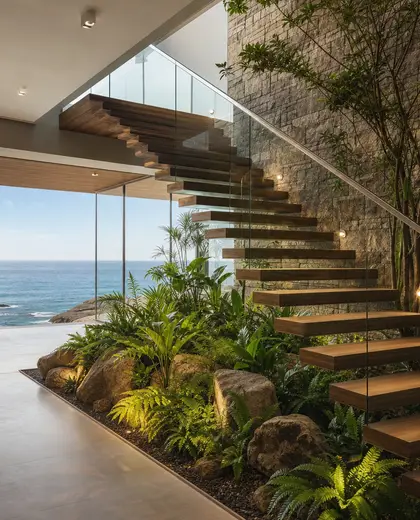
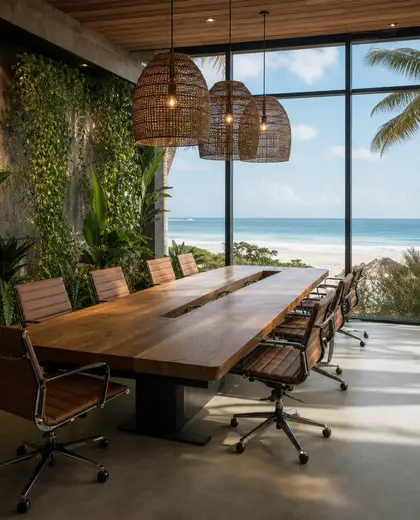
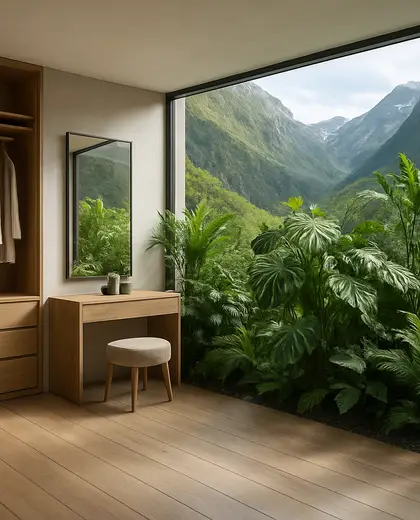
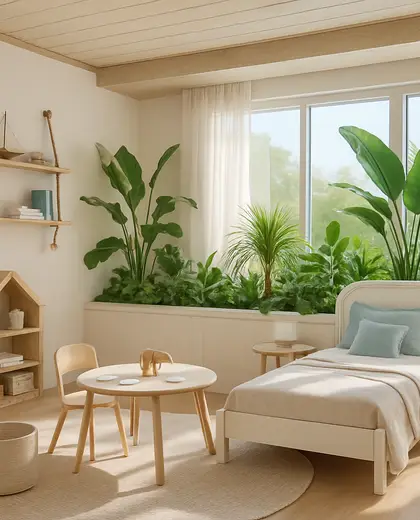
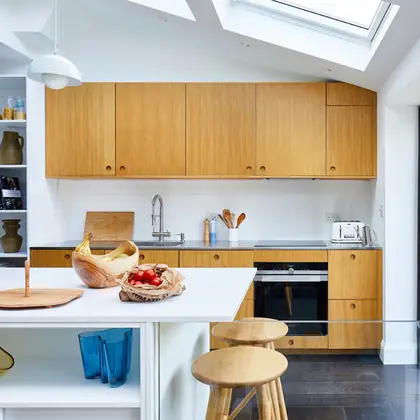
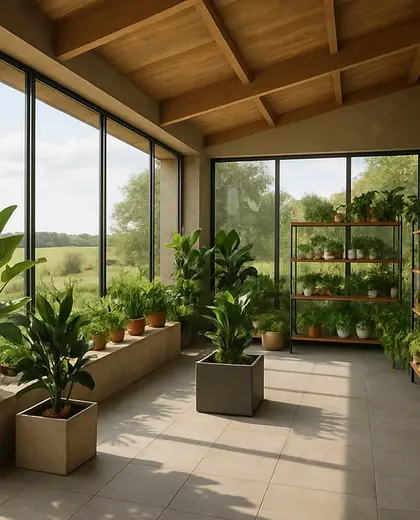
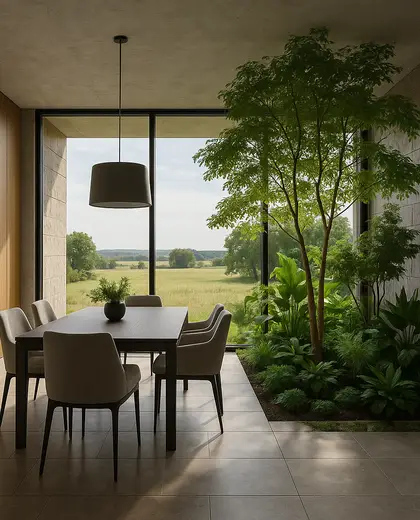
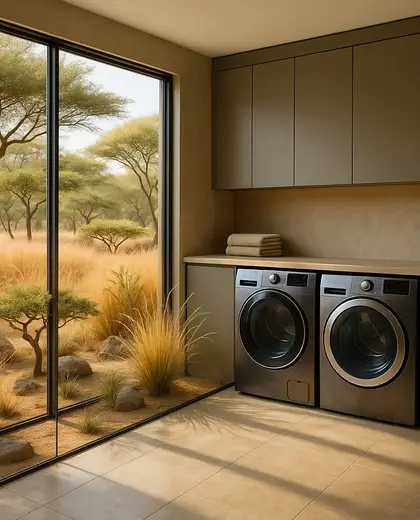
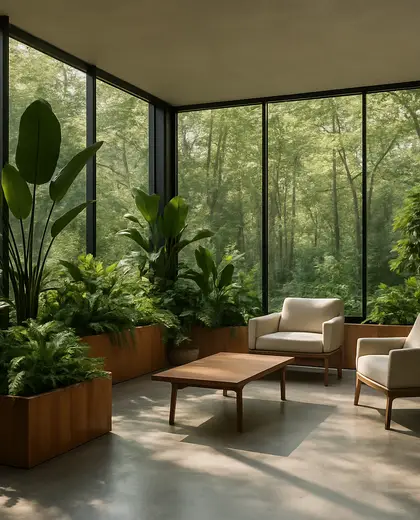
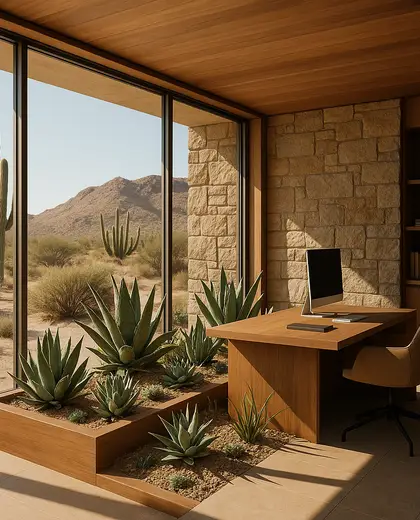
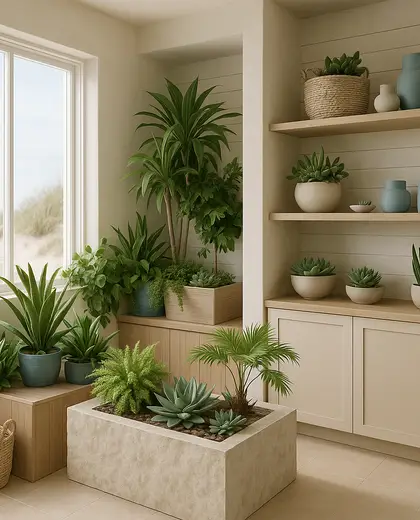
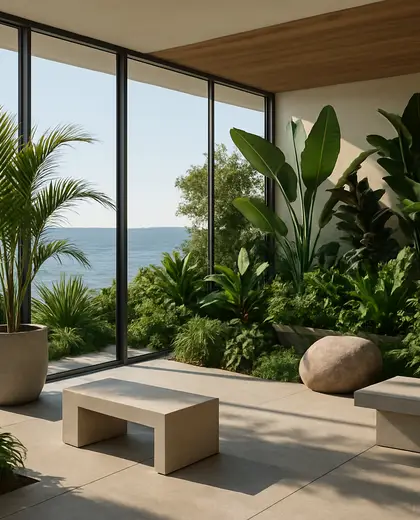
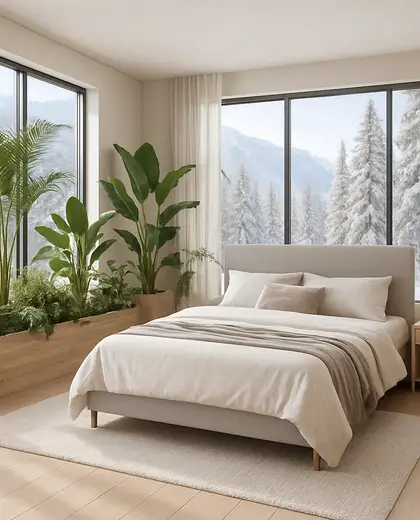
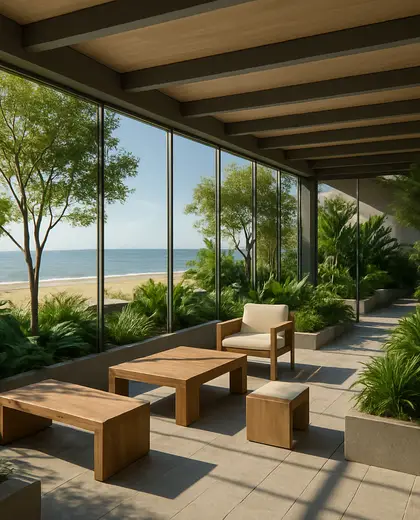
A contemporary indoor garden is defined by clean-lined planting zones, restrained detailing, and a balance of living greenery with hard surfaces like concrete, steel, glass, and smooth timber. The palette usually stays neutral and muted, with white, gray, black, and warm natural tones allowing foliage to become the main visual contrast. Typical elements include built-in planters, large-format glazing, indirect light, and minimal furniture that keeps the planting feature central.
- indoor garden
- contemporary
— References
References to explore
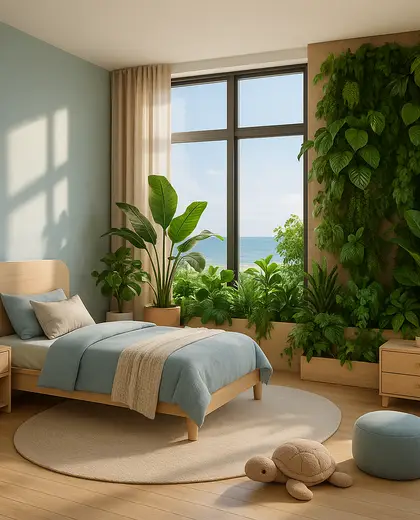
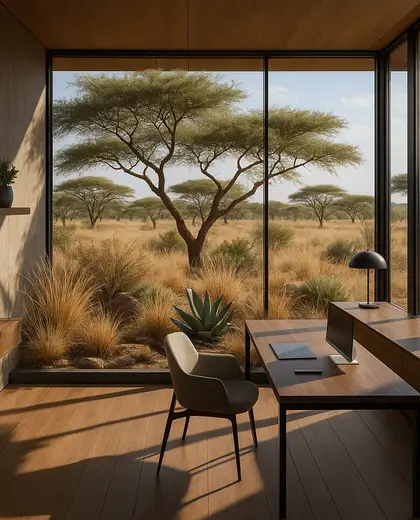
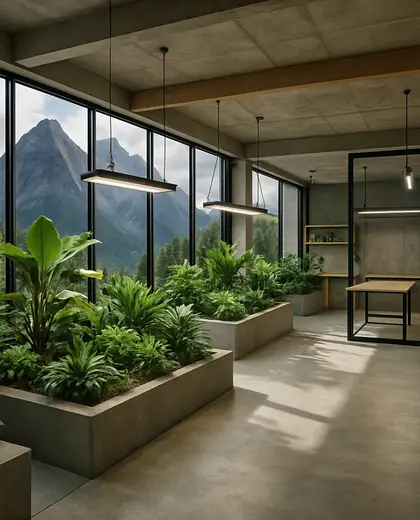
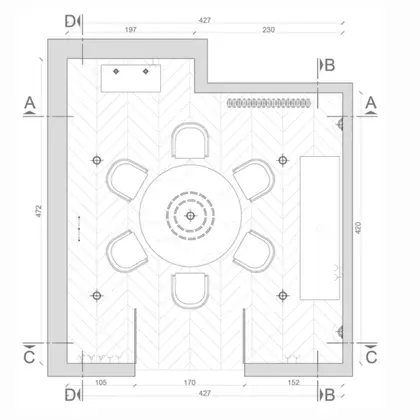
How do I keep a contemporary indoor garden looking tidy?
Use built-in planters, simple container shapes, and a limited plant palette. Drainage, concealed irrigation, and easy-access maintenance paths help keep the space neat.
— The style
What defines it
Concrete, powder-coated metal, glass, stone, and natural wood are common, often paired with ceramic or integrated planter finishes.
Mostly neutral: white, gray, charcoal, black, and warm wood tones, with green plants providing the strongest color.
Works well with minimal interiors, open-plan living, biophilic design, and spaces that connect to terraces or courtyards.
— Professionals
Who has already built it



- maria mateaarchitects · London · 4 projectsView profile →
- paquis norris group limitedbuilders · Reading · 3 projectsView profile →
- LoftRobejoiners · Guildford · 4 projectsView profile →
- Beneito Faurelighting designers · 2 projectsView profile →
— Explore
Keep exploring
— ARTICLES
Related reading
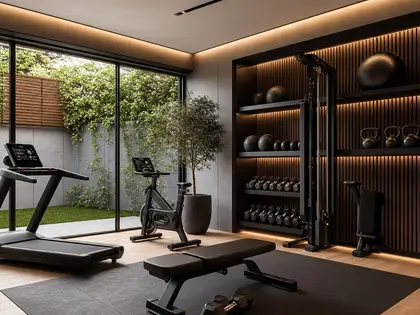
Home gym budget guide: what a realistic renovation costs in the UK
A practical UK budget guide for renovating a home gym, with realistic cost ranges, smart places to invest, and the hidden extras people often forget.
Read article →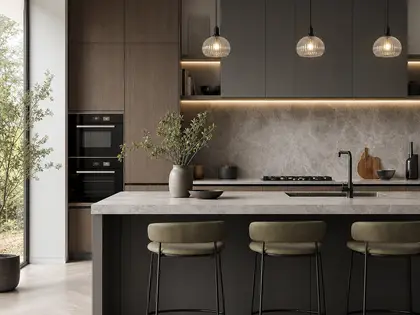
Kitchen planning made simple: a practical place to start
A practical starting guide for planning a kitchen project, from defining what you need to locking key decisions before work begins.
Read article →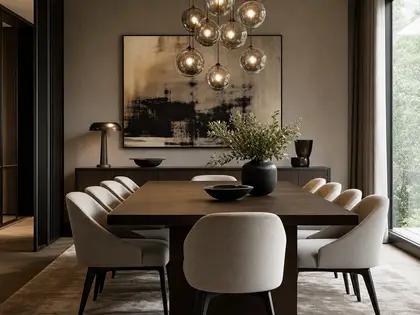
formal dining room ideas shaping 2026 interiors
A practical look at the latest formal dining room trends, from richer materials and softer lighting to smarter layouts and easy updates that do not require a full renovation.
Read article →— Questions
Frequently asked questions
How do I keep a contemporary indoor garden looking tidy?
Use built-in planters, simple container shapes, and a limited plant palette. Drainage, concealed irrigation, and easy-access maintenance paths help keep the space neat.
What plants suit this style best?
Architectural plants with clean forms usually fit well, such as ferns, snake plants, ficus, olive trees in large pots, or layered tropical species depending on light.
Does this style need a lot of natural light?
More light helps, but it is not mandatory. With the right plant selection and layered artificial lighting, the composition can work in bright rooms, shaded corners, or enclosed interiors.