— Ideas & inspiration
Art Deco in the desert
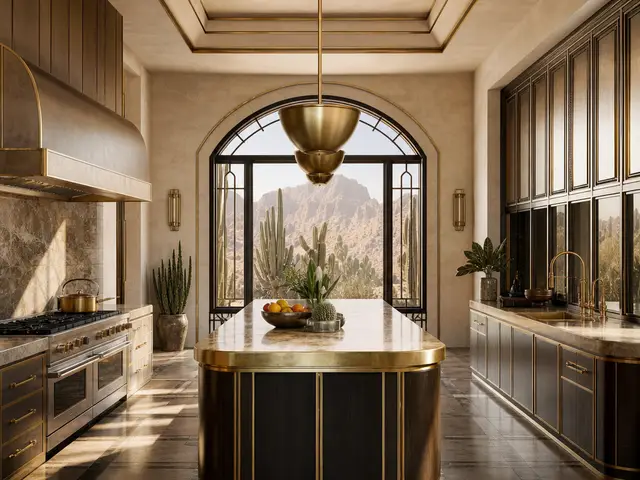
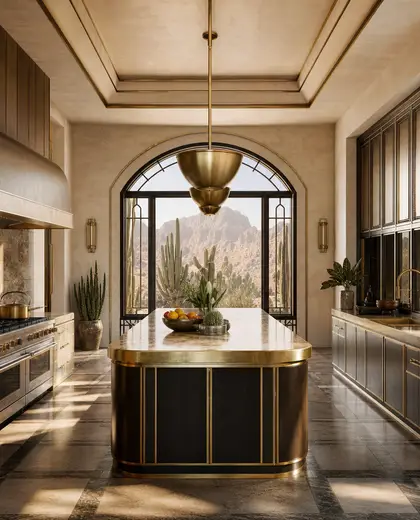
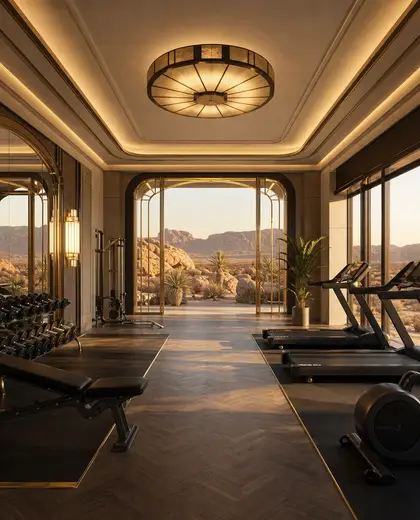
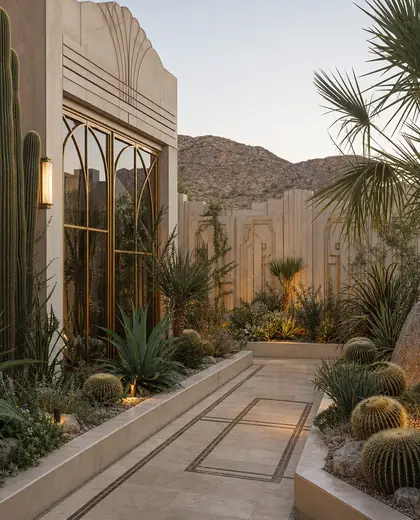
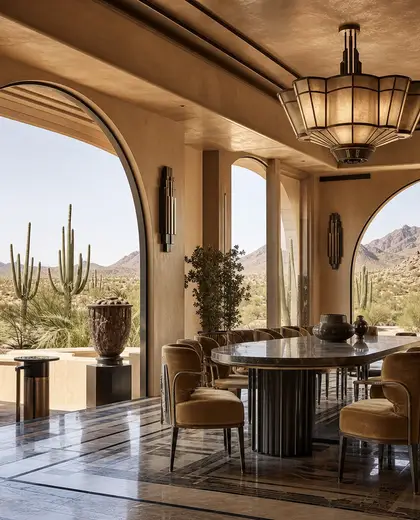
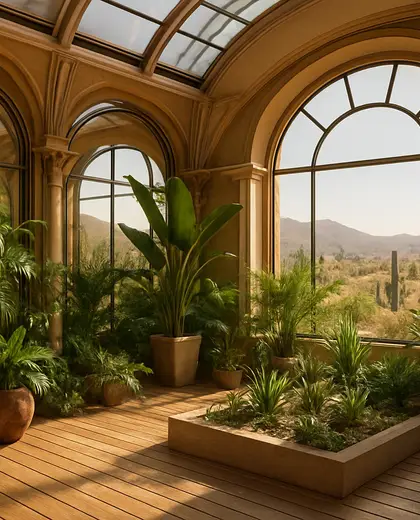
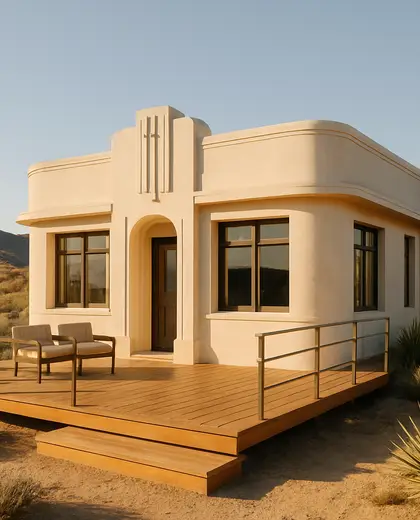
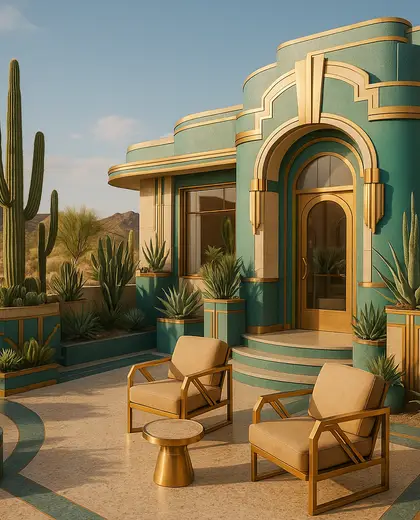
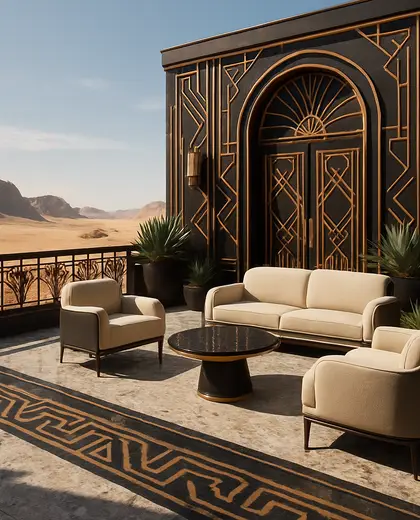
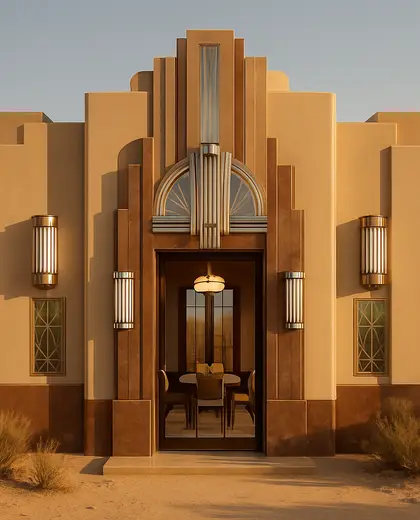
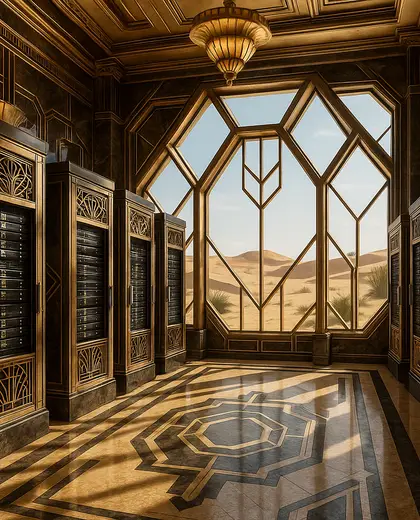
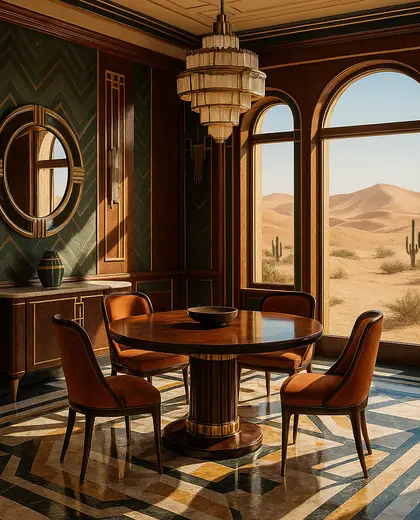
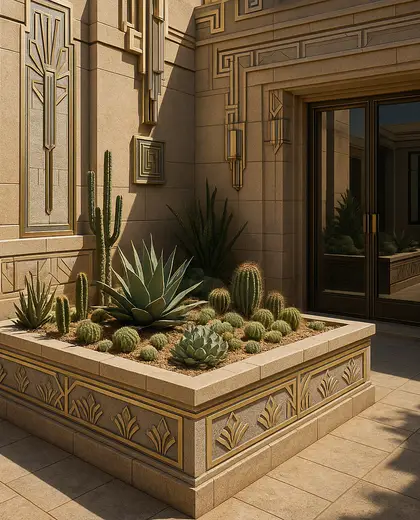
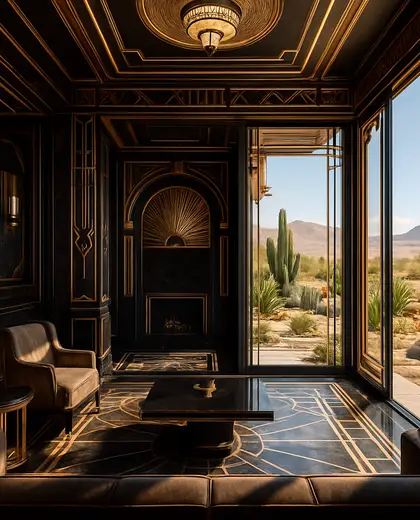
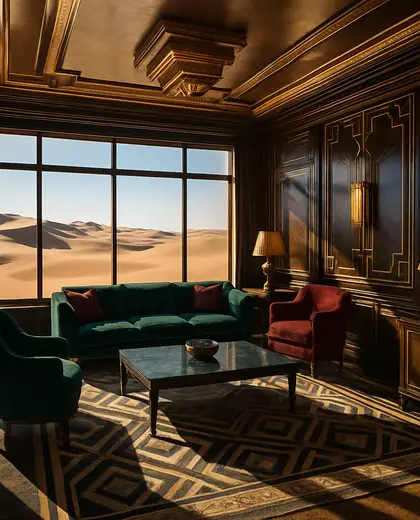
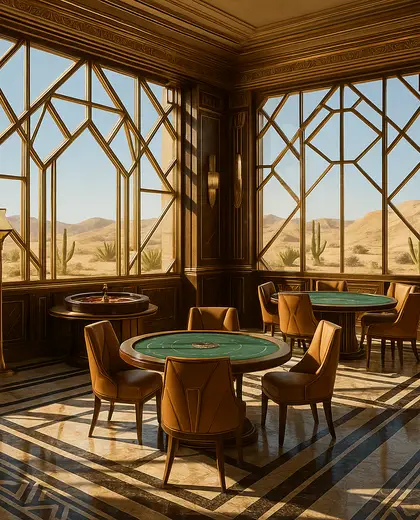
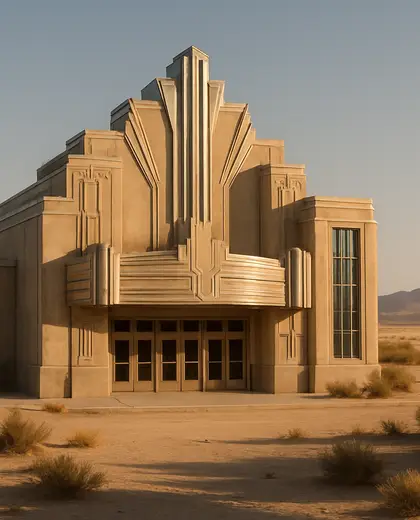
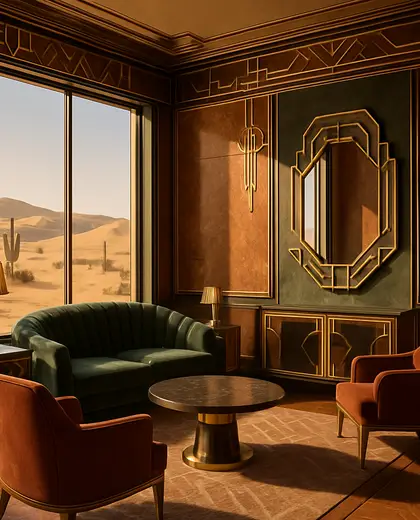
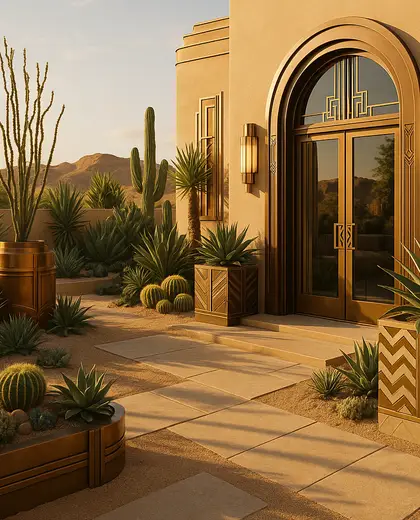
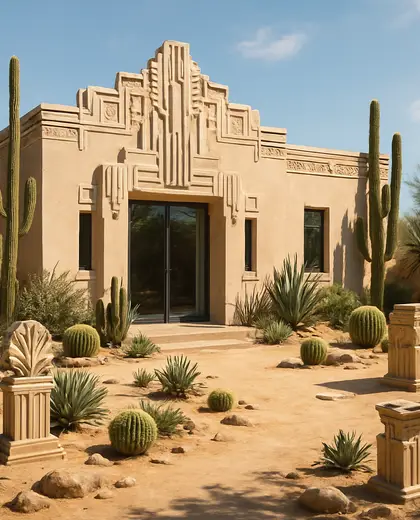
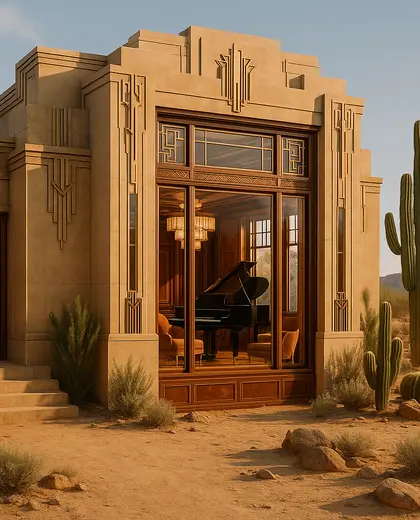
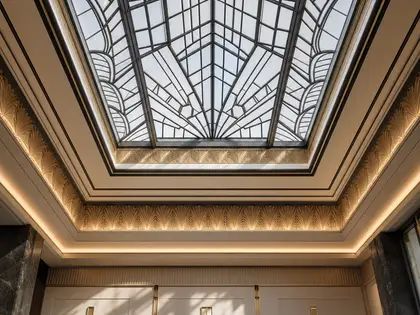
This composition pairs Art Deco geometry with desert-light restraint. It often uses sunbaked stone, stucco, brass, glazed tile, and patterned metalwork, with strong lines, stepped forms, and rounded corners softened by warm natural textures. The palette leans toward sand, terracotta, cream, bronze, and muted teal or black accents.
- art deco
- desert
— References
References to explore
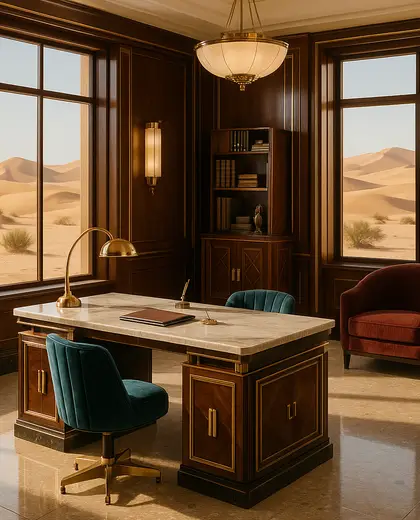
How do I keep Art Deco from feeling too ornate in a desert home?
Use the geometry and symmetry, but keep the ornament limited to a few strong details such as a doorway, grille, light fixture, or tile band. Pair them with simple plaster walls and natural textures so the space stays calm.
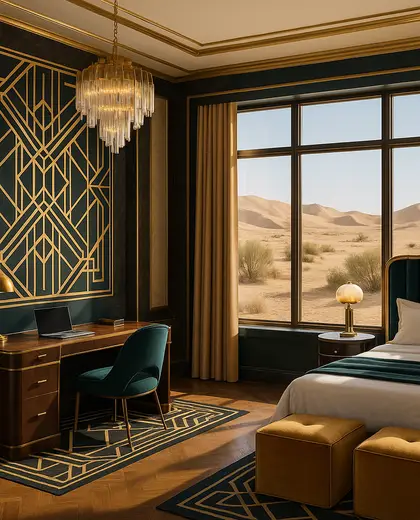
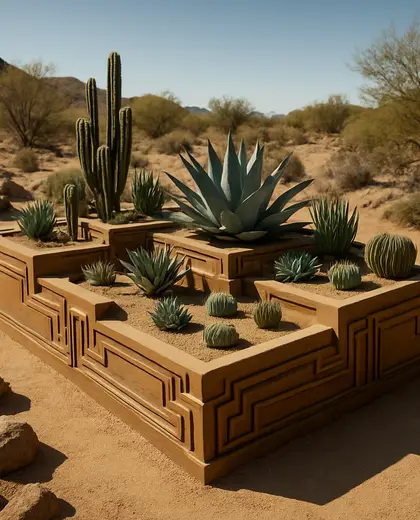
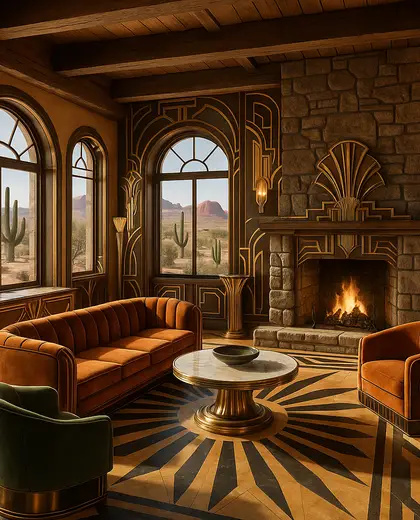
What finishes work best in this style?
Matte plaster, honed stone, patinated brass, and textured tile usually fit best because they respond well to strong sunlight. Highly glossy surfaces can work as accents, but they should be used sparingly.
Can this style work in a modern house?
Yes, if the Deco references are simplified into clean lines, stepped profiles, and geometric patterns. The desert influence helps ground the look with warmer materials and a more relaxed palette.
— The style
What defines it
Stucco, limestone, terra-cotta, brass, dark wood, ribbed glass, and decorative metal screens.
Sand, clay, ivory, bronze, black, and faded jewel tones such as teal or emerald.
Desert architecture, streamlined facades, geometric ornament, shaded courtyards, and sun-focused detailing.
— Professionals
Who has already built it
- vorbild architecturearchitects · 6 projectsView profile →
- kerem erbagci3d renderers · London · 9 projectsView profile →
- paquis norris group limitedbuilders · Reading · 3 projectsView profile →
- LoftRobejoiners · Guildford · 4 projectsView profile →
— Questions
Frequently asked questions
How do I keep Art Deco from feeling too ornate in a desert home?
Use the geometry and symmetry, but keep the ornament limited to a few strong details such as a doorway, grille, light fixture, or tile band. Pair them with simple plaster walls and natural textures so the space stays calm.
What finishes work best in this style?
Matte plaster, honed stone, patinated brass, and textured tile usually fit best because they respond well to strong sunlight. Highly glossy surfaces can work as accents, but they should be used sparingly.
Can this style work in a modern house?
Yes, if the Deco references are simplified into clean lines, stepped profiles, and geometric patterns. The desert influence helps ground the look with warmer materials and a more relaxed palette.