— Ideas & inspiration
Art Deco
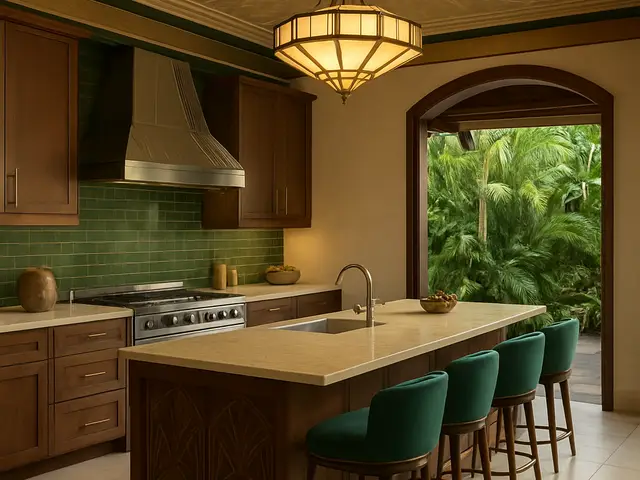
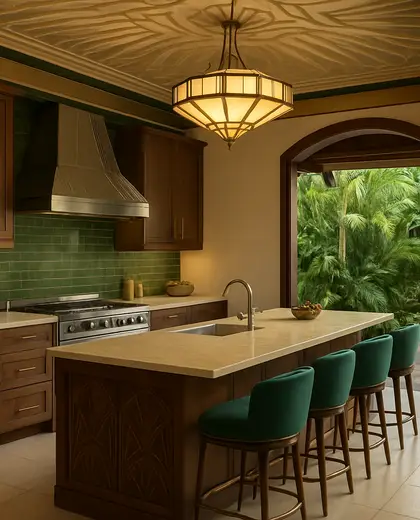
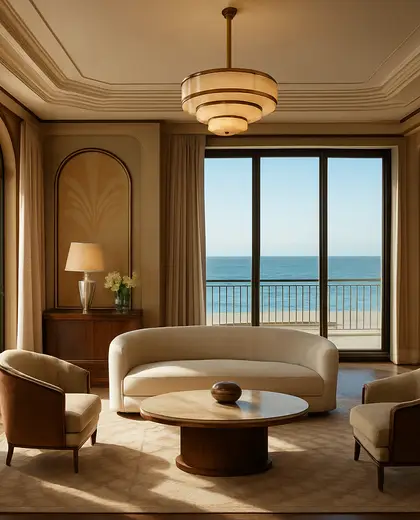
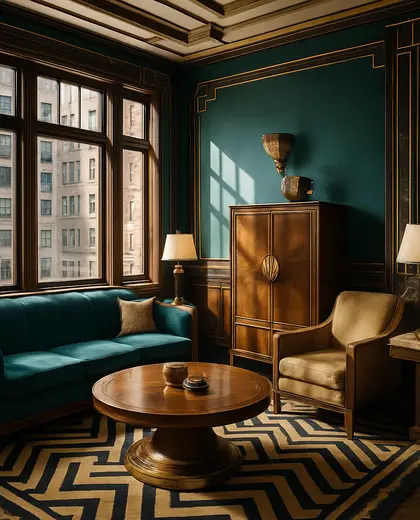
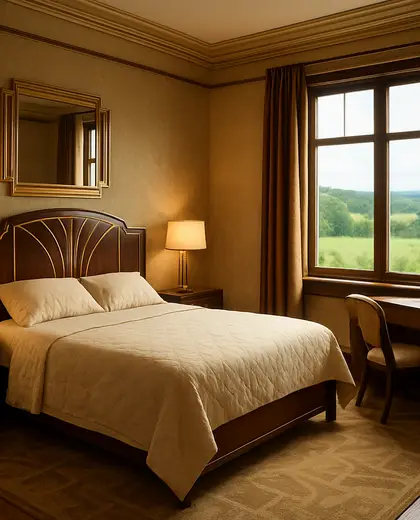
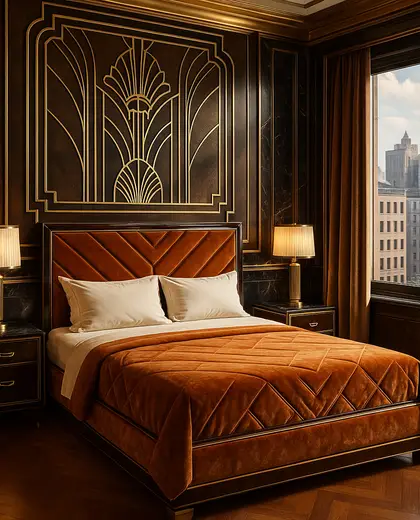
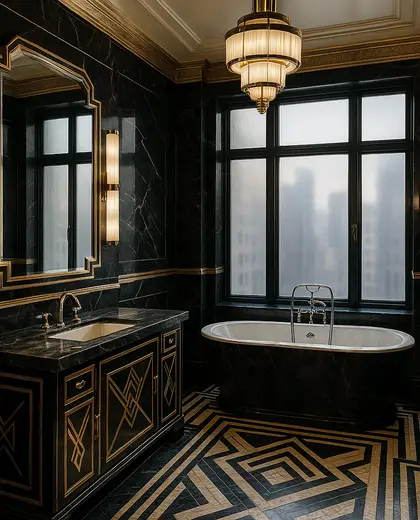
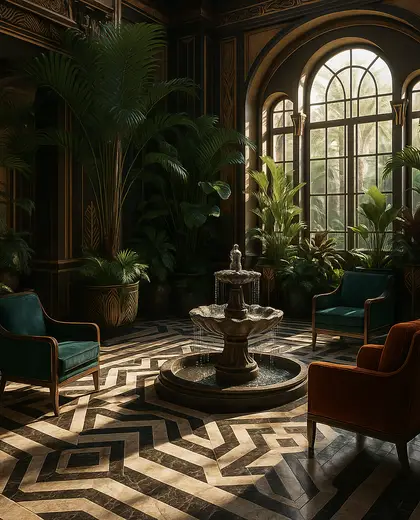
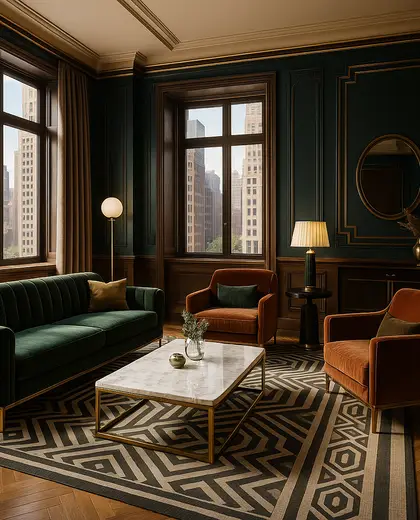
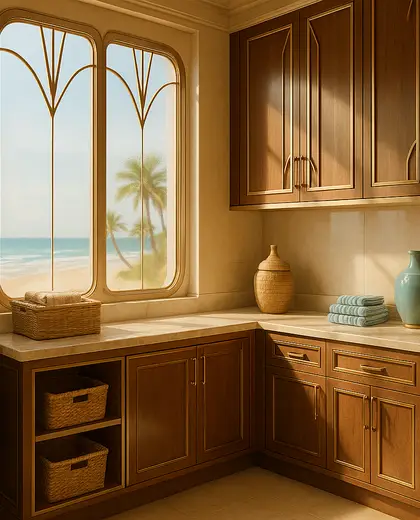
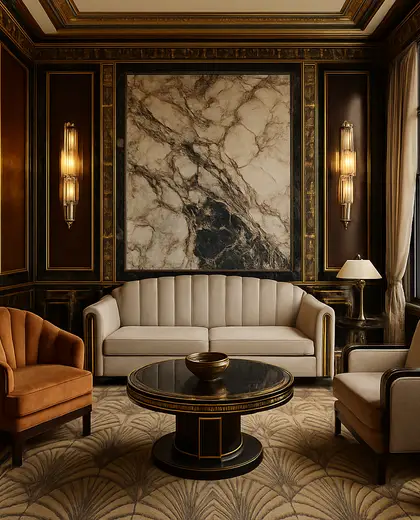
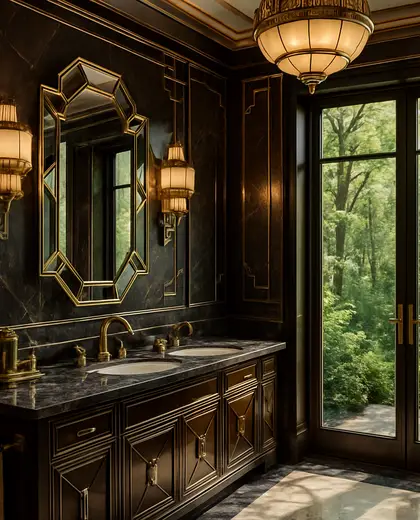
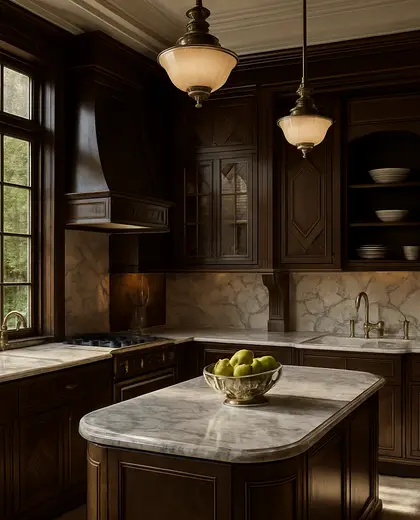
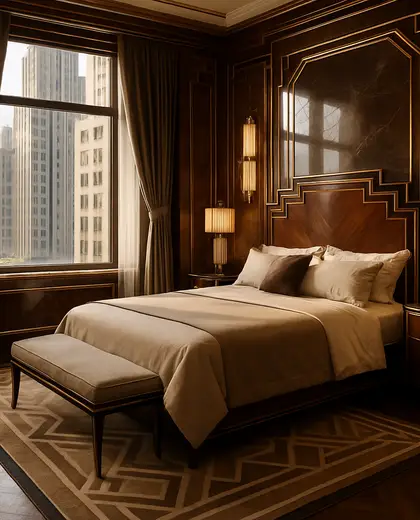
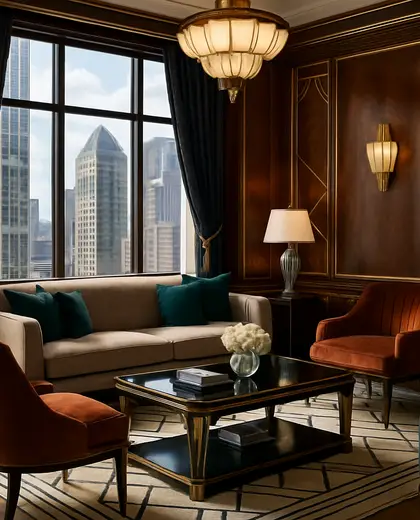
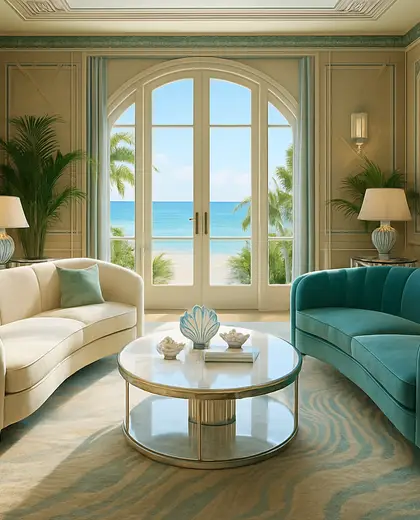
Art deco is defined by geometric ornament, strong symmetry, and polished finishes. Common materials include lacquered wood, brass, chrome, glass, marble, and mirrors. The palette often pairs black, white, cream, emerald, navy, and deep jewel tones with metallic accents.
- art deco
— References
References to explore

How do I recognize Art Deco in a room?
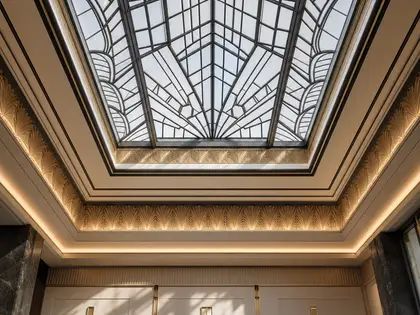
Look for symmetry, stepped or sunburst motifs, geometric patterns, glossy surfaces, and metallic details. Furniture is often streamlined but with decorative edges or luxe materials.


Can Art Deco work in a small home?
Yes, if the pattern and ornament are used selectively. A few strong pieces, mirrors, and a restrained color palette can bring the style in without making the space feel crowded.


What finishes suit Art Deco best?
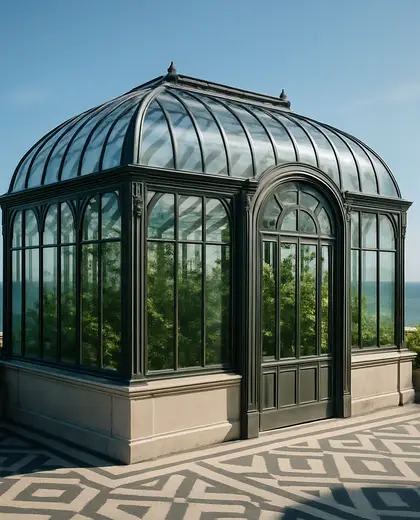
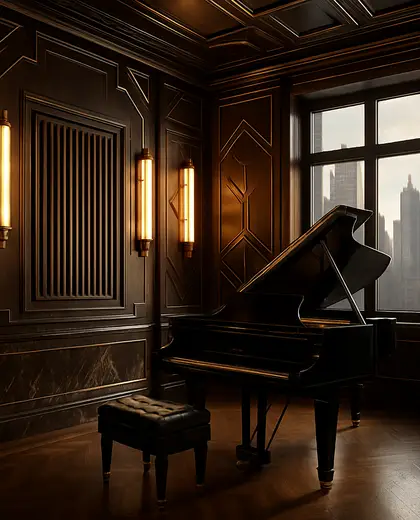
Polished, reflective finishes work best: brass, chrome, lacquer, glass, and marble. Matte surfaces can still be used, but they usually need contrast from a more luminous material nearby.


— The style
What defines it
Lacquered wood, brass, chrome, marble, glass, mirror, velvet, and sometimes inlaid stone or terrazzo.
High-contrast neutrals with jewel tones: black, white, cream, emerald, sapphire, burgundy, and gold or silver accents.
It combines well with modern lines, vintage furniture, sculptural lighting, and other streamlined styles that can handle bold ornament.
— Professionals
Who has already built it
- vorbild architecturearchitects · 6 projectsView profile →
- kerem erbagci3d renderers · London · 9 projectsView profile →
- paquis norris group limitedbuilders · Reading · 3 projectsView profile →
- LoftRobejoiners · Guildford · 4 projectsView profile →
— Explore
Keep exploring
— Questions
Frequently asked questions
How do I recognize Art Deco in a room?
Look for symmetry, stepped or sunburst motifs, geometric patterns, glossy surfaces, and metallic details. Furniture is often streamlined but with decorative edges or luxe materials.
Can Art Deco work in a small home?
Yes, if the pattern and ornament are used selectively. A few strong pieces, mirrors, and a restrained color palette can bring the style in without making the space feel crowded.
What finishes suit Art Deco best?
Polished, reflective finishes work best: brass, chrome, lacquer, glass, and marble. Matte surfaces can still be used, but they usually need contrast from a more luminous material nearby.