— Ideas & inspiration
Bohemian composition
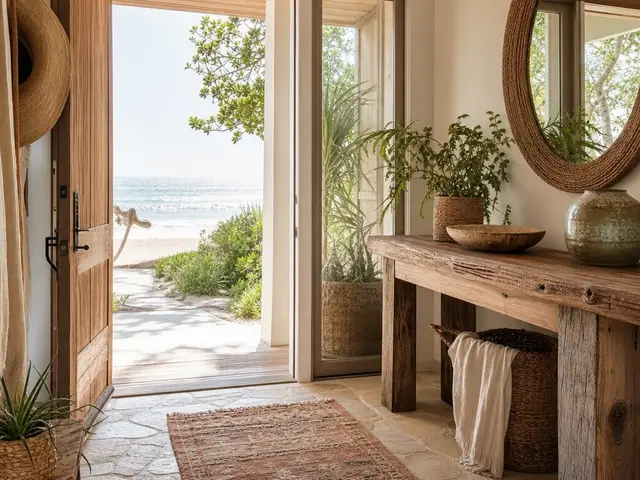
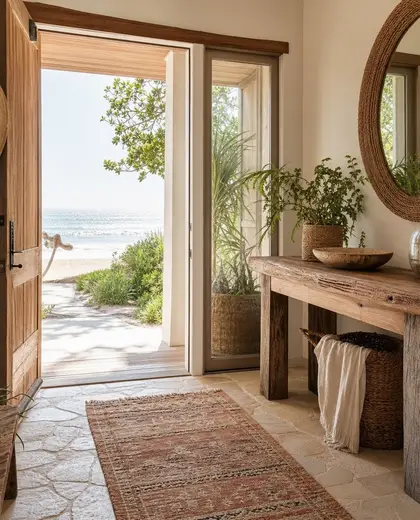
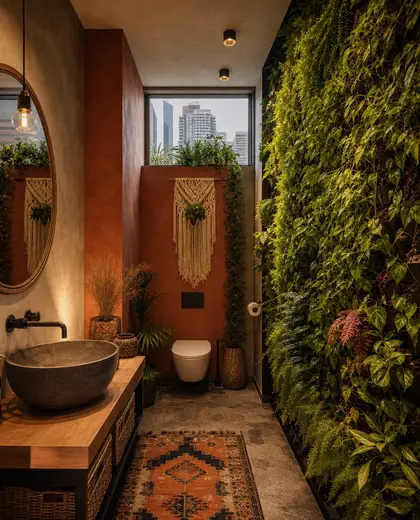
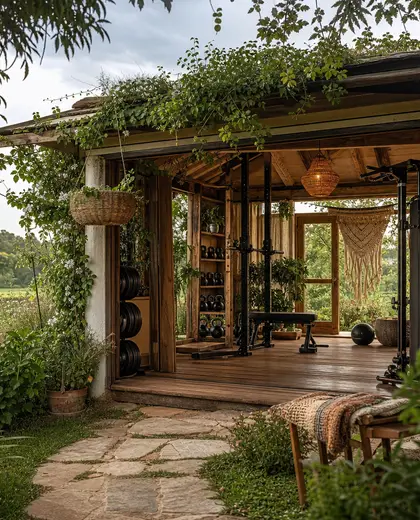
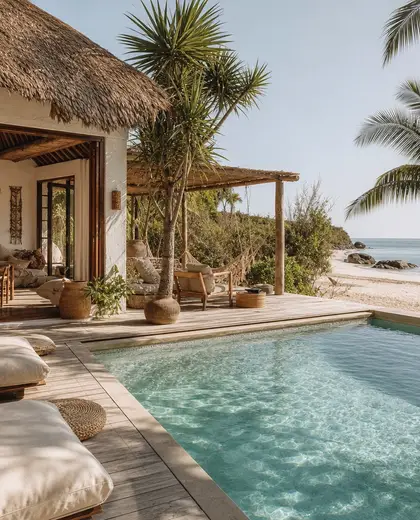
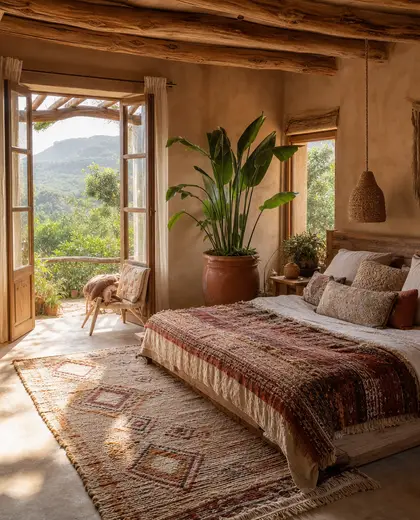
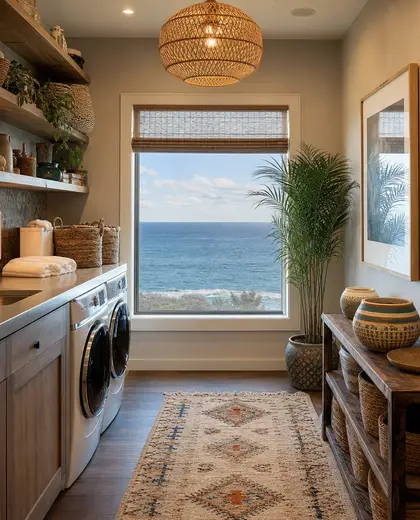
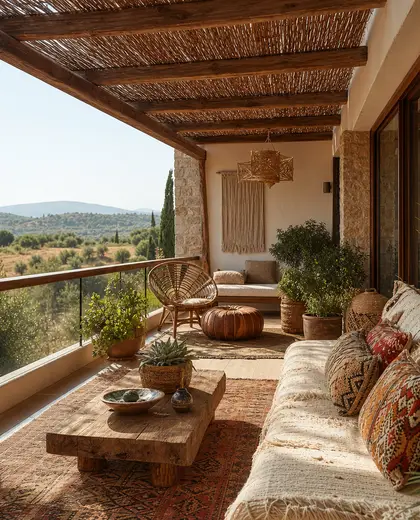
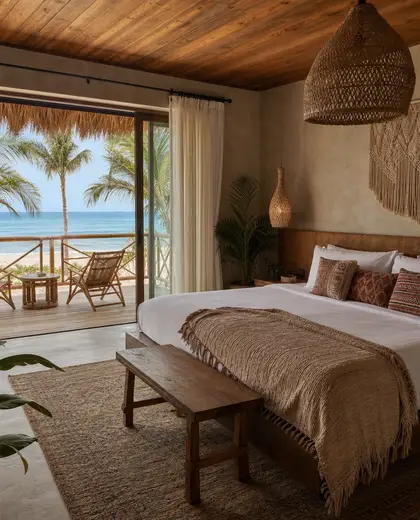
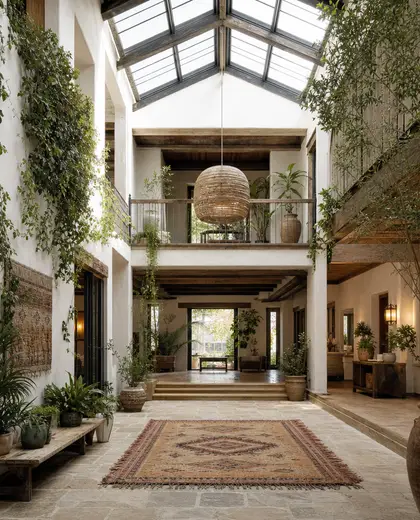
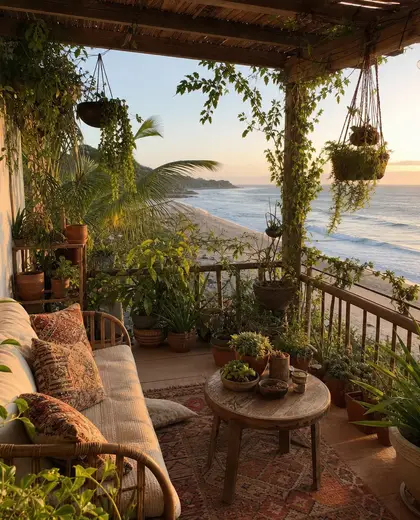
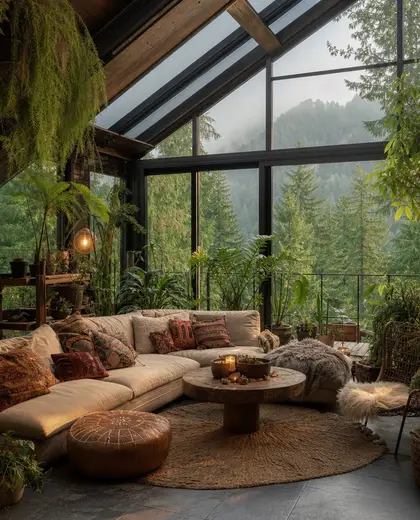
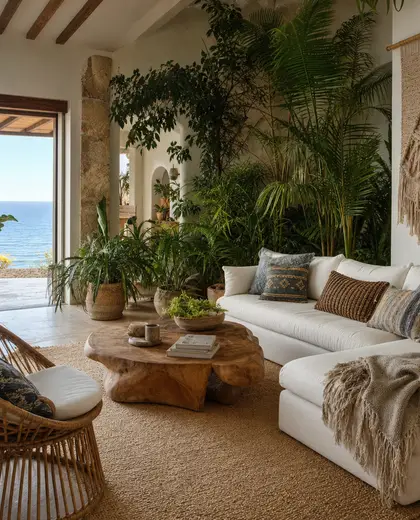
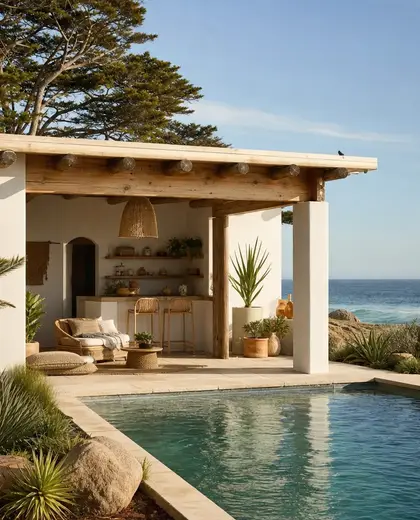
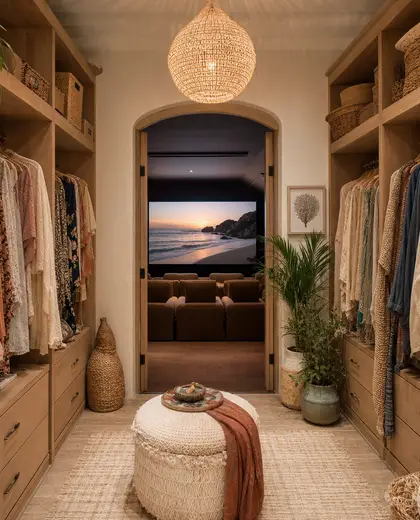
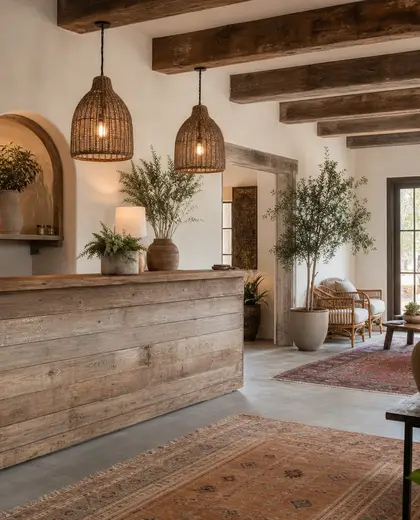
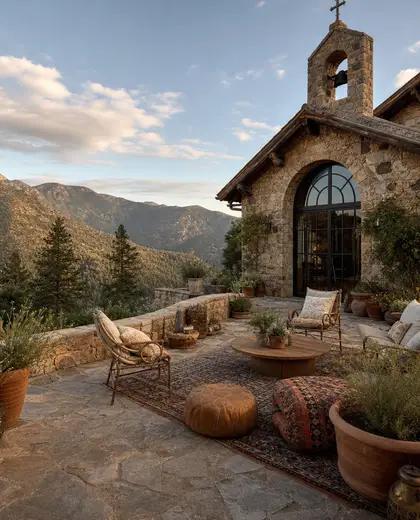
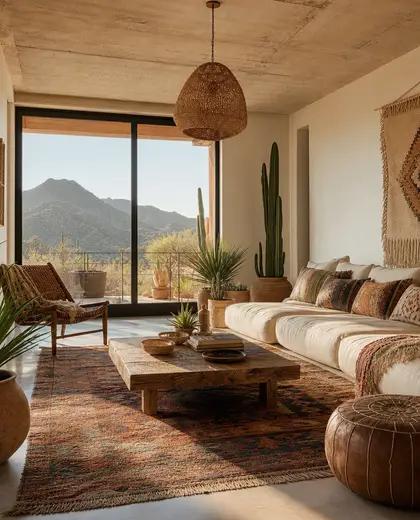
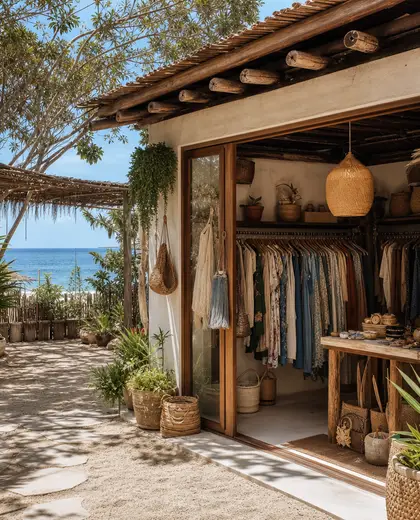
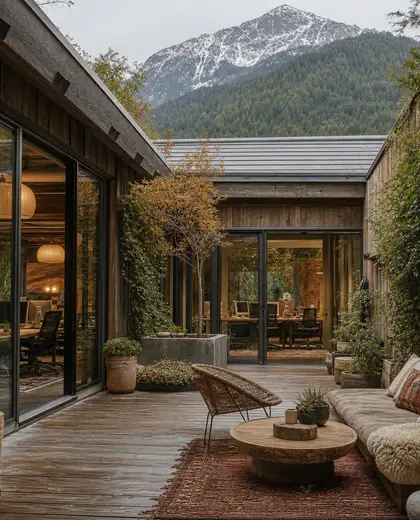
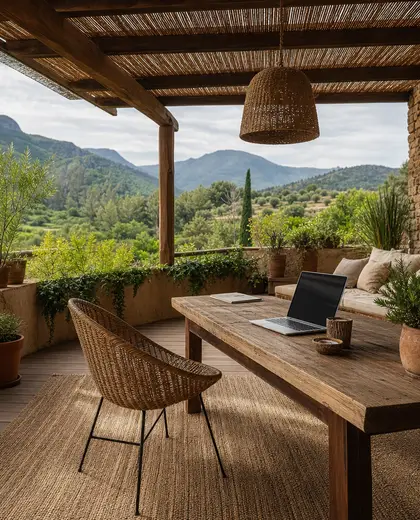
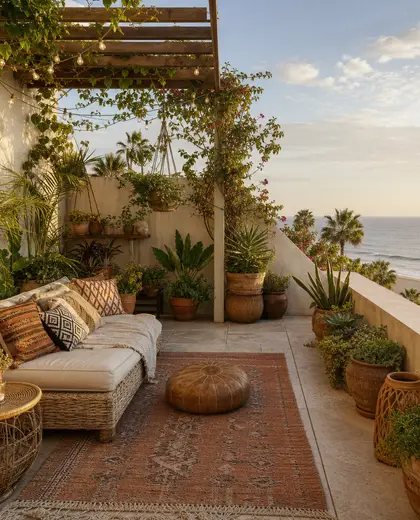
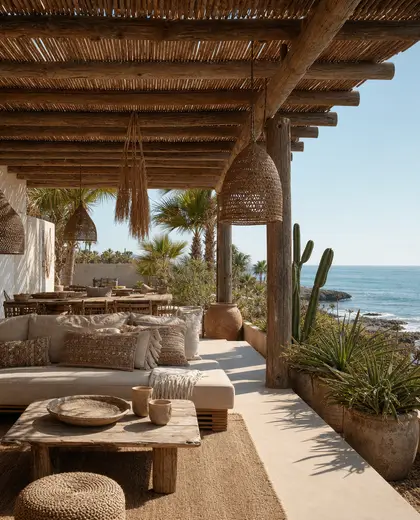
Bohemian composition is defined by layered textiles, natural textures, and collected, mixed-era furnishings. It often uses rattan, wood, wicker, linen, wool, and handmade ceramics, with a relaxed palette built from warm neutrals, earthy browns, faded terracotta, olive, and muted jewel tones. The look is typically softened with patterned rugs, plants, fringe, and a more eclectic, lived-in arrangement than a strictly matched interior.
- bohemian
— References
References to explore
How do I keep a bohemian room from looking messy?
Use a clear base palette, repeat a few materials, and limit the number of dominant patterns. Let the room feel layered, but keep the furniture layout and storage intentional.

Can bohemian style work in a small home?
Yes. Use lighter neutrals, slimmer furniture, and a few well-chosen textures instead of too many bulky pieces. Mirrors, plants, and open-leg furniture help keep the space airy.
What is the difference between bohemian and eclectic?
Bohemian usually leans more on relaxed textures, earthy tones, and a handmade or collected feel. Eclectic is broader and can include stronger contrasts, sharper forms, and a more deliberate mix of styles.

— The style
What defines it
Rattan, cane, reclaimed wood, woven textiles, linen, wool, leather, ceramic, and brass are common.
Warm whites, sand, camel, terracotta, rust, olive, ochre, dusty pink, and muted teal or indigo.
Works well with vintage furniture, global textiles, indoor plants, natural plaster, and casual Mediterranean or rustic elements.
— Professionals
Who has already built it
- vorbild architecturearchitects · 6 projectsView profile →
- kerem erbagci3d renderers · London · 9 projectsView profile →
- paquis norris group limitedbuilders · Reading · 3 projectsView profile →
- LoftRobejoiners · Guildford · 4 projectsView profile →
— Explore
Keep exploring
— Questions
Frequently asked questions
How do I keep a bohemian room from looking messy?
Use a clear base palette, repeat a few materials, and limit the number of dominant patterns. Let the room feel layered, but keep the furniture layout and storage intentional.
Can bohemian style work in a small home?
Yes. Use lighter neutrals, slimmer furniture, and a few well-chosen textures instead of too many bulky pieces. Mirrors, plants, and open-leg furniture help keep the space airy.
What is the difference between bohemian and eclectic?
Bohemian usually leans more on relaxed textures, earthy tones, and a handmade or collected feel. Eclectic is broader and can include stronger contrasts, sharper forms, and a more deliberate mix of styles.