— Ideas & inspiration
Formal dining room
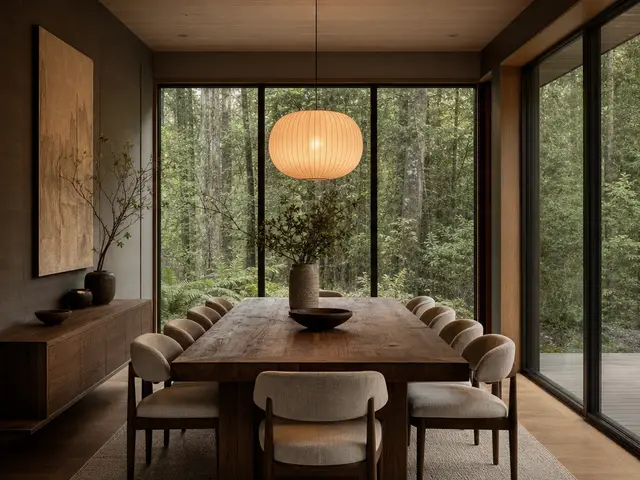
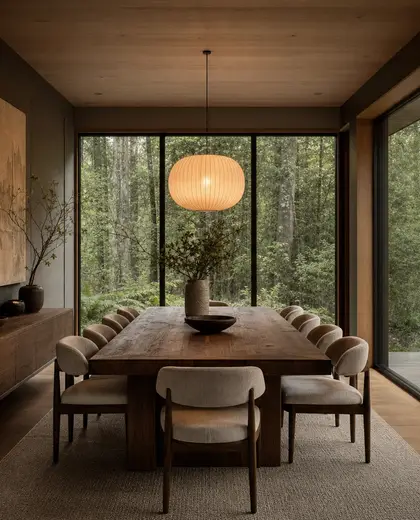
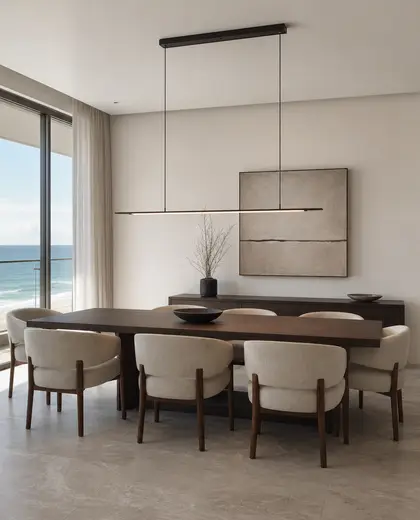
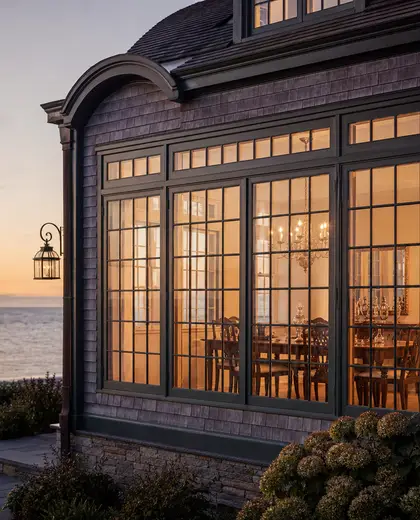
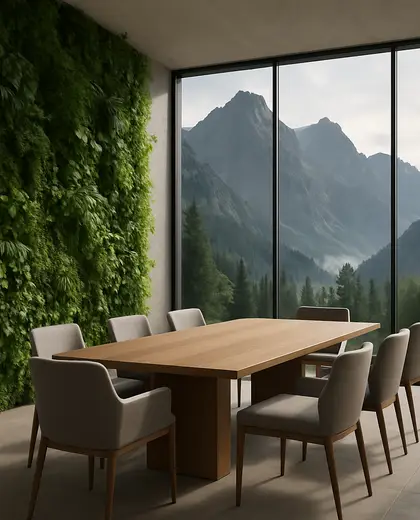
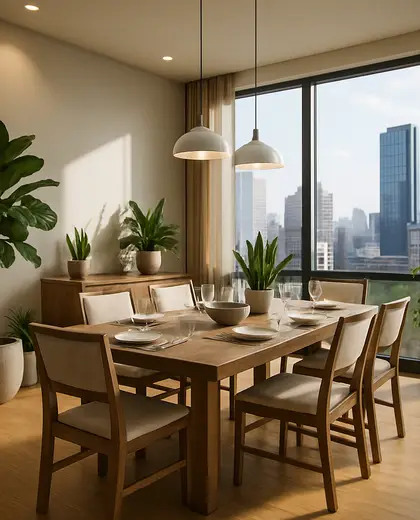
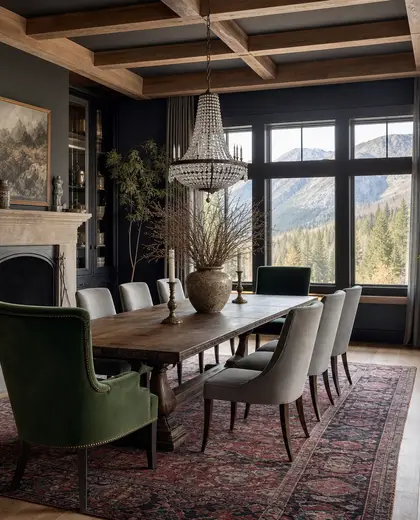
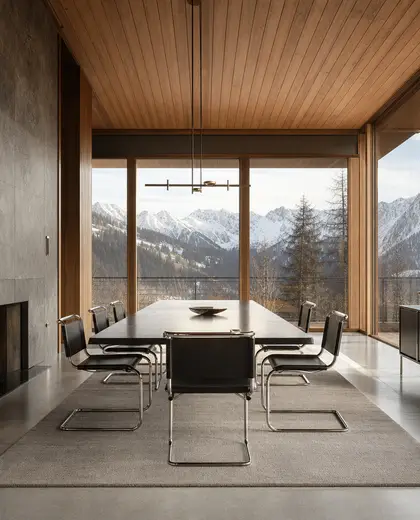
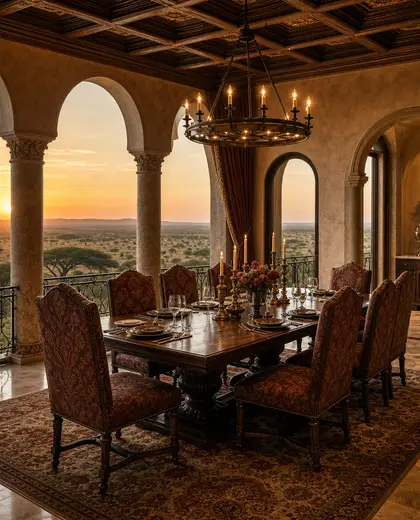
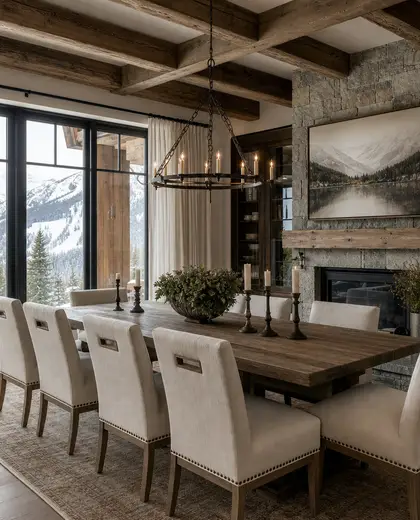
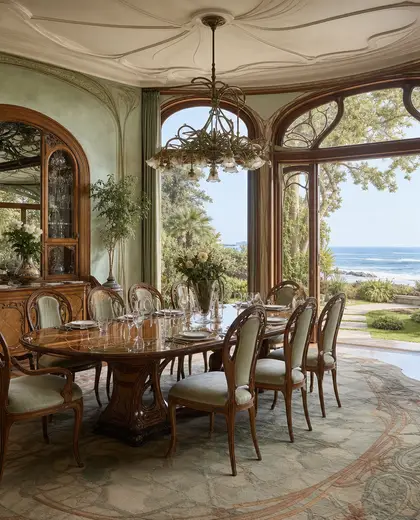
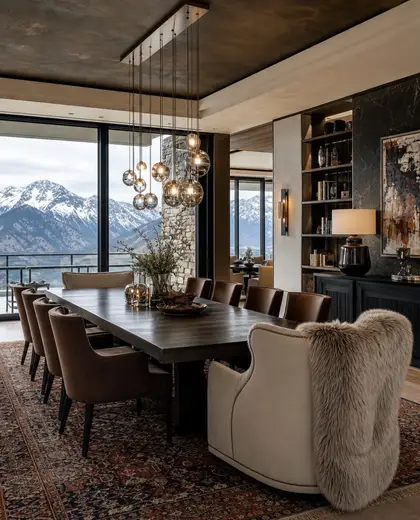
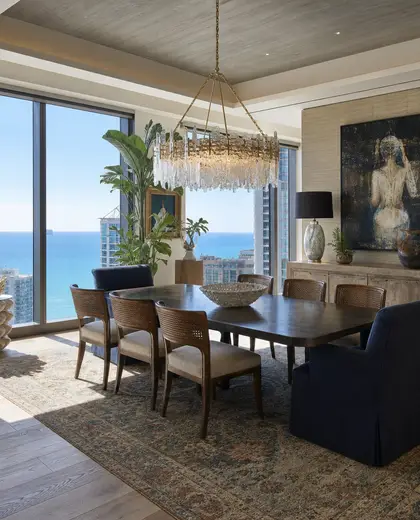
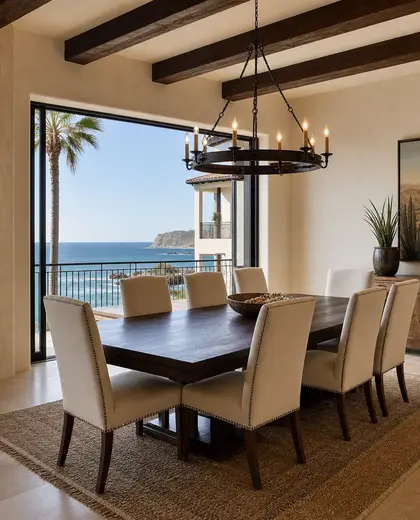
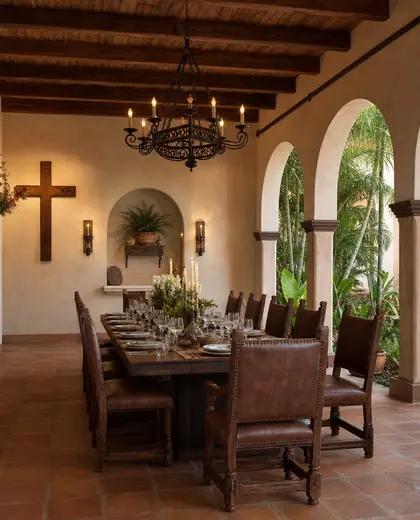
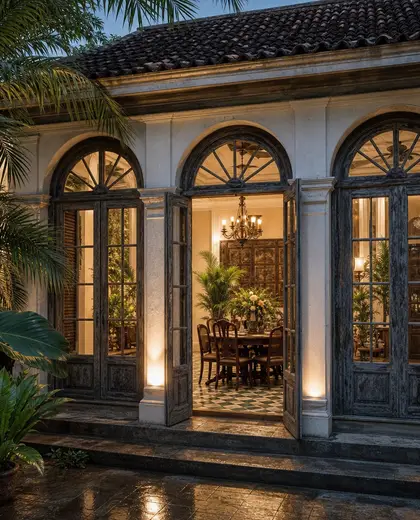
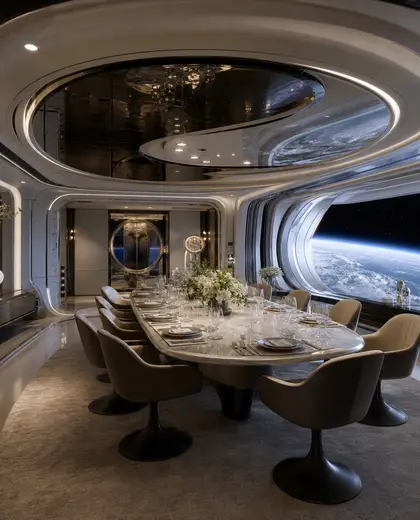
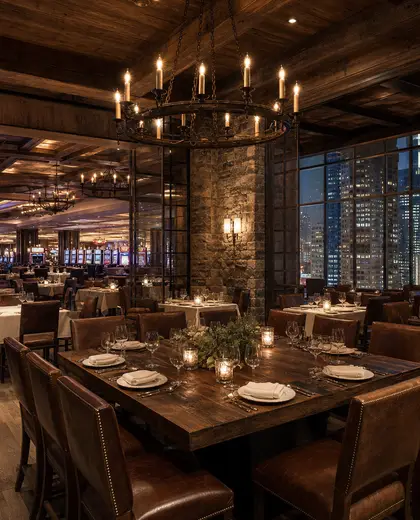
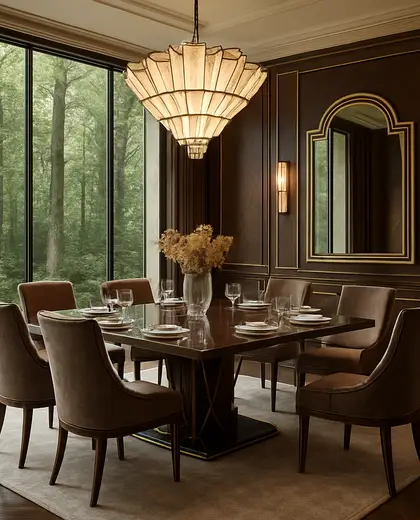
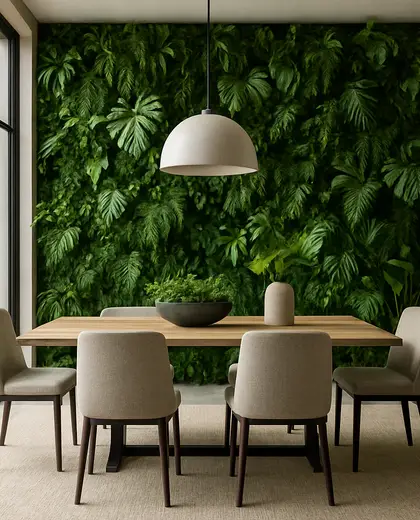
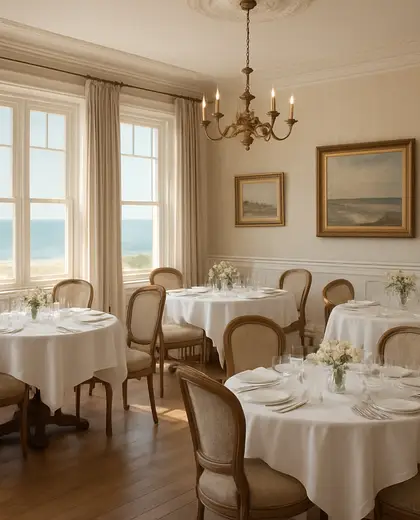
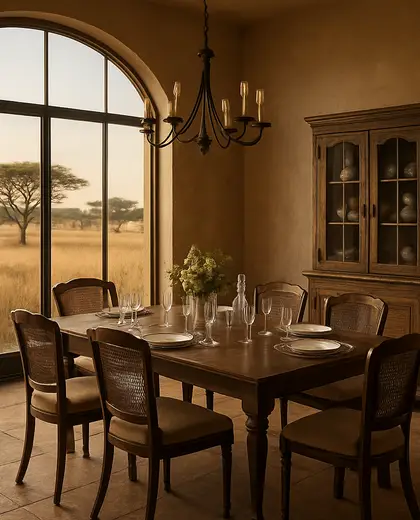
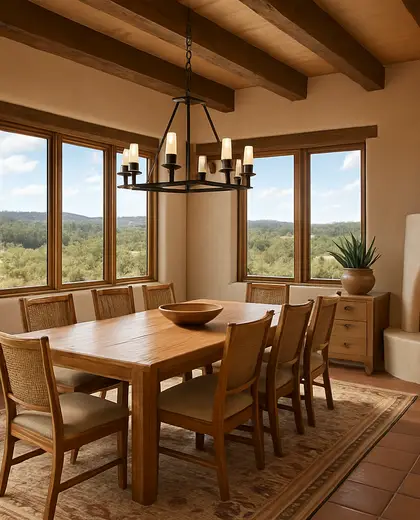
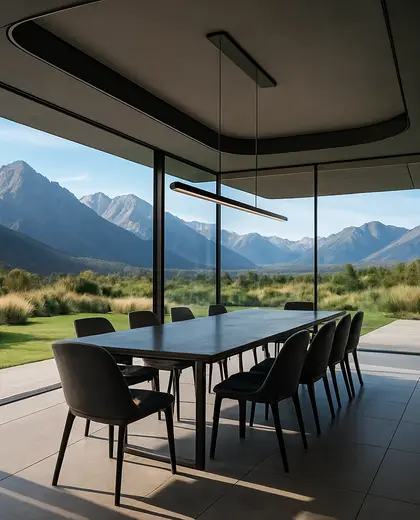
A formal dining room is typically defined by a larger dining table, a clear central layout, and a more composed, symmetrical arrangement than an everyday dining area. Materials often include wood, stone, upholstered seating, glass, and metal, with finishes that feel refined and durable. The palette is usually restrained: warm neutrals, deep wood tones, muted jewel colors, or black-and-white contrasts.
- formal dining room
— References
References to explore
How is a formal dining room different from an everyday dining area?
It usually has a more intentional layout, fewer casual pieces, and more emphasis on symmetry, scale, and finish quality. The room is often used for hosting rather than daily quick meals.
What furniture belongs in a formal dining room?
A dining table, matching or coordinated chairs, a sideboard or buffet, and often a rug and overhead pendant or chandelier. Some rooms also include a display cabinet or console.
Can a formal dining room still feel modern?
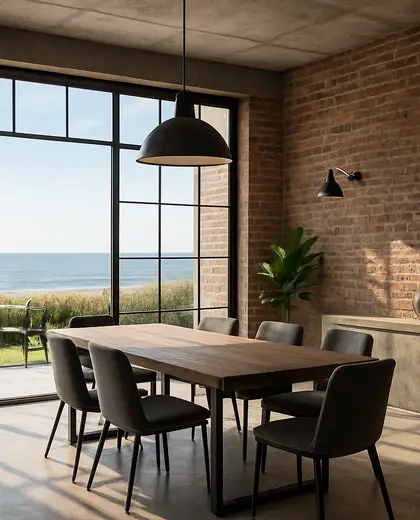
Yes. Using clean-lined furniture, simple trim, muted colors, and natural materials keeps it formal without feeling heavy or ornate.
— The style
What defines it
Solid wood, veneer, marble or stone tabletops, upholstered chairs, glass lighting, brass or black metal accents.
Neutral, layered, and elegant: cream, taupe, walnut, charcoal, navy, olive, or subtle metallic highlights.
Works well with wainscoting, a chandelier, sideboard storage, large rugs, wall art, and formal trim details.
— Professionals
Who has already built it
- vorbild architecturearchitects · 6 projectsView profile →
- kerem erbagci3d renderers · London · 9 projectsView profile →
- paquis norris group limitedbuilders · Reading · 3 projectsView profile →
- LoftRobejoiners · Guildford · 4 projectsView profile →
— Explore
Keep exploring
— Questions
Frequently asked questions
How is a formal dining room different from an everyday dining area?
It usually has a more intentional layout, fewer casual pieces, and more emphasis on symmetry, scale, and finish quality. The room is often used for hosting rather than daily quick meals.
What furniture belongs in a formal dining room?
A dining table, matching or coordinated chairs, a sideboard or buffet, and often a rug and overhead pendant or chandelier. Some rooms also include a display cabinet or console.
Can a formal dining room still feel modern?
Yes. Using clean-lined furniture, simple trim, muted colors, and natural materials keeps it formal without feeling heavy or ornate.