— Ideas & inspiration
Meeting Room
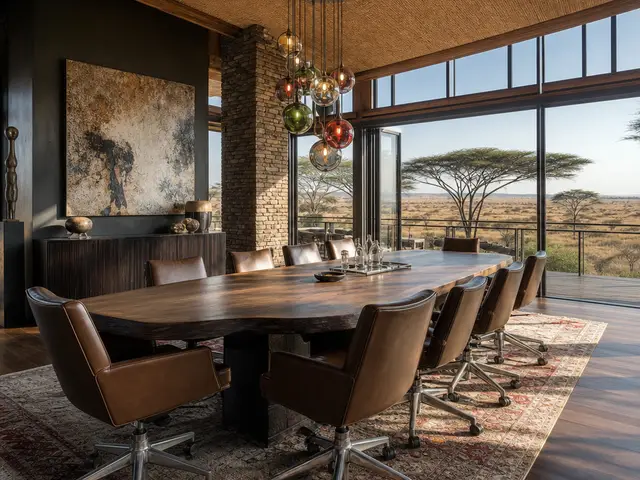
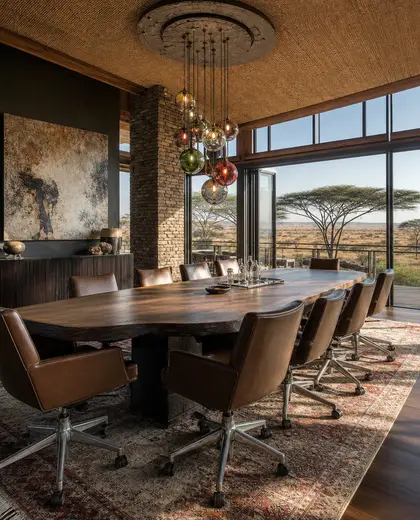
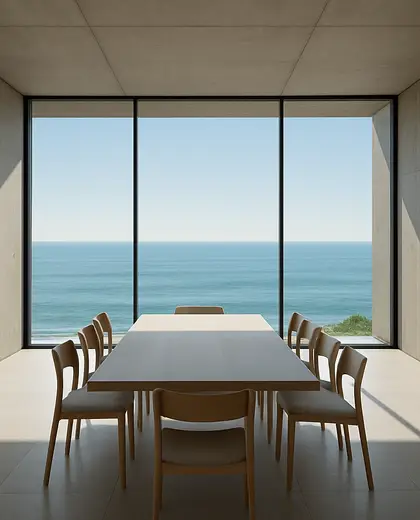
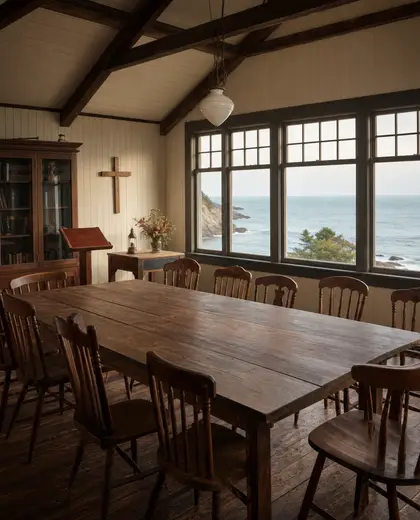
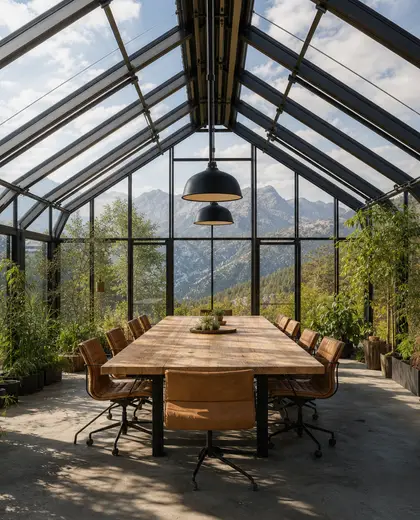
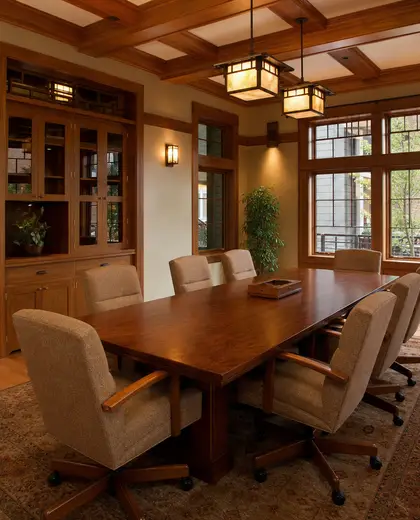
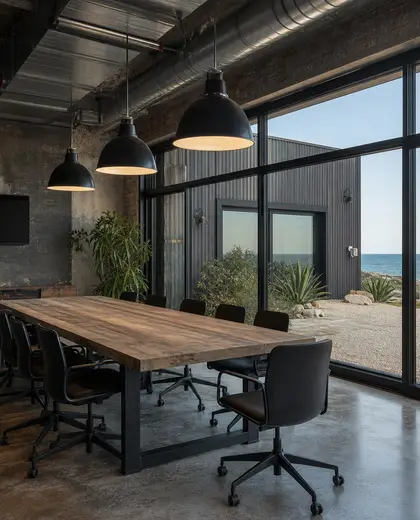
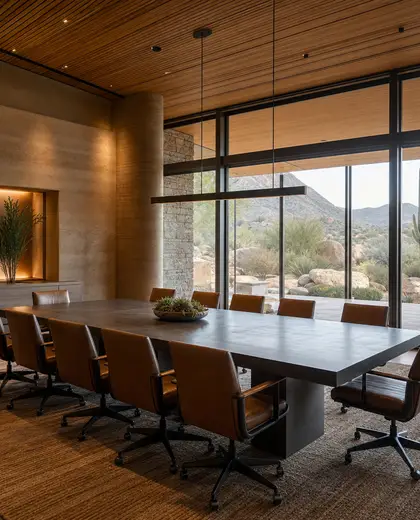
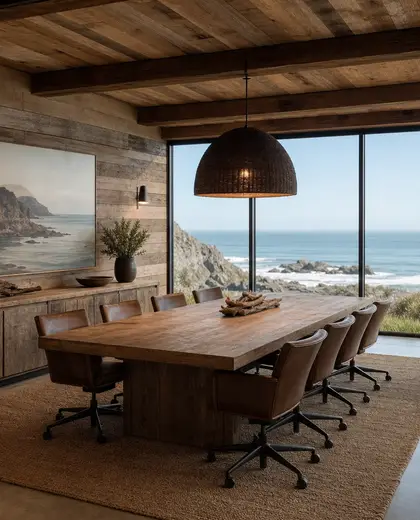
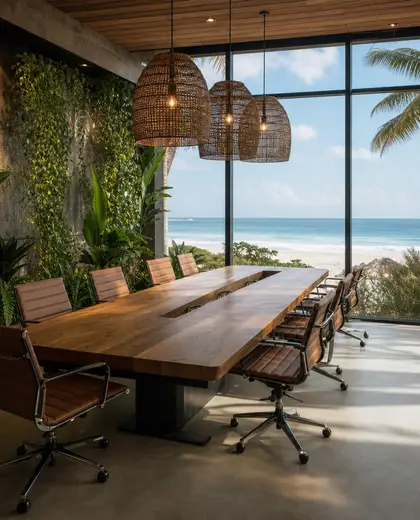
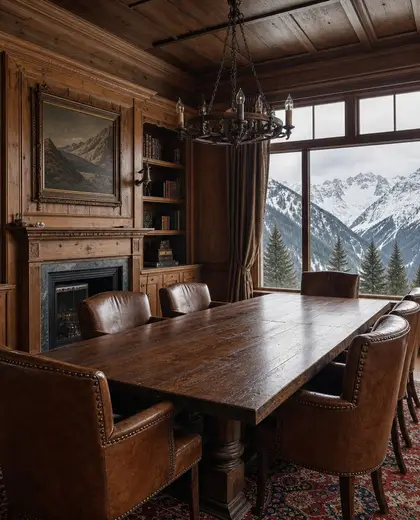
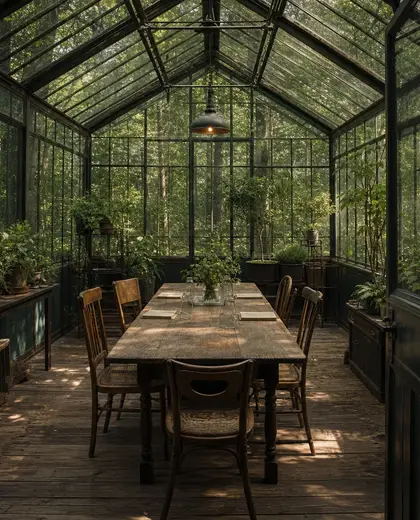
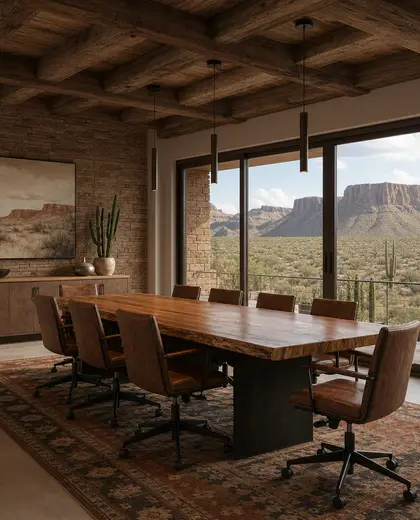
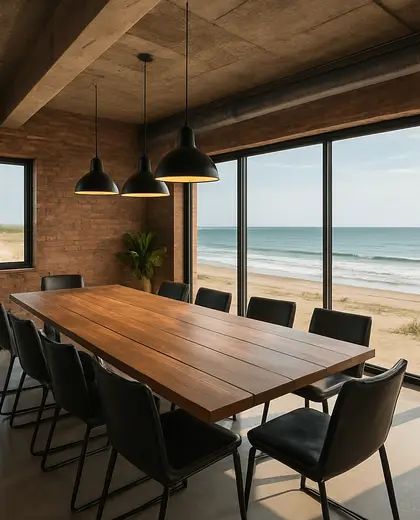
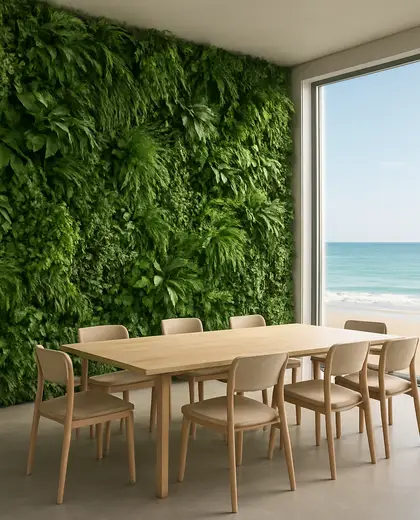
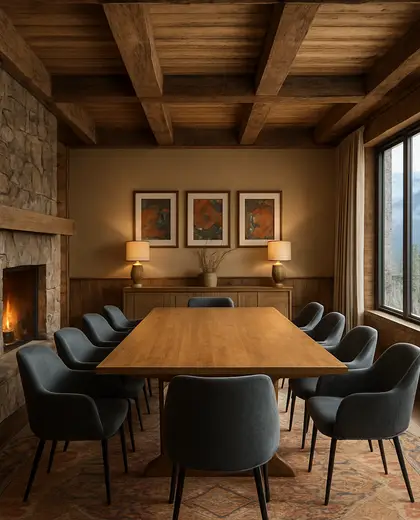
A meeting room composition is typically defined by a clear central table, ergonomic seating, and controlled lighting that supports conversation and focus. Materials are usually straightforward and durable: wood, veneer, glass, metal, acoustic panels, and upholstered chairs. The palette tends to stay neutral or muted, with finishes chosen to keep the room calm, professional, and easy to maintain.
- meeting room
— References
References to explore
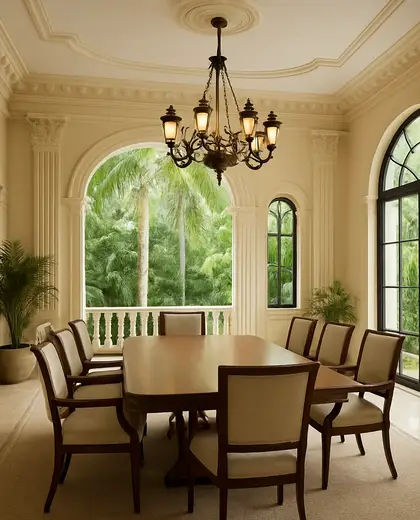
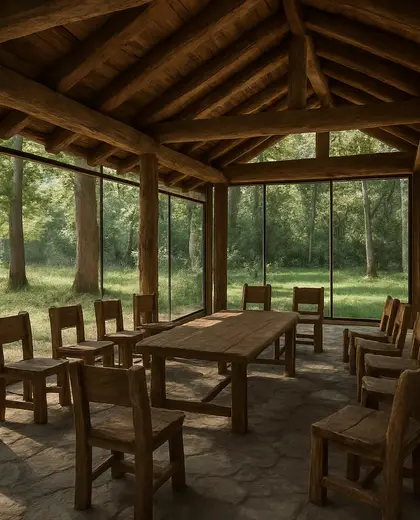
What makes a room feel like a proper meeting room rather than a dining room?
A meeting room usually has a more formal layout, better task lighting, acoustic control, and furniture sized for discussion rather than dining. Cable management, presentation equipment, and less decorative styling also help define it.
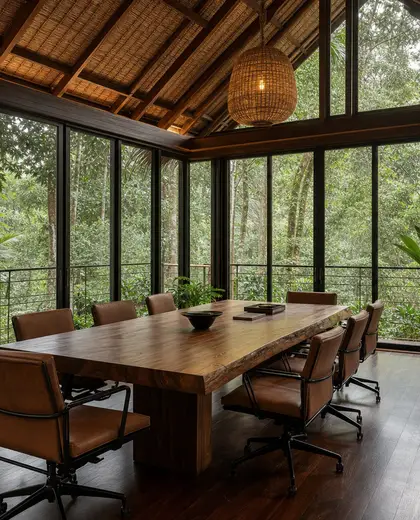
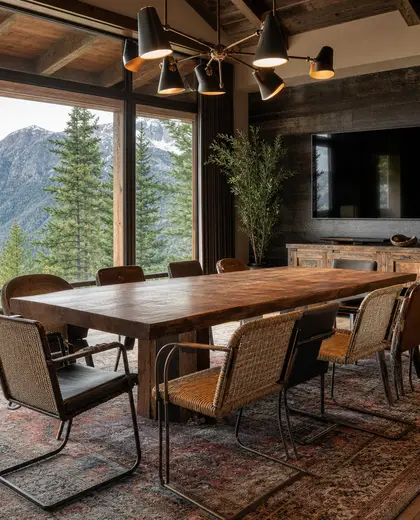
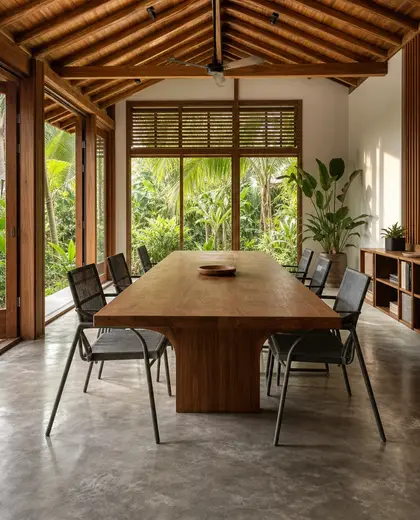
Do meeting rooms need to be all neutral?
Not necessarily, but the base palette is usually calm and restrained. Small accents can be added through chairs, artwork, or a feature wall without distracting from the room’s function.
What should I prioritize if the room is small?
Prioritize a compact table, slim seating, and good circulation around the edges. Built-in storage, lighter finishes, and acoustic surfaces can make a small meeting room feel more usable and open.
— The style
What defines it
Wood veneer, laminate, glass, powder-coated metal, acoustic felt, and upholstered seating are common.
Neutrals lead: white, grey, beige, black, and warm wood tones, with occasional restrained accent colors.
Works well with conference lighting, built-in storage, wall-mounted screens, acoustic wall treatment, and minimal decor.
— Professionals
Who has already built it
- LoftRobejoiners · Guildford · 4 projectsView profile →
- Beneito Faurelighting designers · 2 projectsView profile →
- Lusso Stonetile suppliers · Stocktonontees · 7 projectsView profile →
- elizabeth bee interior deinterior designers · 4 projectsView profile →
— Explore
Keep exploring
— Questions
Frequently asked questions
What makes a room feel like a proper meeting room rather than a dining room?
A meeting room usually has a more formal layout, better task lighting, acoustic control, and furniture sized for discussion rather than dining. Cable management, presentation equipment, and less decorative styling also help define it.
Do meeting rooms need to be all neutral?
Not necessarily, but the base palette is usually calm and restrained. Small accents can be added through chairs, artwork, or a feature wall without distracting from the room’s function.
What should I prioritize if the room is small?
Prioritize a compact table, slim seating, and good circulation around the edges. Built-in storage, lighter finishes, and acoustic surfaces can make a small meeting room feel more usable and open.