— Ideas & inspiration
Rural composition
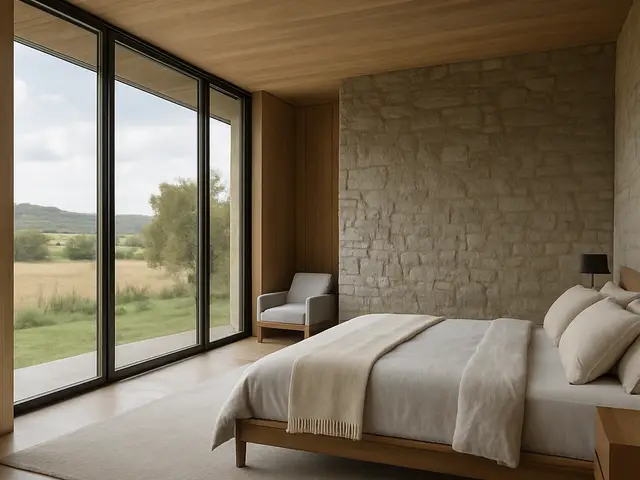
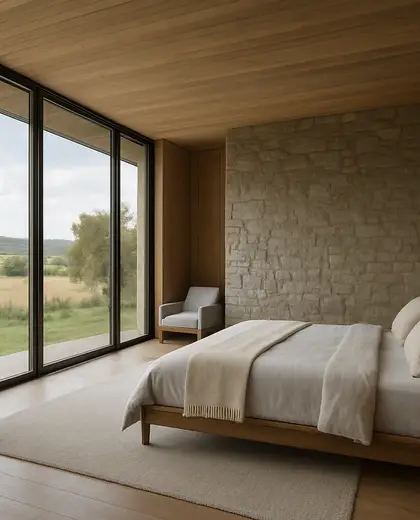
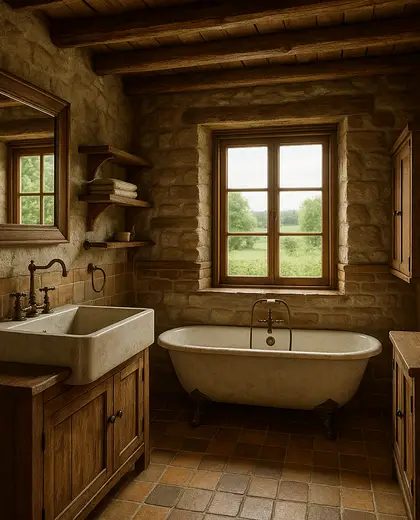
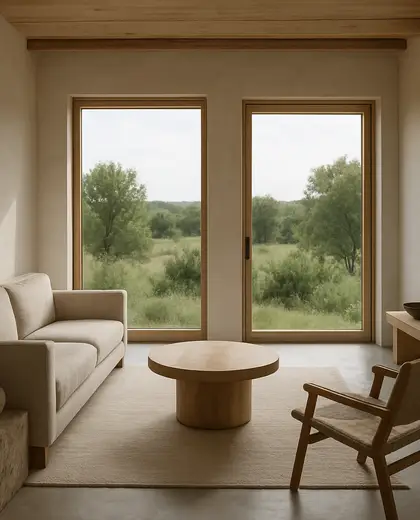
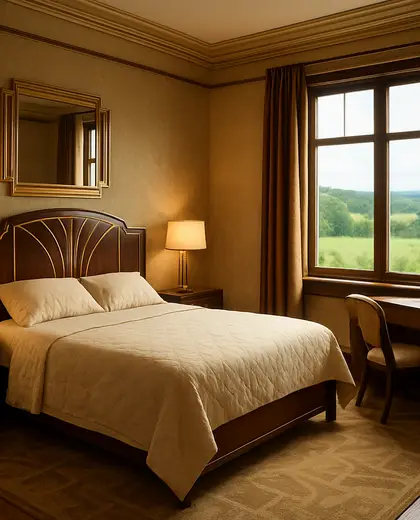
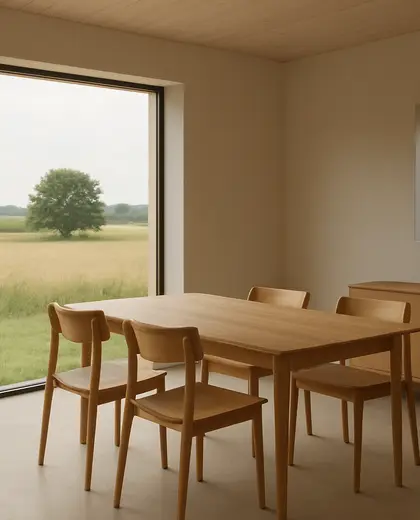
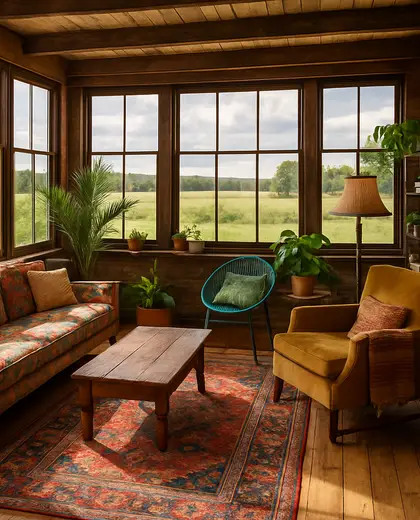
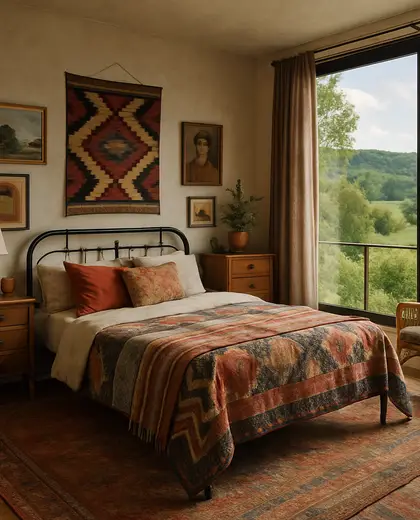
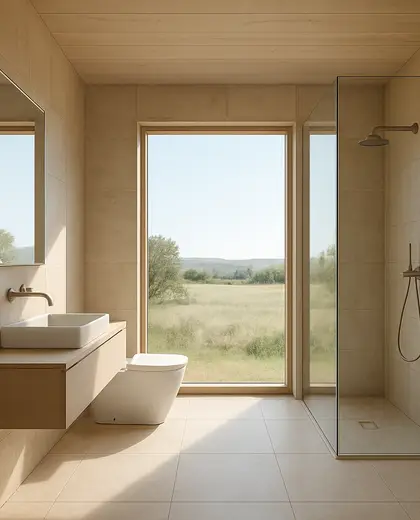
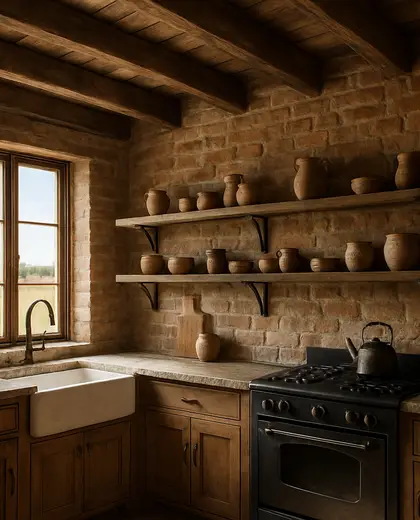
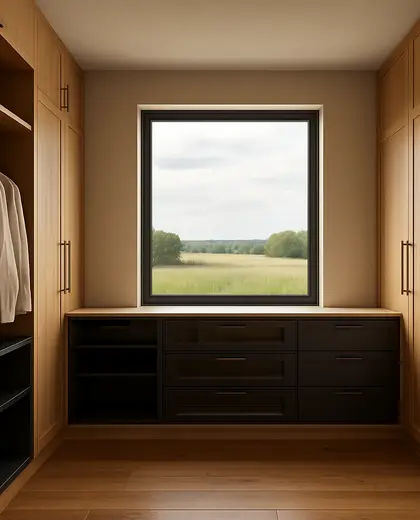
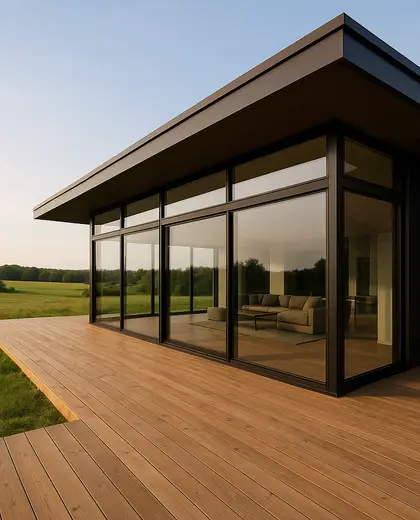
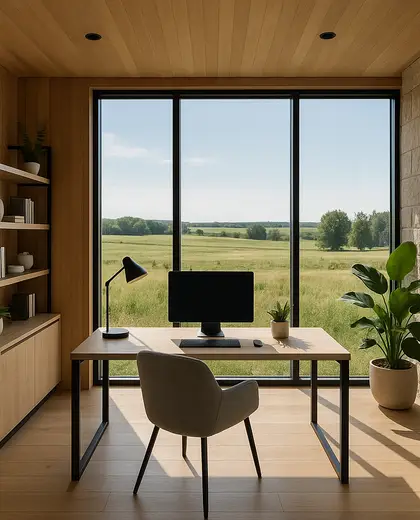
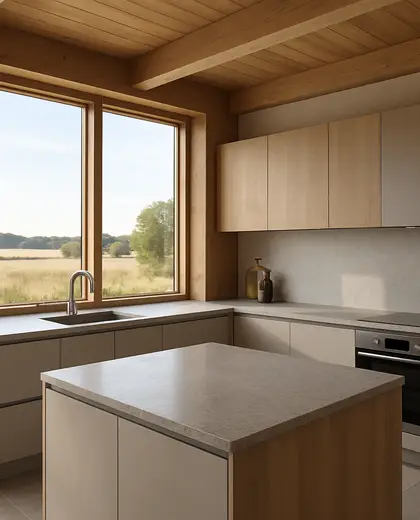
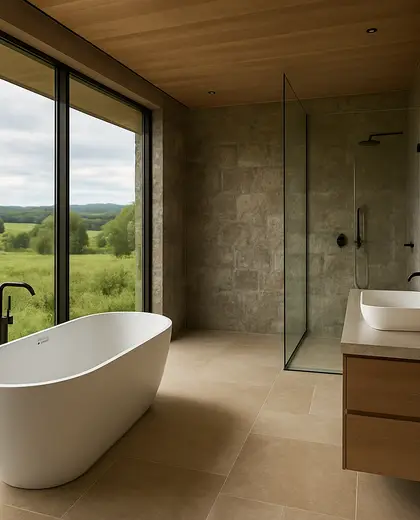
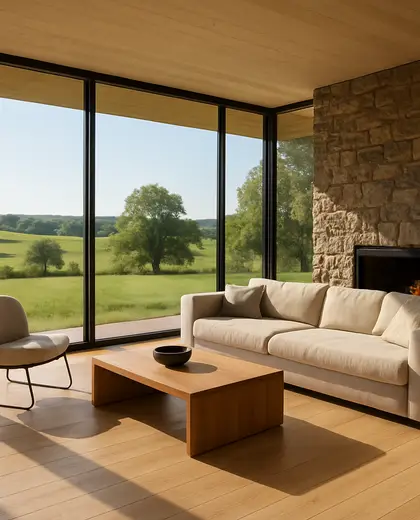
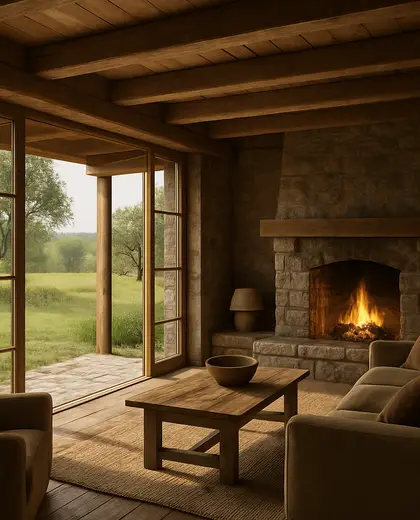
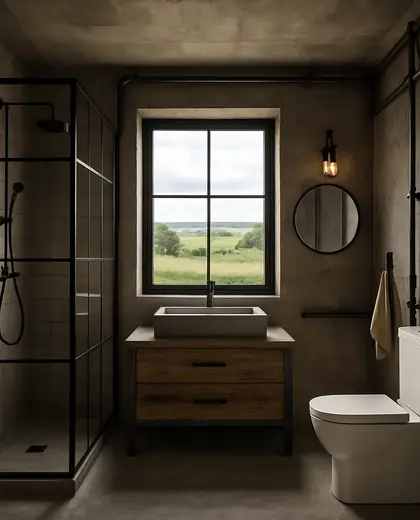
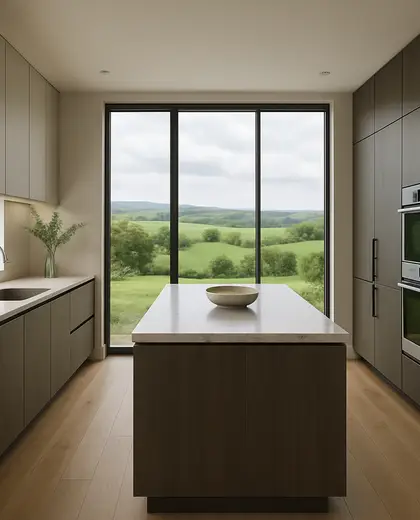
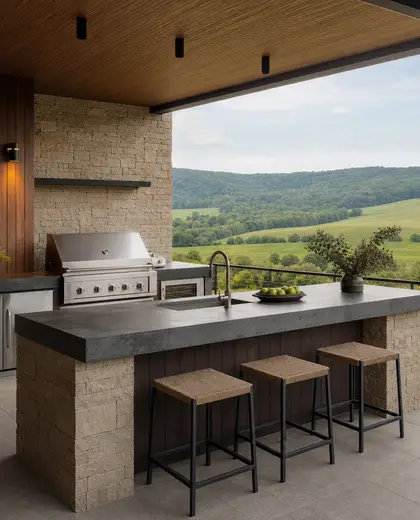
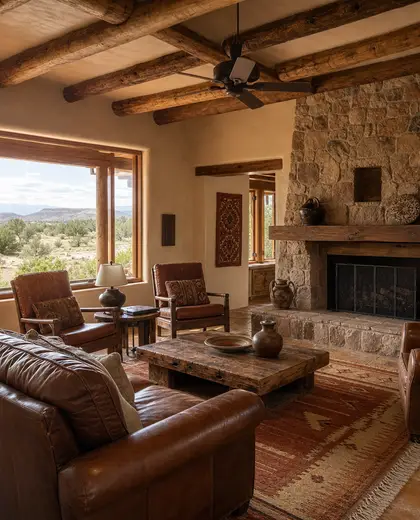
A rural composition is defined by weathered, natural materials such as timber, stone, clay render, and metal with a patina. The palette stays grounded in earth tones, muted greens, warm greys, and soft whites, with simple massing, pitched roofs, and deep openings that suit open landscapes. Details are usually restrained, with an emphasis on texture, shadow, and a direct connection to the site.
- rural
— References
References to explore
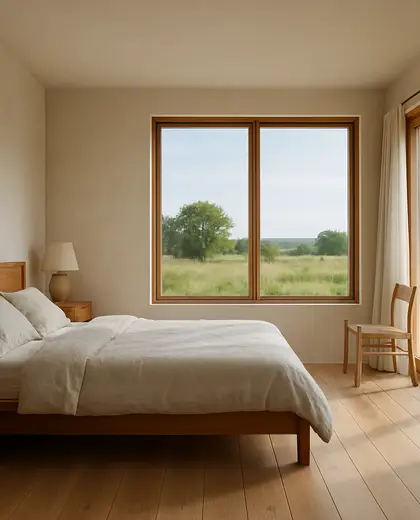
Does a rural composition have to look traditional?
No. It can be traditional in form, but it can also feel contemporary if the volume is simple and the materials are honest and local.
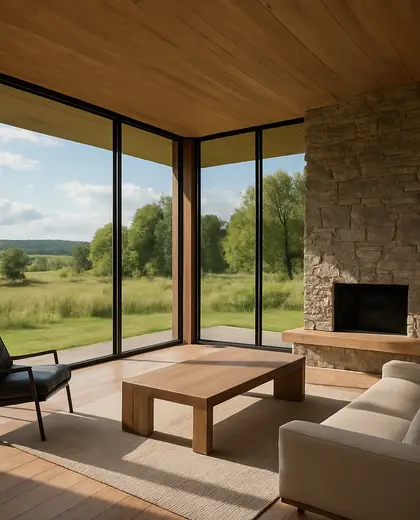
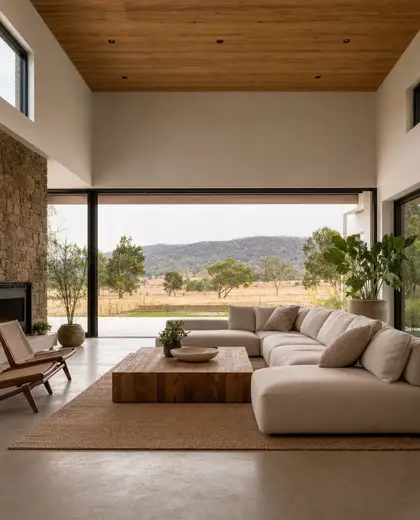
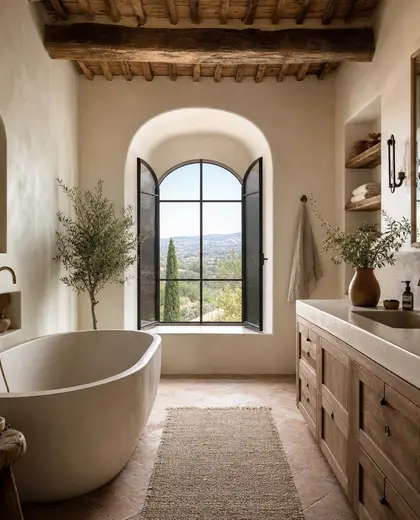
What finishes suit a rural-style home best?
Matte, low-reflective finishes usually fit best, especially on timber, metal, plaster, and masonry surfaces that can age naturally.
Can this composition work on a small plot?
Yes, but it usually works best when the building keeps a compact form, clear roof shape, and a strong relationship to the surrounding planting or terrain.
— The style
What defines it
Timber, fieldstone, clay brick, lime plaster, and standing-seam metal are common choices.
Earthy browns, weathered greys, olive tones, off-whites, and charcoal accents keep the look calm and natural.
Works well with traditional roofs, exposed structure, farmhouse forms, and landscape-led interiors.
— Professionals
Who has already built it
- LoftRobejoiners · Guildford · 4 projectsView profile →
- Beneito Faurelighting designers · 2 projectsView profile →
- Lusso Stonetile suppliers · Stocktonontees · 7 projectsView profile →
- elizabeth bee interior deinterior designers · 4 projectsView profile →
— Explore
Keep exploring
— Questions
Frequently asked questions
Does a rural composition have to look traditional?
No. It can be traditional in form, but it can also feel contemporary if the volume is simple and the materials are honest and local.
What finishes suit a rural-style home best?
Matte, low-reflective finishes usually fit best, especially on timber, metal, plaster, and masonry surfaces that can age naturally.
Can this composition work on a small plot?
Yes, but it usually works best when the building keeps a compact form, clear roof shape, and a strong relationship to the surrounding planting or terrain.