— Ideas & inspiration
Storage room composition
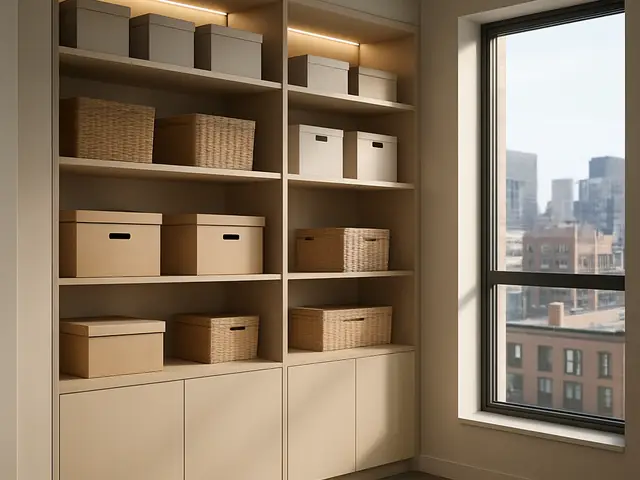
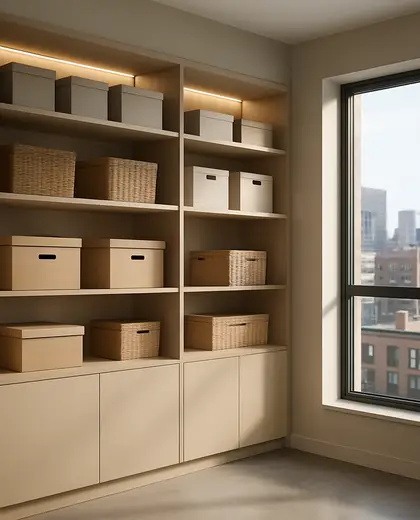
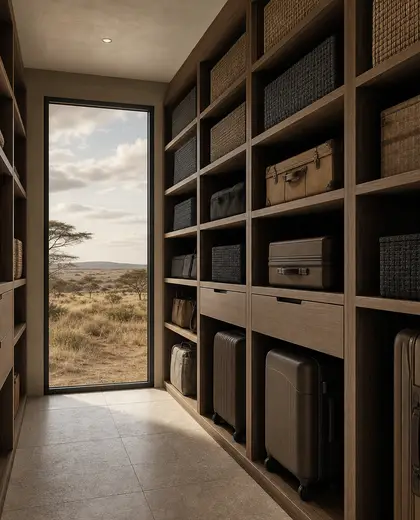
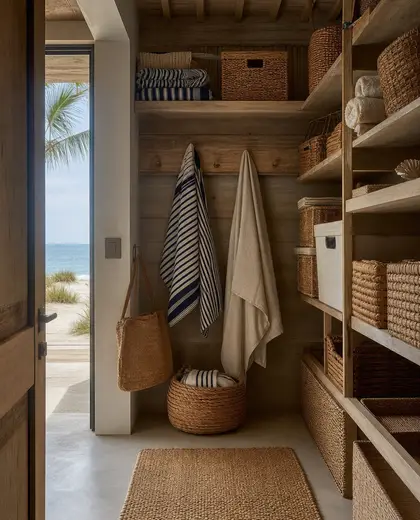
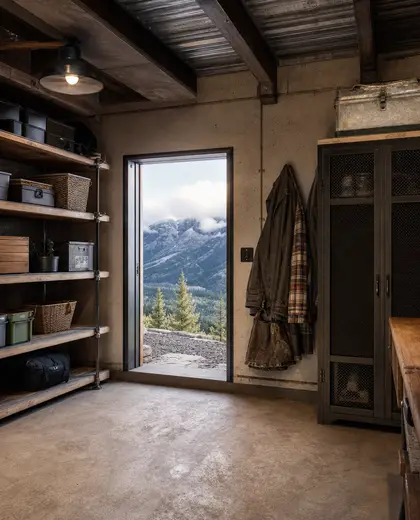
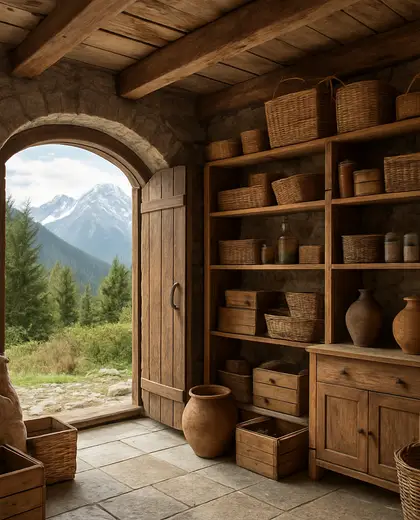
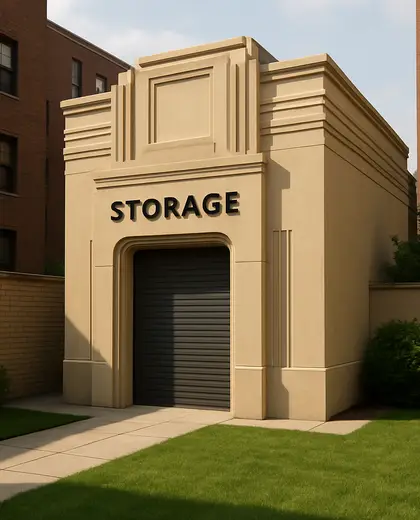
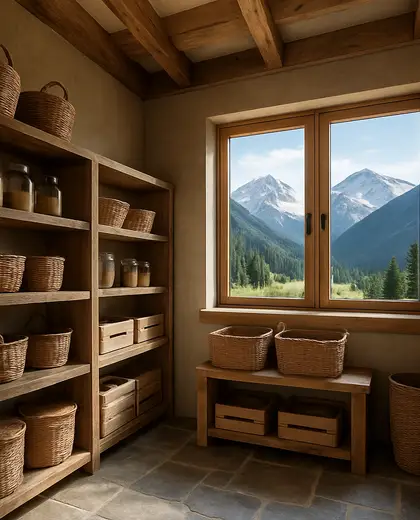
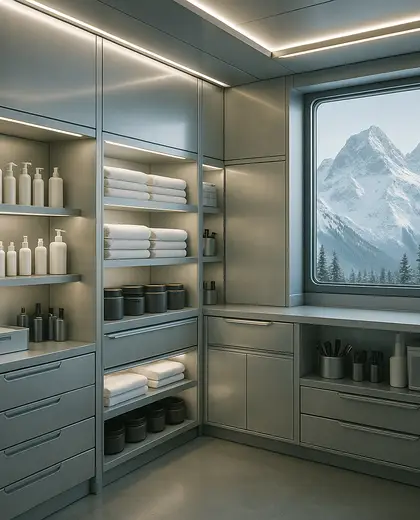
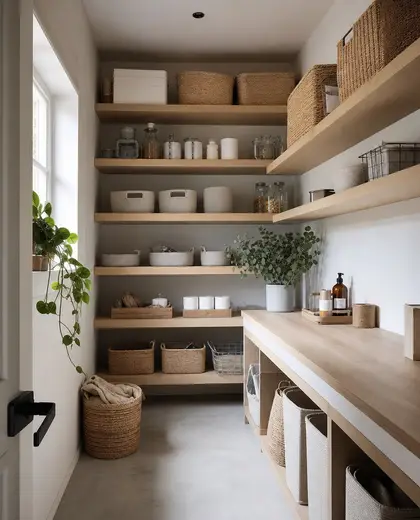
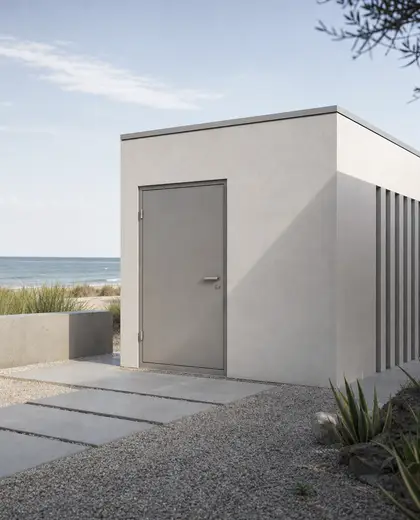
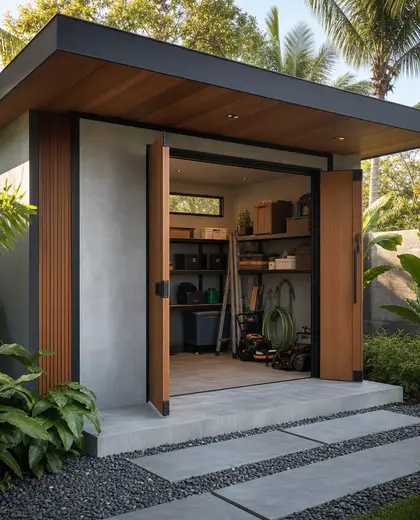
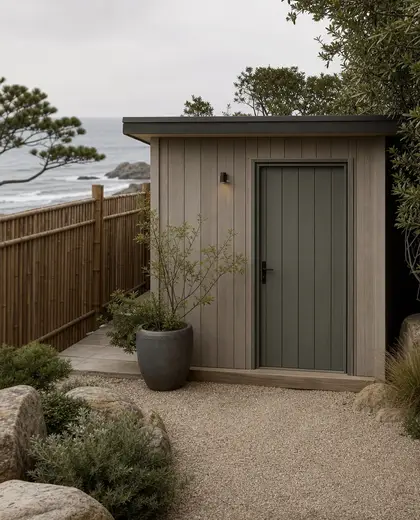
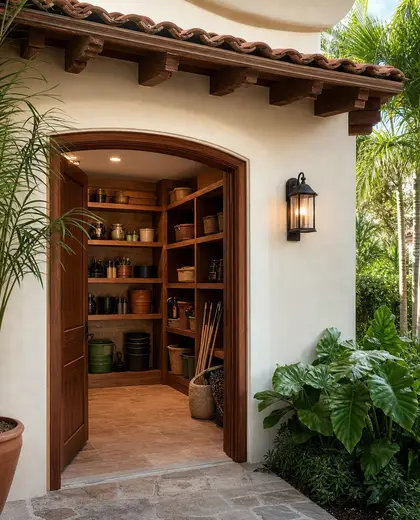
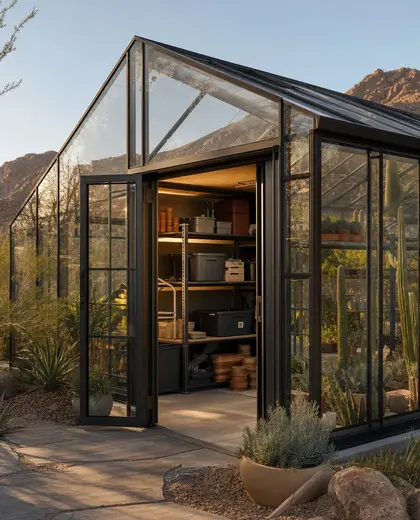
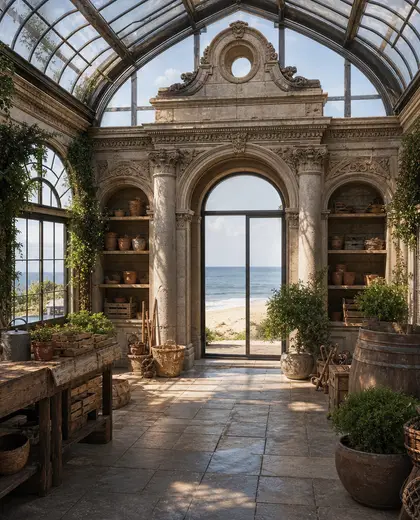
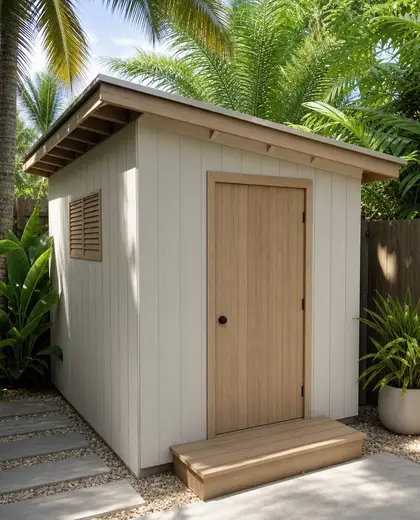
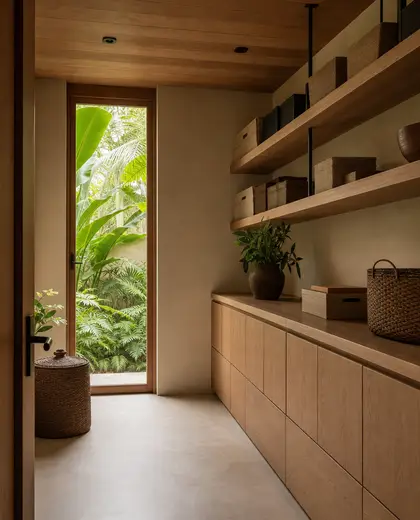
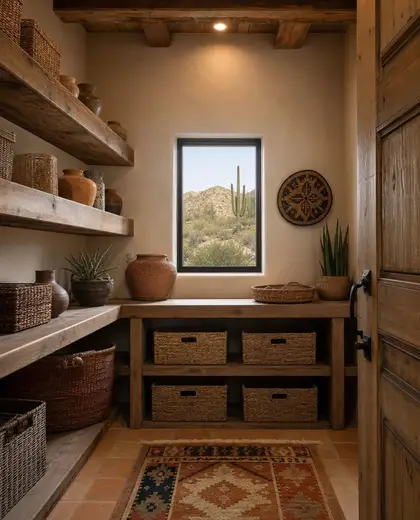
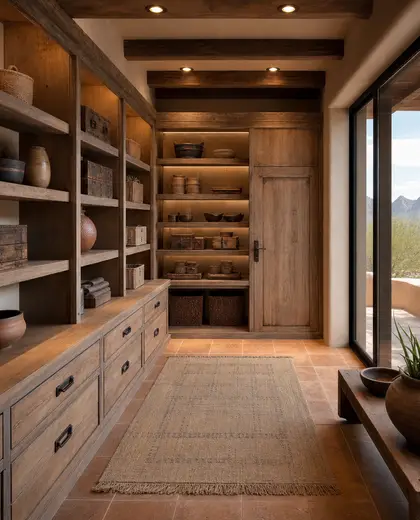
A storage room composition is defined by durable, easy-clean surfaces and tightly organized built-ins. Common materials include painted MDF, plywood shelving, melamine cabinets, concrete or tile floors, and metal hardware. The palette usually stays quiet and practical, with whites, grays, wood tones, and matte finishes that help the space feel clear and orderly.
- storage room
— References
References to explore

What makes a good storage room material choice?
Choose surfaces that are durable, resistant to scuffs, and easy to wipe down. Shelving and cabinetry should be strong enough for the intended load, especially for heavier household items.
Should a storage room be fully closed off or partly open?
Both can work. Closed cabinetry hides visual clutter, while open shelving makes items easier to access; many homes use a mix of the two.

Does a storage room need a decorative finish?
Not usually. The best finishes are practical and restrained, but a wood veneer, a cleaner paint color, or coordinated hardware can still make the room feel intentional.

— The style
What defines it
Plywood, MDF, melamine, painted plaster, tile, concrete, and powder-coated metal are typical choices because they handle frequent use and support shelving, bins, and cabinetry.
Neutral and low-contrast colors work best: white, off-white, light gray, beige, and natural wood tones, often balanced with darker accents for handles or frames.
Storage rooms pair well with laundry zones, mudrooms, utility areas, pantry shelving, and circulation spaces where concealed storage helps keep the rest of the home calm.
— Professionals
Who has already built it
- vorbild architecturearchitects · 6 projectsView profile →
- kerem erbagci3d renderers · London · 9 projectsView profile →
- paquis norris group limitedbuilders · Reading · 3 projectsView profile →
- LoftRobejoiners · Guildford · 4 projectsView profile →
— Explore
Keep exploring
— Questions
Frequently asked questions
What makes a good storage room material choice?
Choose surfaces that are durable, resistant to scuffs, and easy to wipe down. Shelving and cabinetry should be strong enough for the intended load, especially for heavier household items.
Should a storage room be fully closed off or partly open?
Both can work. Closed cabinetry hides visual clutter, while open shelving makes items easier to access; many homes use a mix of the two.
Does a storage room need a decorative finish?
Not usually. The best finishes are practical and restrained, but a wood veneer, a cleaner paint color, or coordinated hardware can still make the room feel intentional.