— Ideas & inspiration
Theater composition
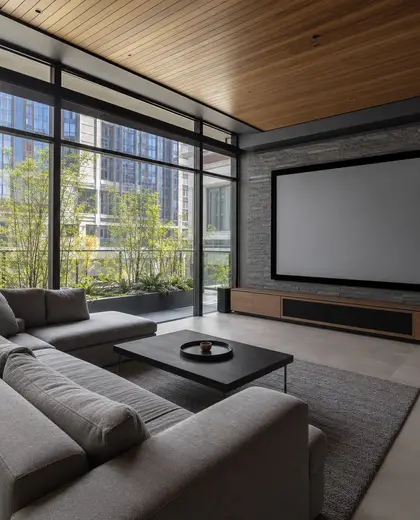
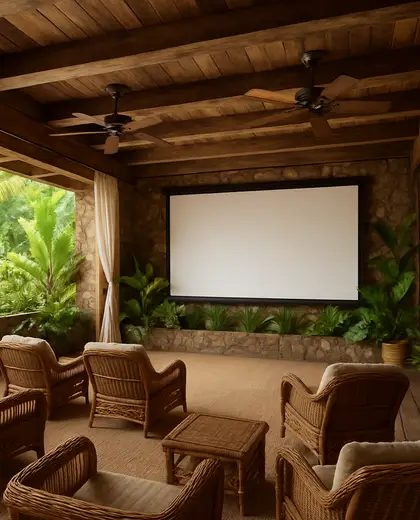
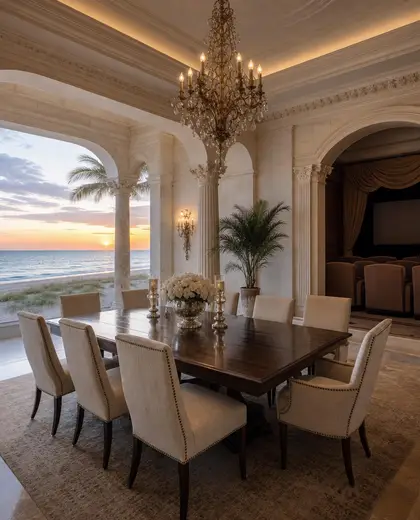
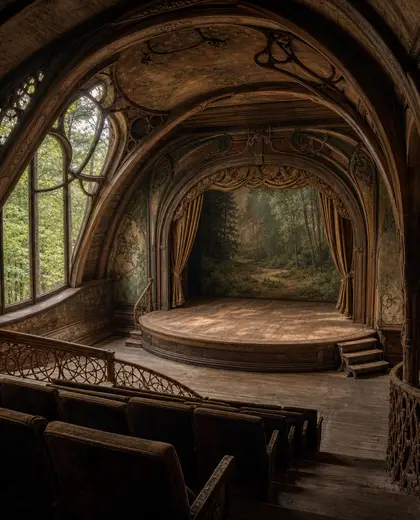
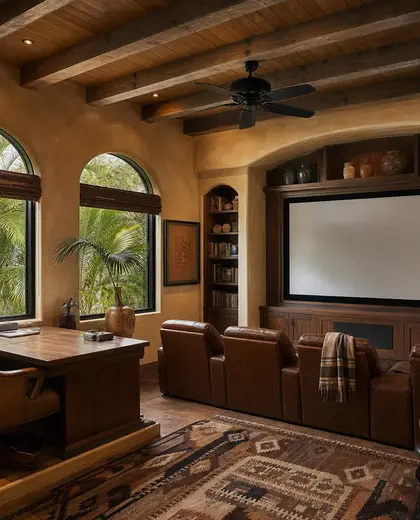
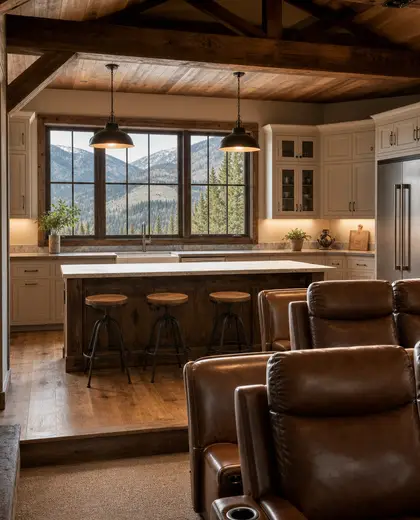
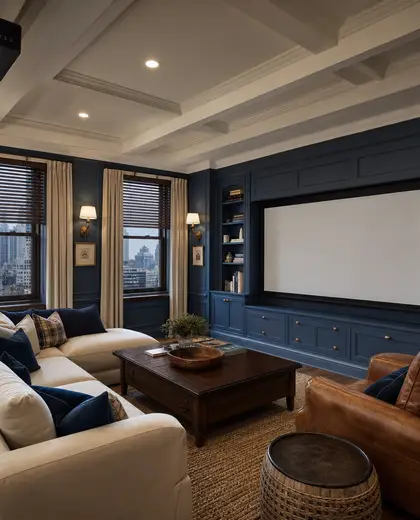
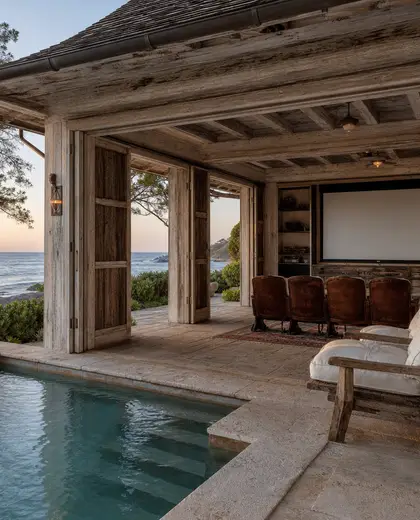
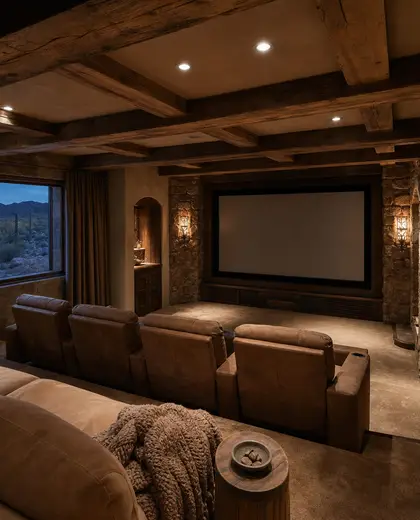
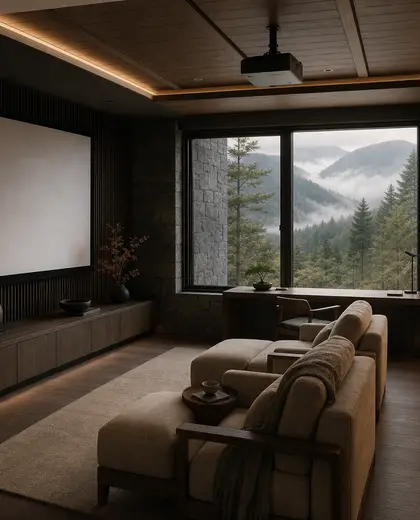
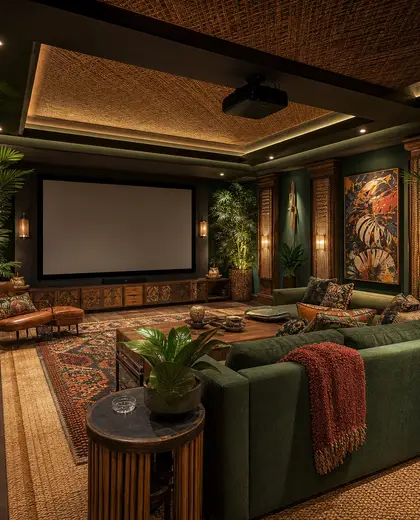
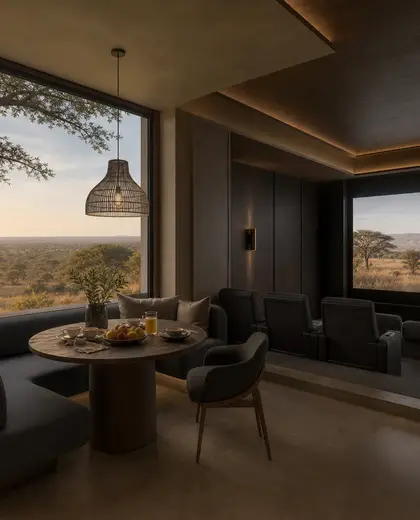
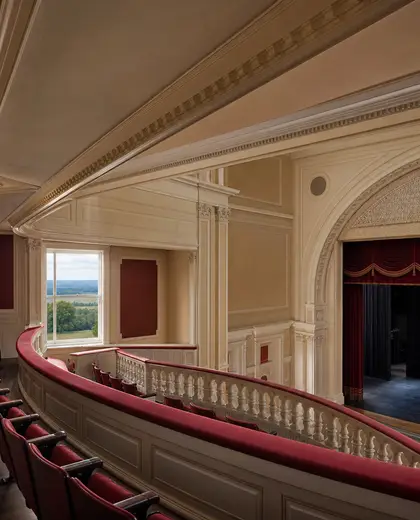
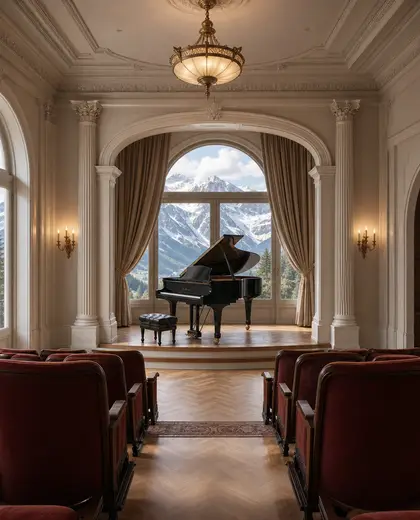
A theater composition is defined by dark, light-absorbing finishes, upholstered seating, and controlled lighting that keeps attention on the screen. Walls and ceilings are often wrapped in acoustic panels, wood slats, fabric, or matte paint, with deep neutrals like black, charcoal, and brown forming the base palette. Built-in millwork, concealed speakers, and stepped seating or a projection wall complete the layout.
- theater

— References
References to explore

Do I need a fully dark room for a theater composition?
Not always, but the room works best with reduced natural light and controllable lighting. Blackout curtains, dimmable fixtures, and low-reflectance finishes help a lot.
What kind of seating works best?
Recliners, deep sofas, or tiered seating can all work, depending on room size and viewing distance. The key is keeping sightlines clear and leaving enough circulation space.
Can a theater composition be integrated into a living area?
Yes, but it usually needs more discreet solutions, like concealed speakers, darker finishes, and lighting that can be lowered or zoned. The result is softer than a dedicated cinema room, but still focused on viewing.


— The style
What defines it
Acoustic fabric, matte paint, wood veneer, carpet, and upholstered seating are common, often paired with hidden technical components and soft wall treatments.
The palette is usually dark and restrained: black, charcoal, deep brown, navy, and muted gray, sometimes balanced with warm wood tones or subtle metal accents.
It often combines with media rooms, lounge seating, custom joinery, blackout systems, sound insulation, and low-level lighting for a controlled viewing environment.
— Professionals
Who has already built it
- LoftRobejoiners · Guildford · 4 projectsView profile →
- Beneito Faurelighting designers · 2 projectsView profile →
- Lusso Stonetile suppliers · Stocktonontees · 7 projectsView profile →
- elizabeth bee interior deinterior designers · 4 projectsView profile →
— Explore
Keep exploring
— Questions
Frequently asked questions
Do I need a fully dark room for a theater composition?
Not always, but the room works best with reduced natural light and controllable lighting. Blackout curtains, dimmable fixtures, and low-reflectance finishes help a lot.
What kind of seating works best?
Recliners, deep sofas, or tiered seating can all work, depending on room size and viewing distance. The key is keeping sightlines clear and leaving enough circulation space.
Can a theater composition be integrated into a living area?
Yes, but it usually needs more discreet solutions, like concealed speakers, darker finishes, and lighting that can be lowered or zoned. The result is softer than a dedicated cinema room, but still focused on viewing.