— Ideas & inspiration
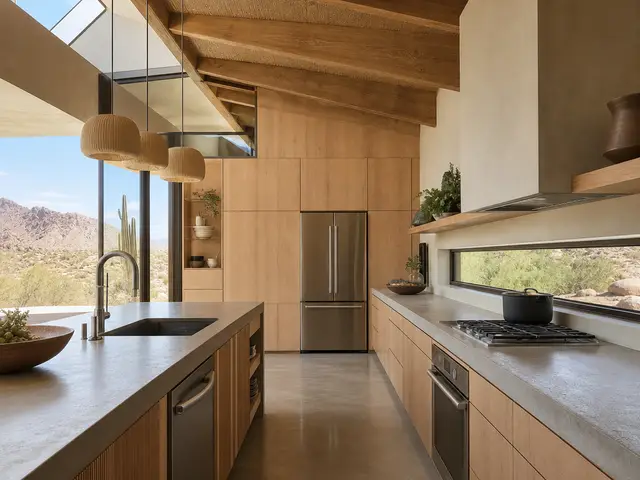
Sustainable desert architecture with a restrained, climate-smart calm
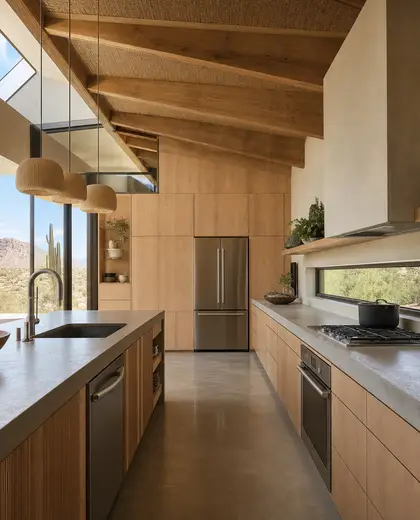
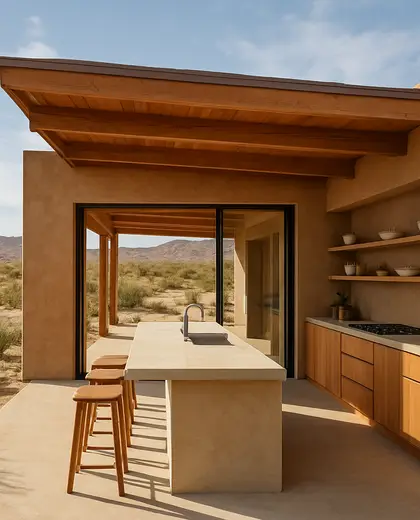
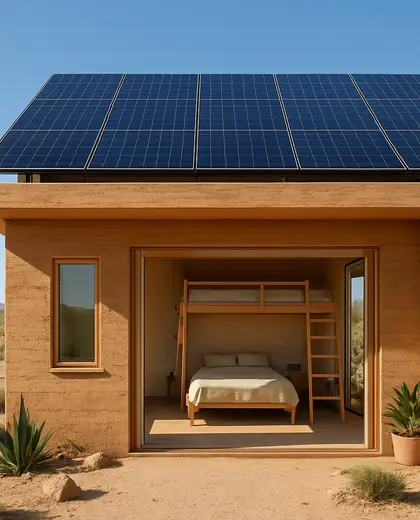
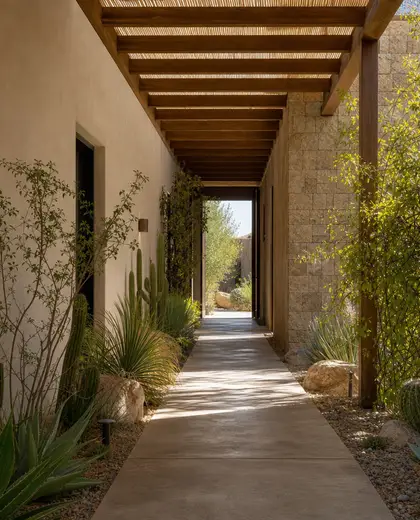
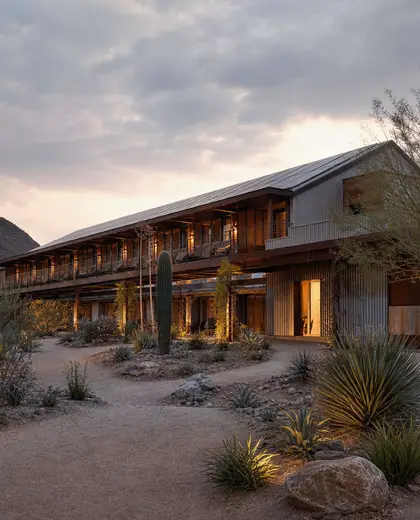
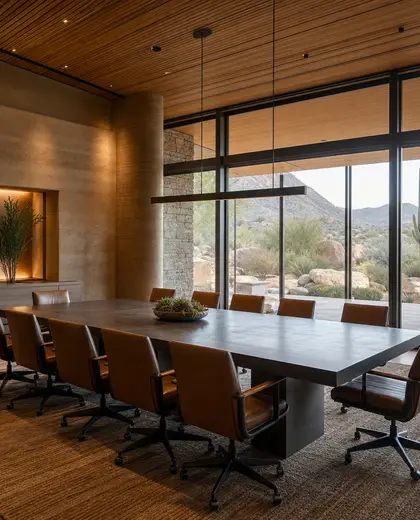
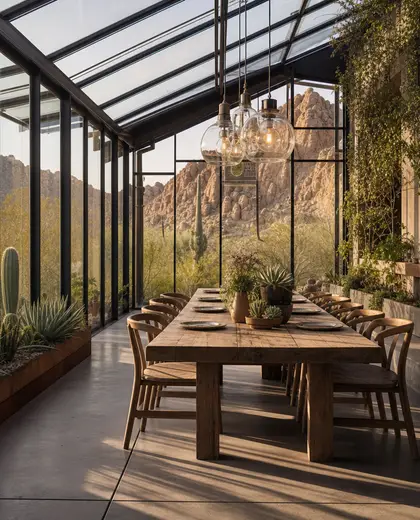
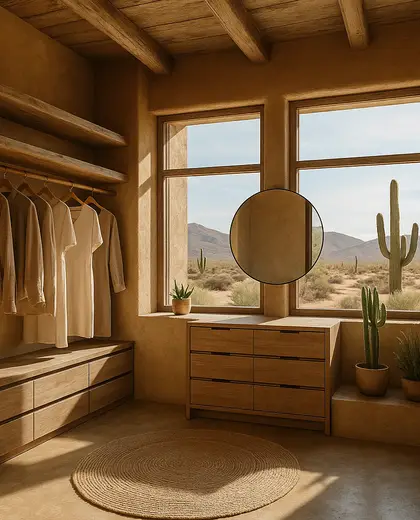
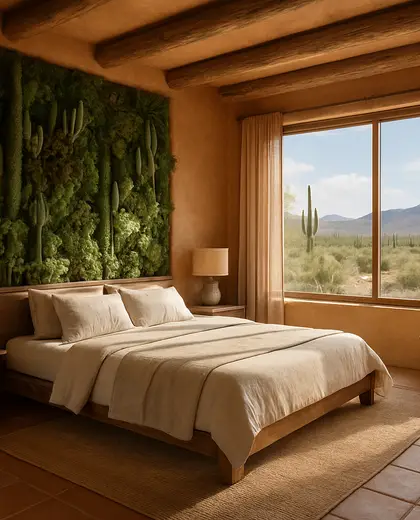
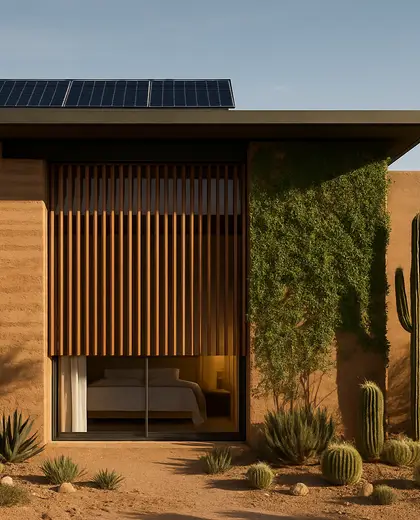
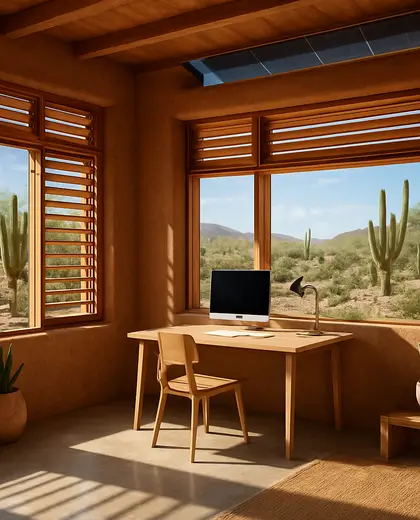
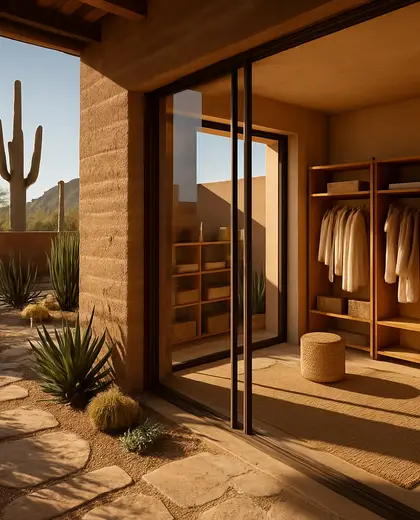
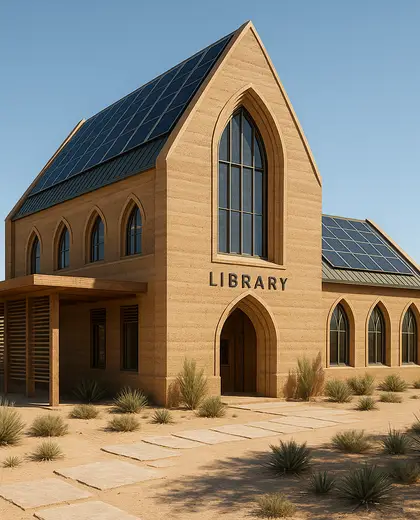
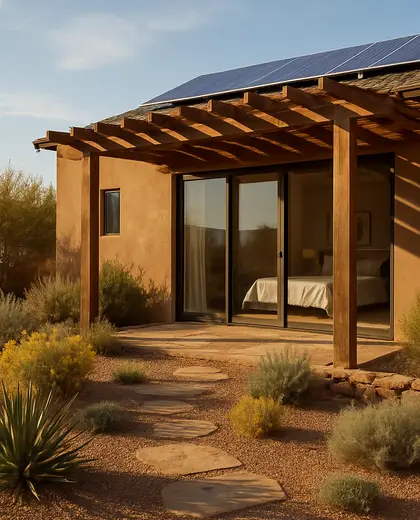
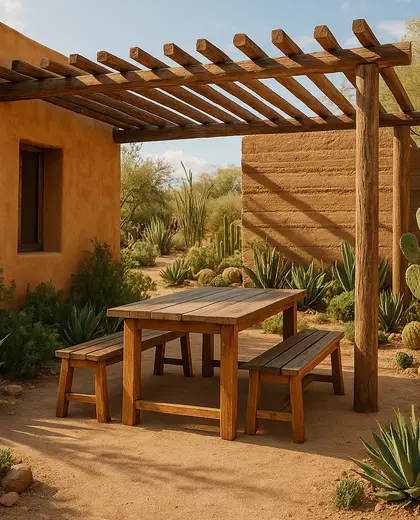
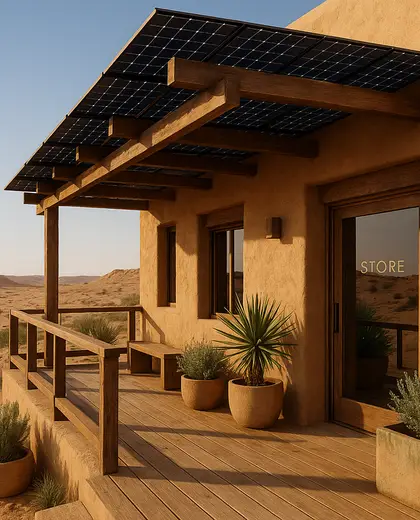
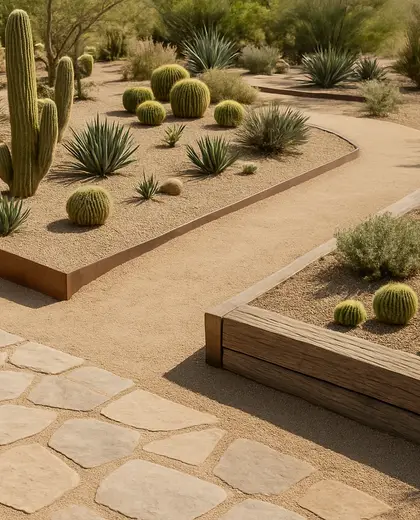
This composition is defined by thick masonry or rammed-earth walls, shaded courtyards, deep overhangs, and high-performance glazing sized for heat control. The palette stays close to sand, clay, stone, and weathered wood, with finishes that reduce heat gain and support passive cooling. It combines the raw texture of desert landscapes with low-water planting, solar-ready roofs, and durable envelope details.
- sustainable
- desert
— References
References to explore
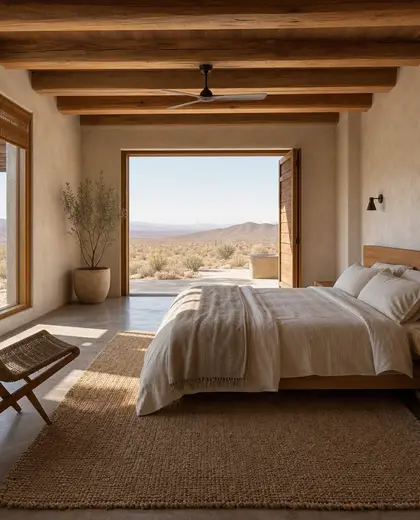
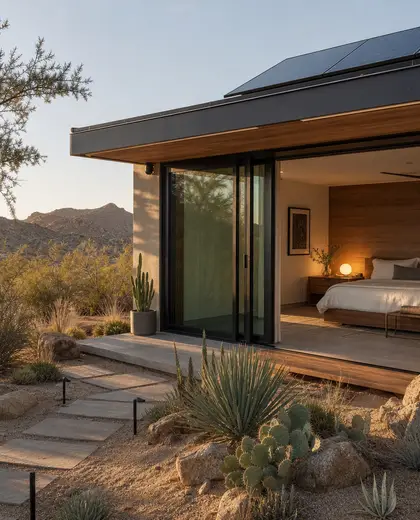
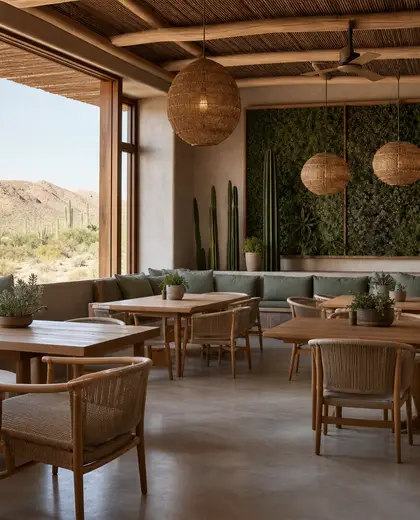
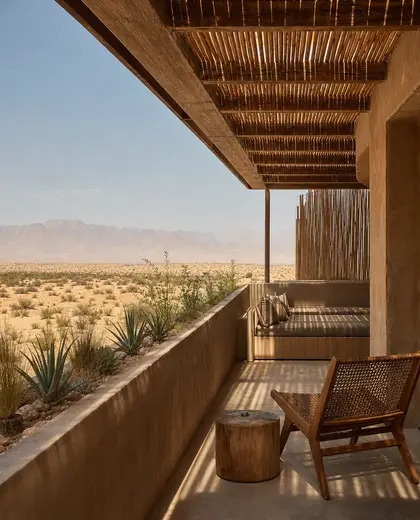
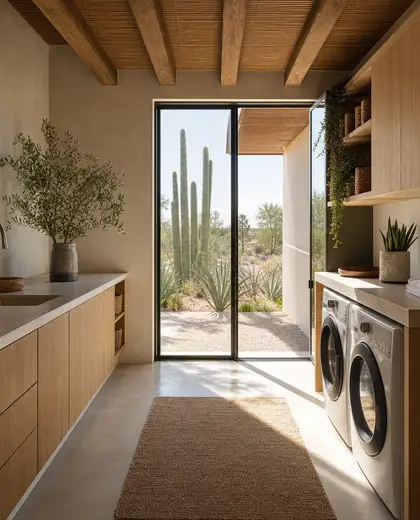
Will a sustainable desert design always look very modern?
No. It can be modern, but it can also feel regional or rustic. The common thread is climate response: shaded openings, thermal mass, and materials that handle heat well.
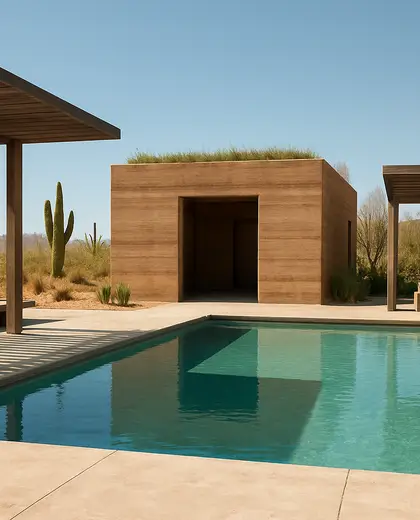
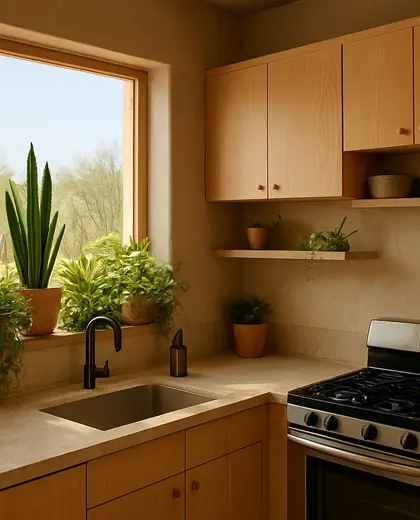
What materials work best in a desert climate?
Materials with good thermal performance and durability tend to work best, such as adobe, rammed earth, stone, stucco, and well-detailed metal. Low-maintenance wood accents can work too if they are protected from intense sun.
Can this style still feel comfortable and not overly stark?
Yes. Softer textures, deeper shade, planted courtyards, and warm neutral tones help the spaces feel calm rather than severe. The design usually balances openness with protection from sun and wind.
— The style
What defines it
Rammed earth, adobe, limestone, textured stucco, reclaimed wood, and thermally efficient metal or concrete elements.
Warm sand, ochre, clay, bone, muted brown, dusted gray, and sun-faded neutrals.
Passive shading, courtyard planning, cross-ventilation, drought-tolerant planting, and solar or water-saving systems.
— Professionals
Who has already built it
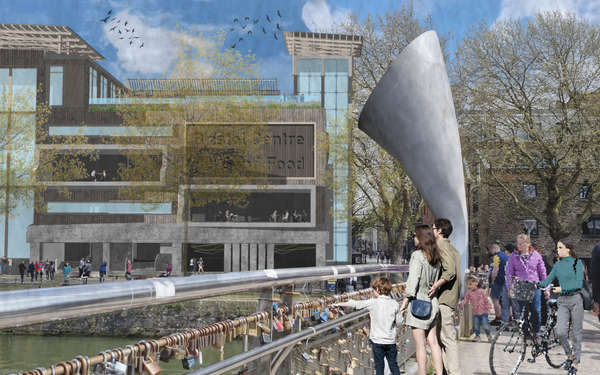

- paquis norris group limitedbuilders · Reading · 3 projectsView profile →
- LoftRobejoiners · Guildford · 4 projectsView profile →
- Beneito Faurelighting designers · 2 projectsView profile →
- Lusso Stonetile suppliers · Stocktonontees · 7 projectsView profile →
— Explore
Keep exploring
— ARTICLES
Related reading
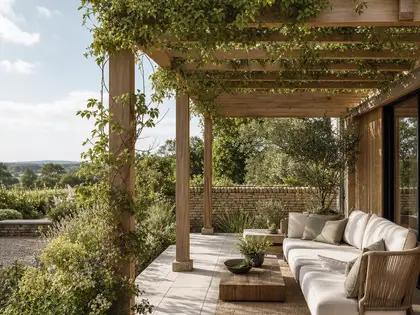
5 mistakes to avoid when designing a pergola
A practical guide to the most common pergola mistakes, with simple fixes that make the space more comfortable, durable and easy to enjoy in the UK.
Read article →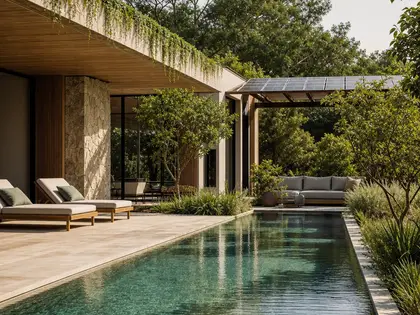
pool trends that feel fresh in 2026
A practical look at the latest pool trends, from low-energy materials and calm colour palettes to smarter layouts and tech, plus easy ways to update without a full rebuild.
Read article →— Questions
Frequently asked questions
Will a sustainable desert design always look very modern?
No. It can be modern, but it can also feel regional or rustic. The common thread is climate response: shaded openings, thermal mass, and materials that handle heat well.
What materials work best in a desert climate?
Materials with good thermal performance and durability tend to work best, such as adobe, rammed earth, stone, stucco, and well-detailed metal. Low-maintenance wood accents can work too if they are protected from intense sun.
Can this style still feel comfortable and not overly stark?
Yes. Softer textures, deeper shade, planted courtyards, and warm neutral tones help the spaces feel calm rather than severe. The design usually balances openness with protection from sun and wind.