SketchCOin the studio
Copy in the tile editor
Copy places copies of the joints you choose inside a pattern's tile, each at a place you click or at a distance you type from one base point. It keeps placing copies from the same base point until you press Escape, and the originals stay where they are.
What it is
Copy repeats joints inside the tile. You choose the joints and a base point, then click each place the base point of a copy should land: every click lays one more copy, and the originals stay where they are. A ghost of the next copy follows the pointer, with a line from the base point and the live distance in the hint. The points you click snap to the tile's corners, the middles of its sides, its centre, its edges and the joints.
It is the same Copy as in the other editors of the studio, acting here on the joints of the tile.
When to use it
- To repeat a joint or a shape at a few chosen places inside the tile.
- To place a second motif at an exact distance from the first.
- For regular rows, columns or rings of copies, use Array instead.
The steps
Choose the joints. Select them before taking the tool, and Copy uses them at once. Otherwise Copy asks select objects: click joints to add them, or drag a box (to the right it takes what lies wholly inside, to the left what it touches),
Shifttakes a joint out,Fdraws a fence that takes every joint it crosses, andEnterends the choice.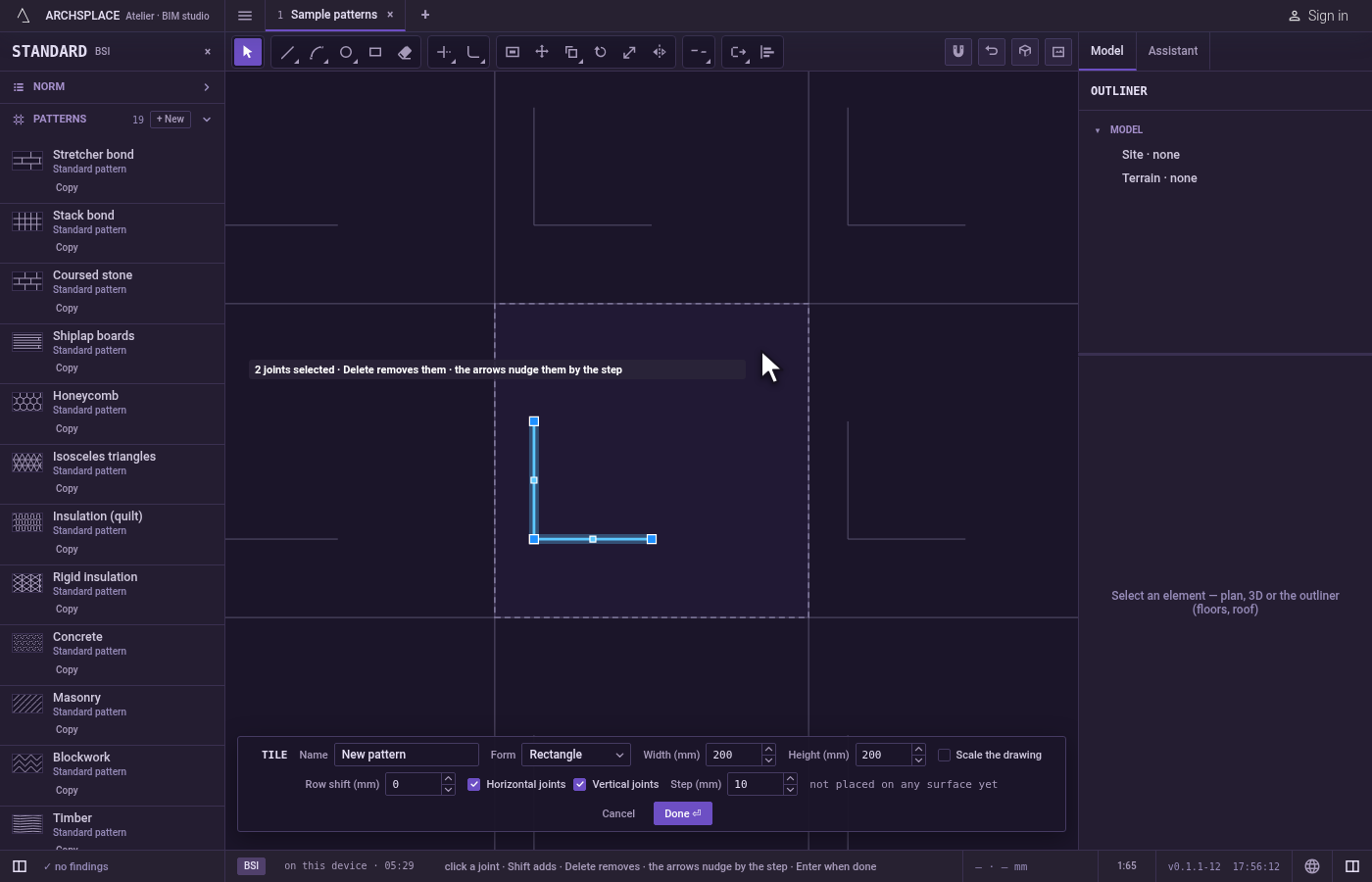
Take the tool. Type
CthenOone after the other (orCthenP), or click Copy on the bar. It shares its button with Array. TheCopens Circle for a moment, and the second letter completes Copy.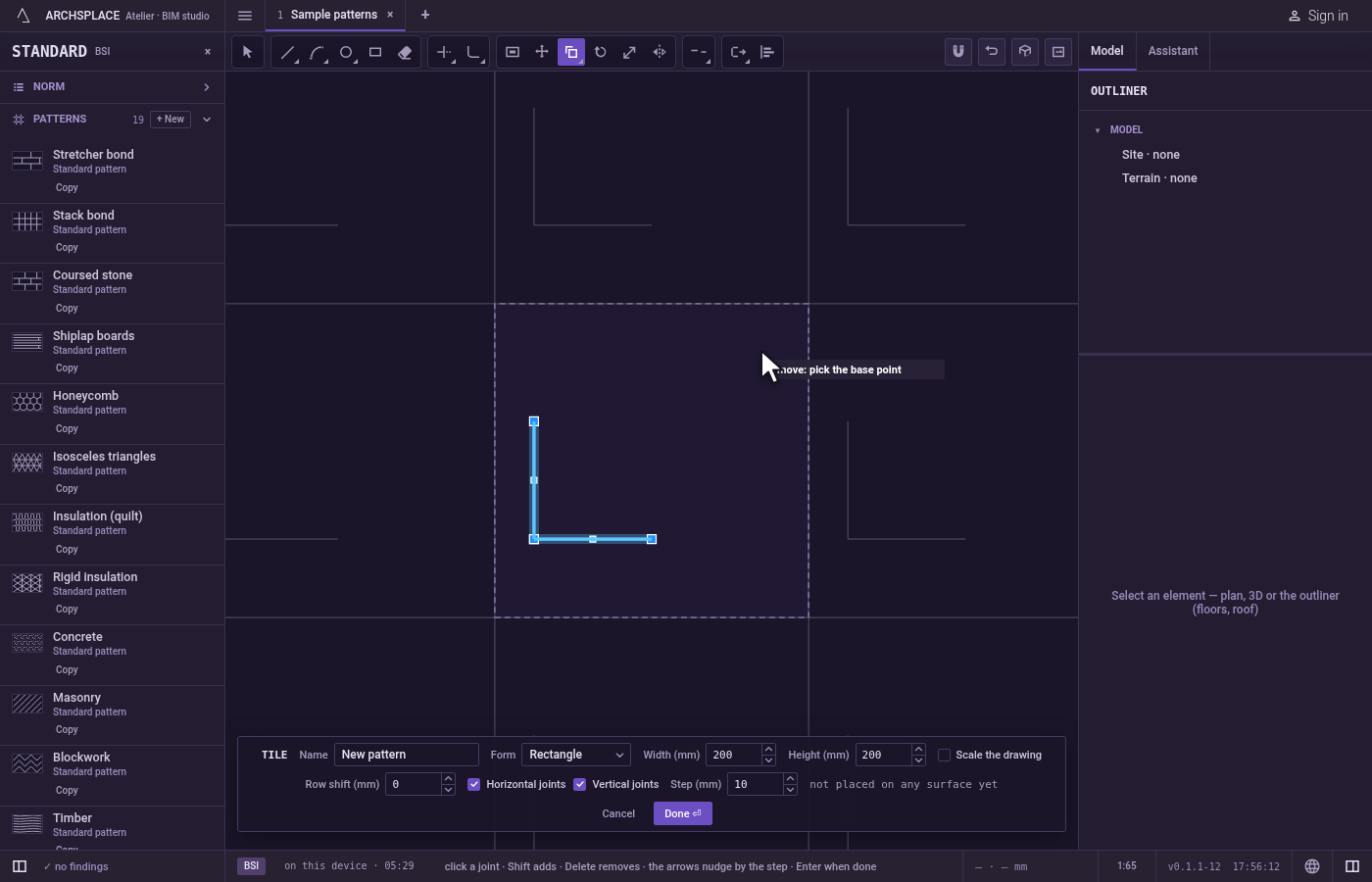
Pick the base point. Click the point of the joints you will place by.
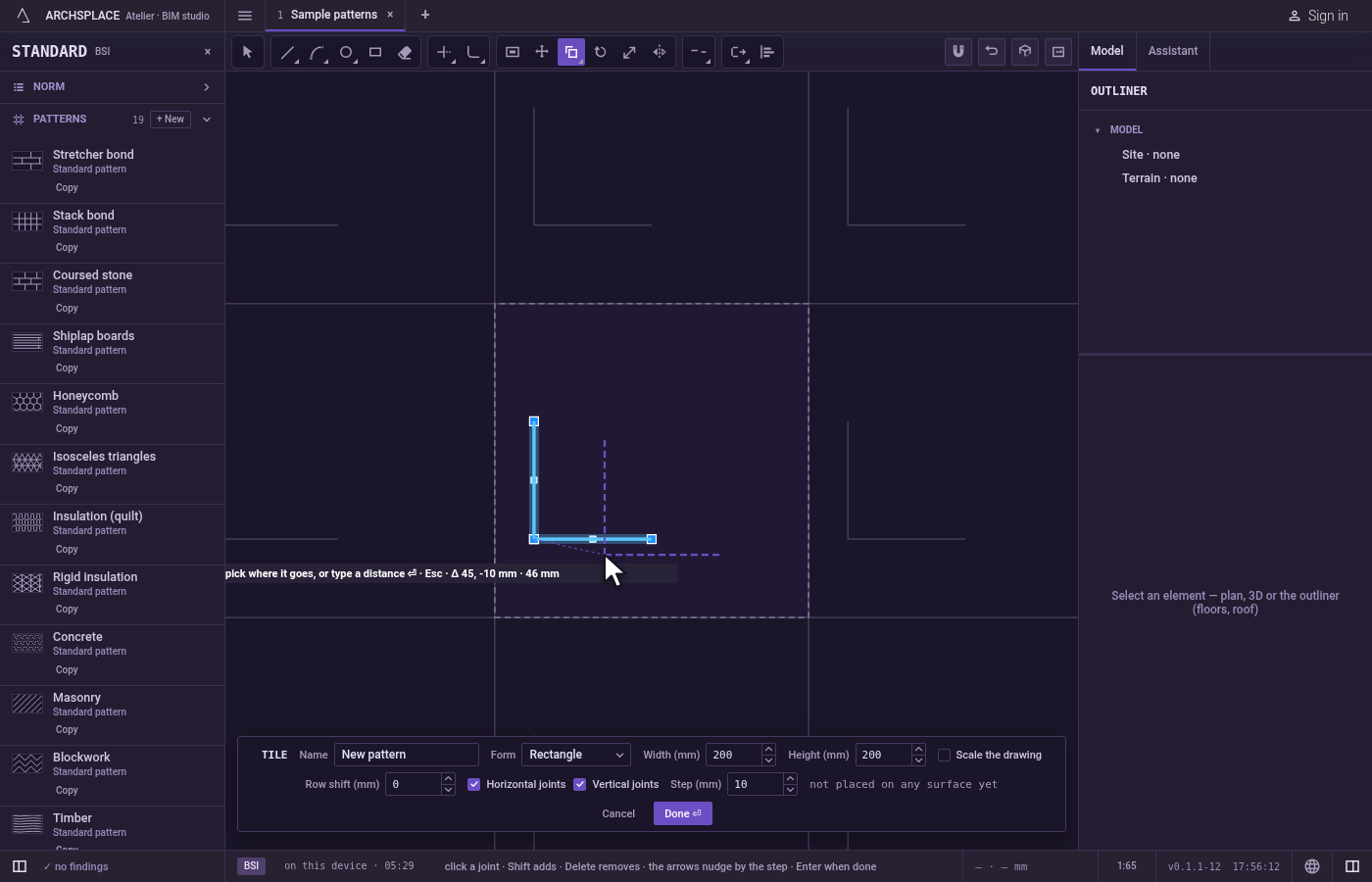
Place each copy. Click where the base point of a copy goes. To be exact, type a distance and press
Enter: the copy lands that far in the direction the pointer shows. A point typed as@dx;dy(across and up) or@d<angle(a distance at an angle), both measured from the last point, lands as a click would. Each copy is laid at once, and Copy waits for the next place, still measuring from the same base point.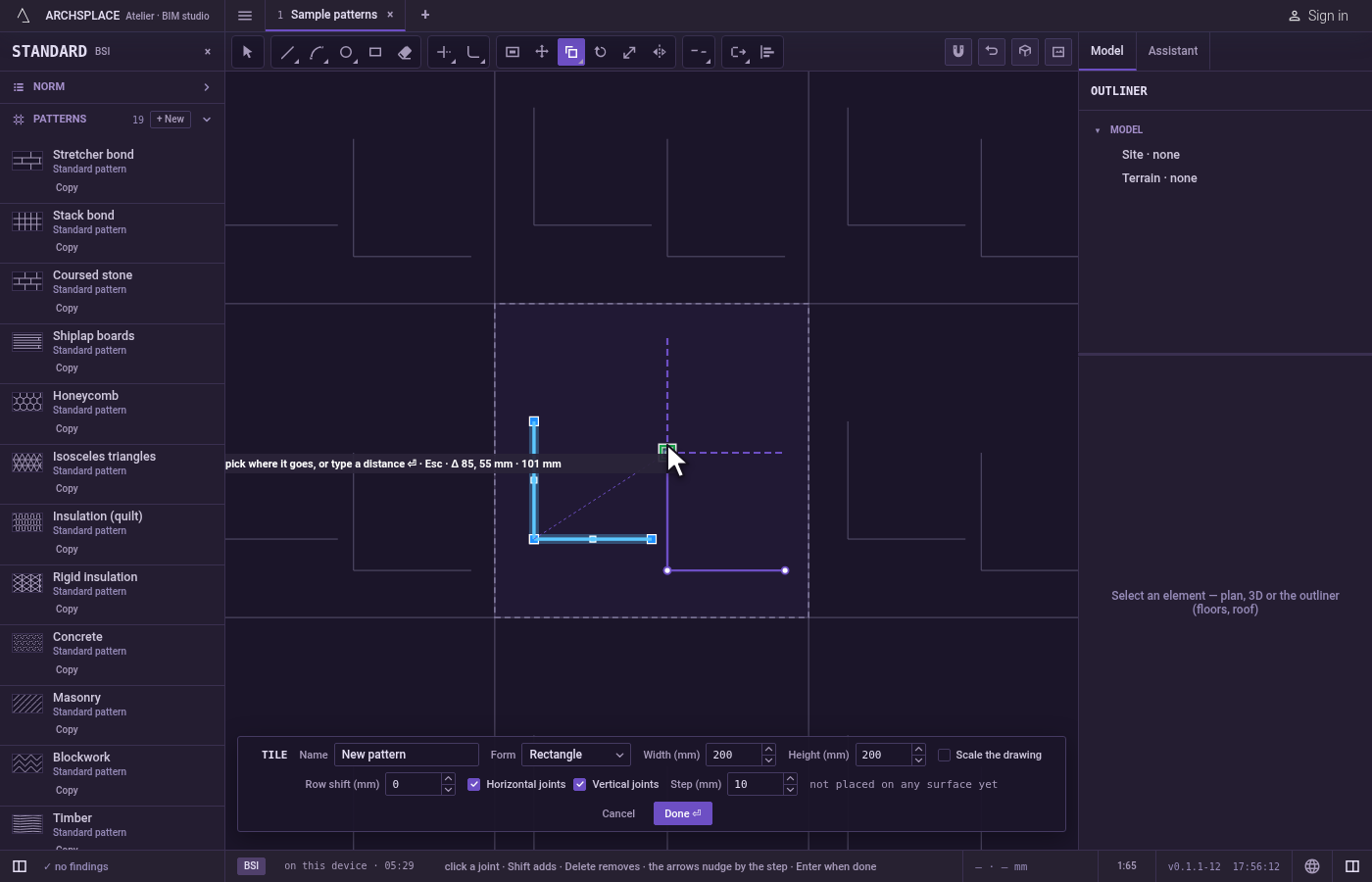
Move instead, if you want. After the base point, press
Cto switch copy off: the next placement moves the joints instead of copying them.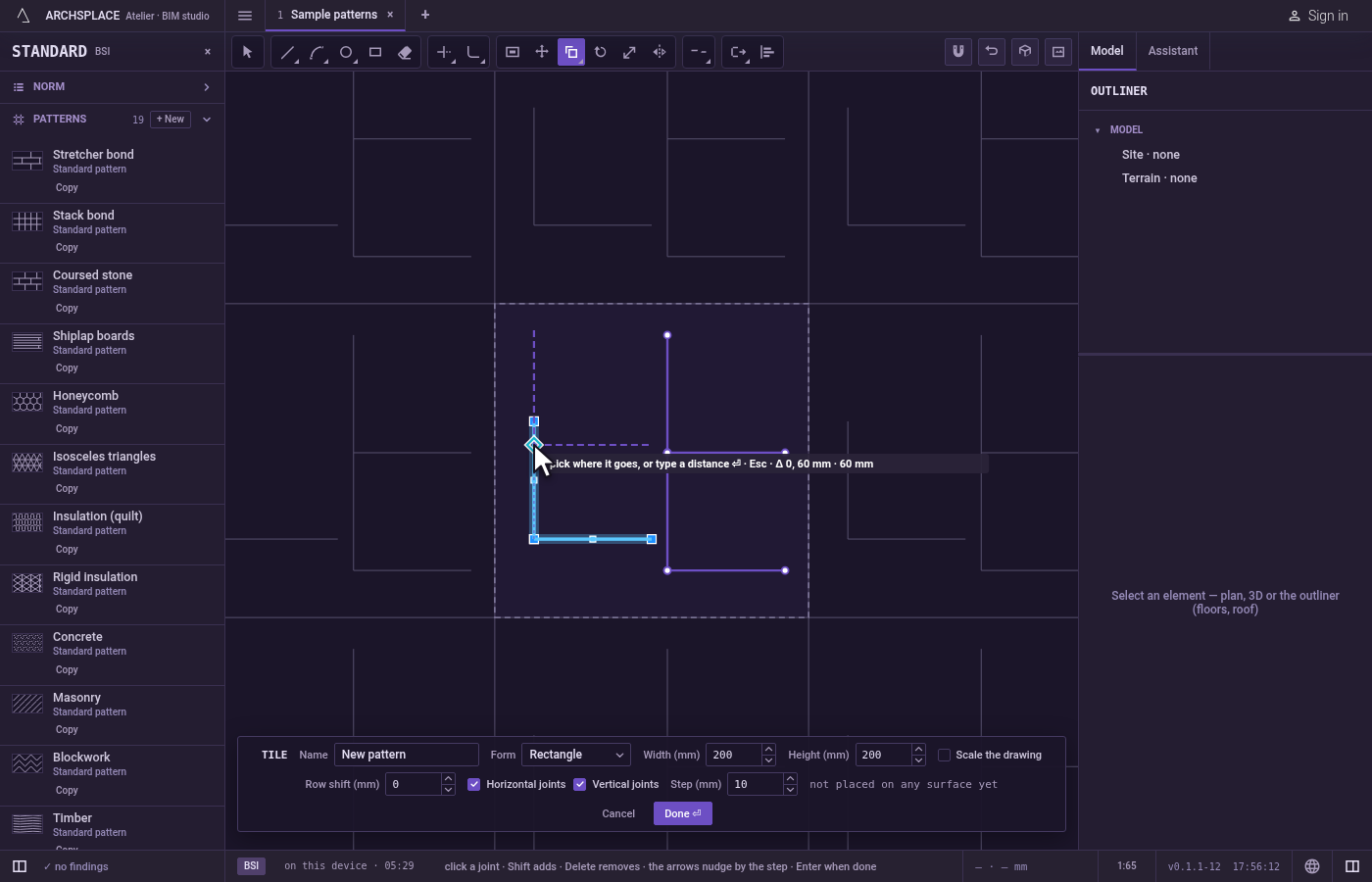
Finish.
Escapedrops the base point, then leaves Copy for Select.Ctrl+Zundoes the last copy. Press Done on the bar at the foot to hand the tile back.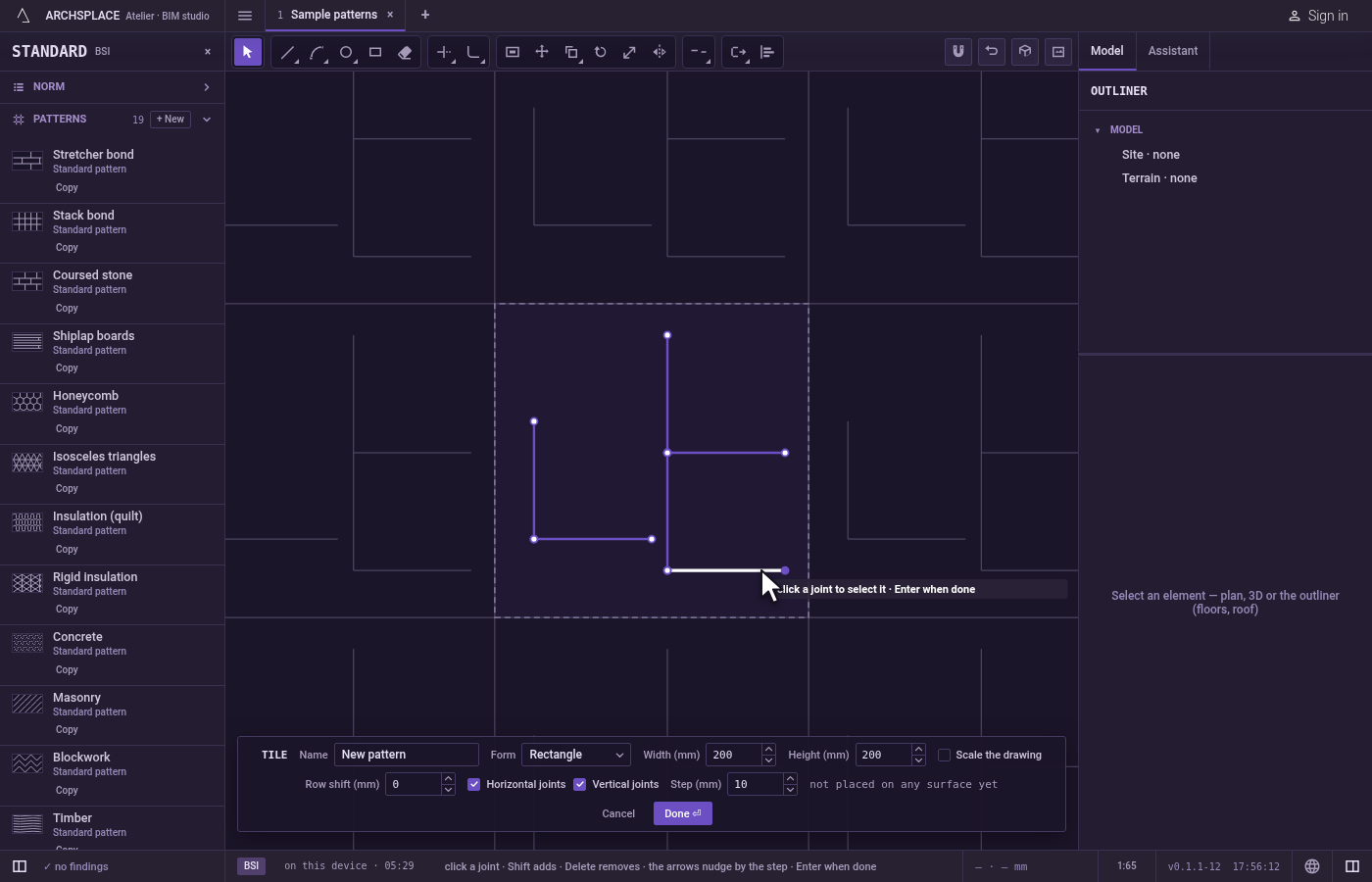
What it refuses
- A shape that would leave the tile. A copy of a curved or closed joint that would stand outside the tile is not laid, and the editor says a shape must stay inside the module.
- A straight joint across the edge. It is not refused: the copy is cut at the tile's edge and only the part inside is kept.
- A click on nothing while choosing. It adds nothing, and Copy keeps asking select objects.
What it writes to the contract
Nothing while you work: the change stays in the tile editor, where Ctrl+Z steps back through it. When you press Done, the whole tile is written to the project's patterns in one step you can undo, every joint as its points in metres from the tile's lower-left corner, each copy a joint of its own. A standard pattern is never changed: Done saves the project's own version of it under the same name, and every surface that lays it follows. Save as new writes a new pattern instead. Cancel writes nothing.
Related
Common questions
How do I make several copies in a row?
Pick the base point once, then click each place a copy should go. Copy keeps the same base point for every copy until you press Escape.
How do I open Copy from the keyboard?
Type C then O, one after the other. The C opens Circle for a moment, and the O completes Copy. CP works too.
Why was my copy refused?
A curved or closed joint must stand wholly inside the tile, so a copy of it that would cross the edge is refused. A straight joint is cut at the edge instead.