SketchFin the studio
Fillet in the tile editor
Fillet rounds the corner where two joints meet with an arc of the radius you type, cutting each joint back to where the arc touches it. With a radius of zero it joins the two into a sharp corner, and with joints selected, Enter rounds every corner they have at once.
What it is
Fillet rounds a corner. You pick two joints (lines or arcs) near the corner they make, and Fillet lays an arc of the radius you typed between them, cutting each joint back to where the arc touches it. The side of each joint that is kept is the side you clicked on. When the two picks are two sides of one polyline or rectangle meeting at a corner, the corner is replaced in place and the shape stays one joint. When they are two separate joints, they stay two, and the arc becomes a joint of its own.
With a radius of zero, Fillet does not round: it trims or grows the two joints until they meet in a sharp corner.
When to use it
- To round the meeting of two joints, as in a pebble or a rounded paver.
- To close a corner neatly where two joints overshoot or fall short, with a radius of zero.
- To round every corner of a polyline or a rectangle at once.
The steps
Take the tool. Press
F, or click Fillet on the bar. It shares its button with Chamfer. The radius starts at zero each time you take the tool.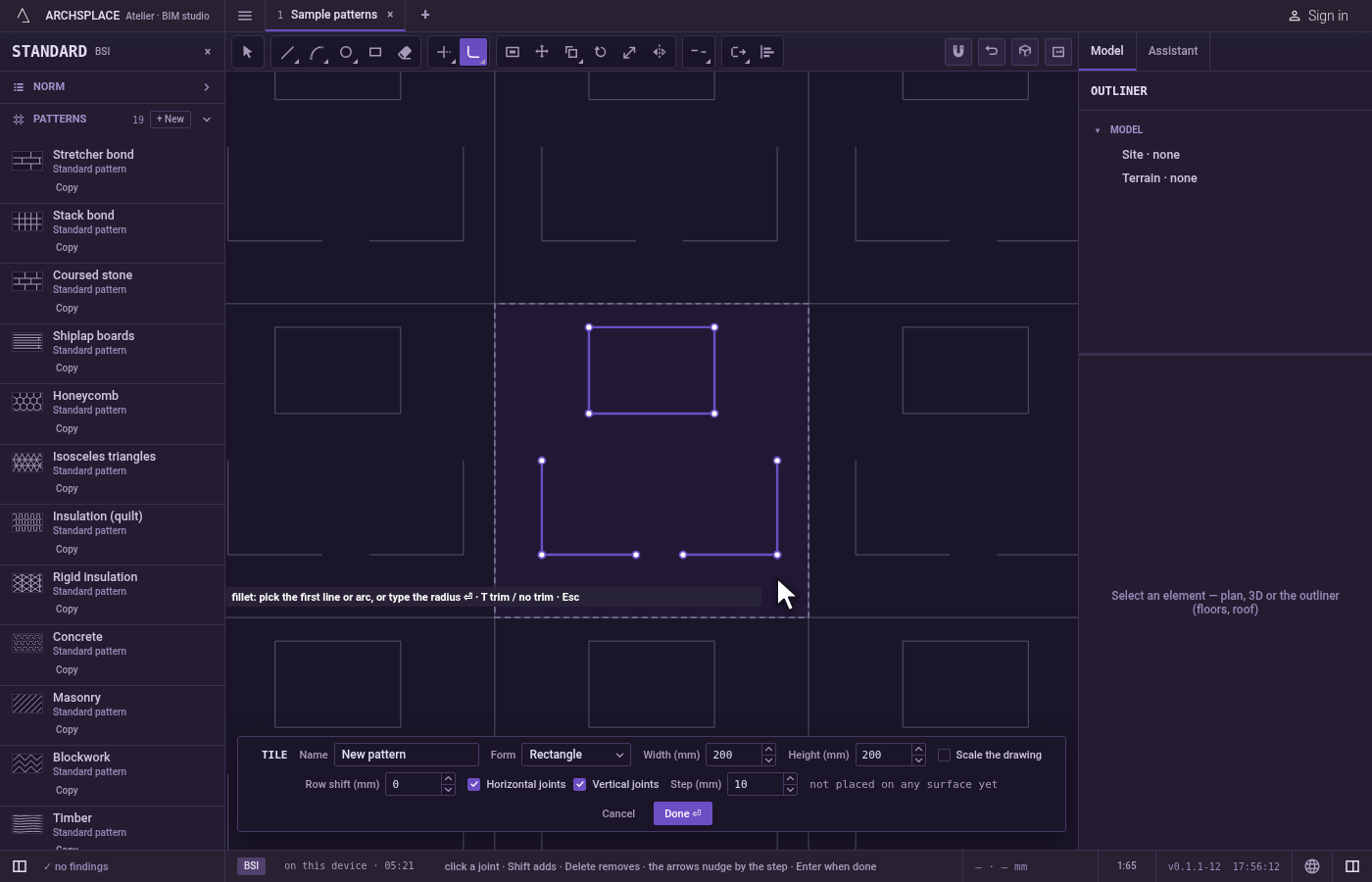
Type the radius. Type it and press
Enter. You can type a new one at any time while the tool is in hand.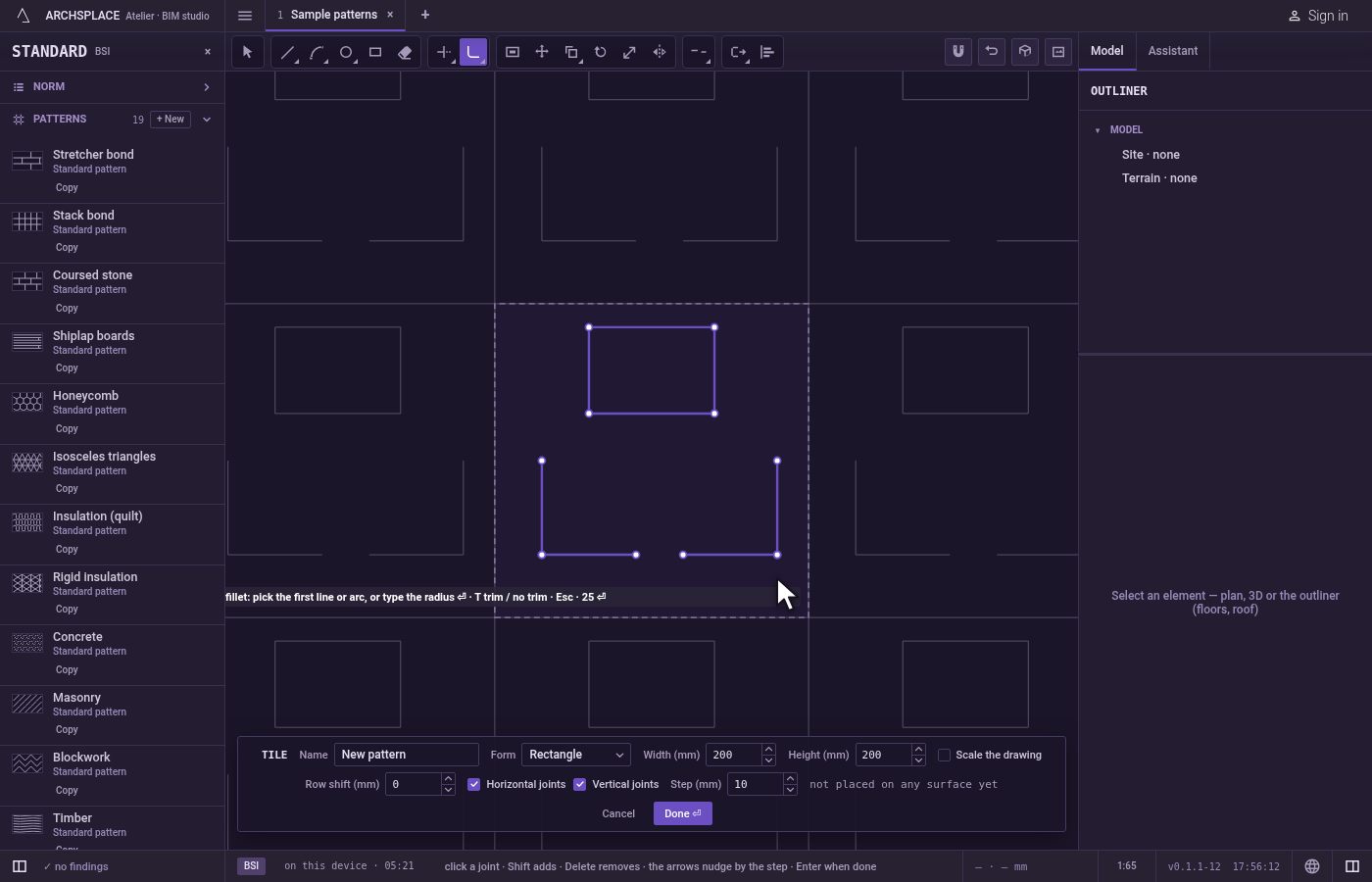
Pick the first joint. Click a line or an arc near the corner, on the side you want to keep. It stays lit while you look for the second. The pick reads the pointer itself, not a snap, so at a crossing it takes the joint you point at.
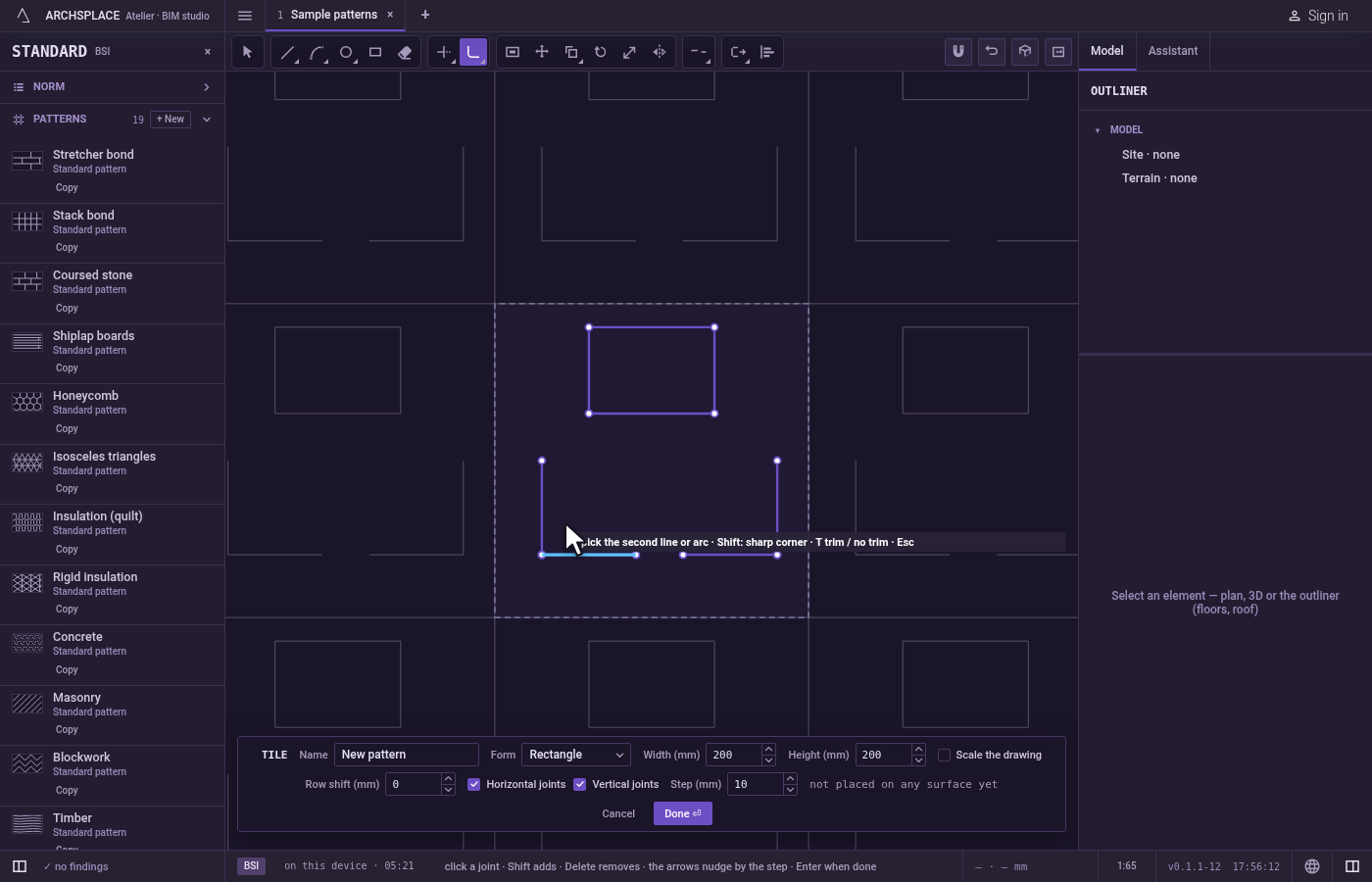
Pick the second joint. As the pointer passes over it, the arc that would be made is shown. Click it, on the side you want to keep. Hold
Shifton this click for a sharp corner, whatever the radius. The tool then waits for the next corner, keeping the same radius.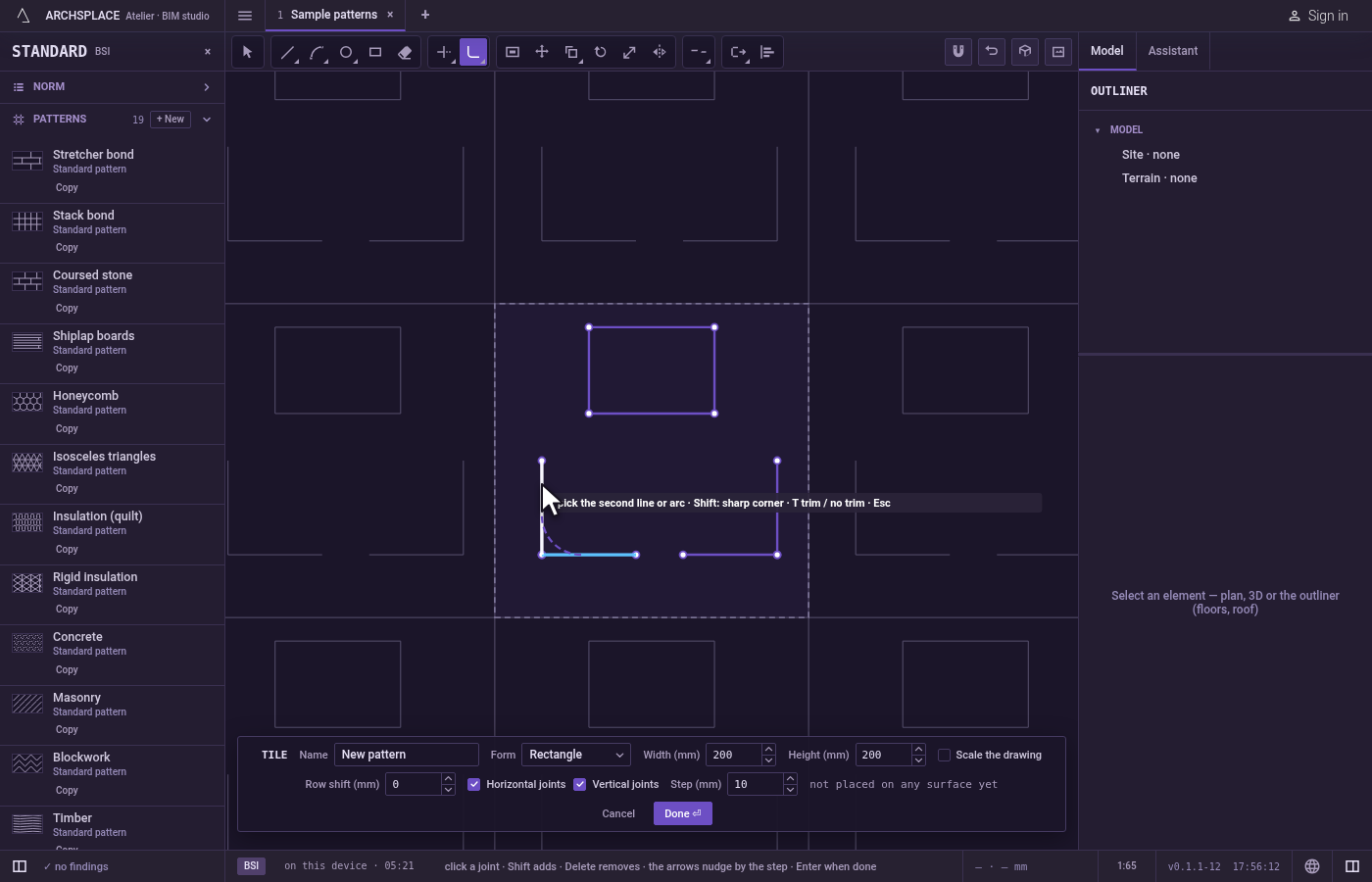
Keep the joints whole, if you want. Press
Tbefore the second pick to switch to no trim: the arc is added and the two joints are left as they were. The hint shows no trim while it is on. PressTagain to switch back.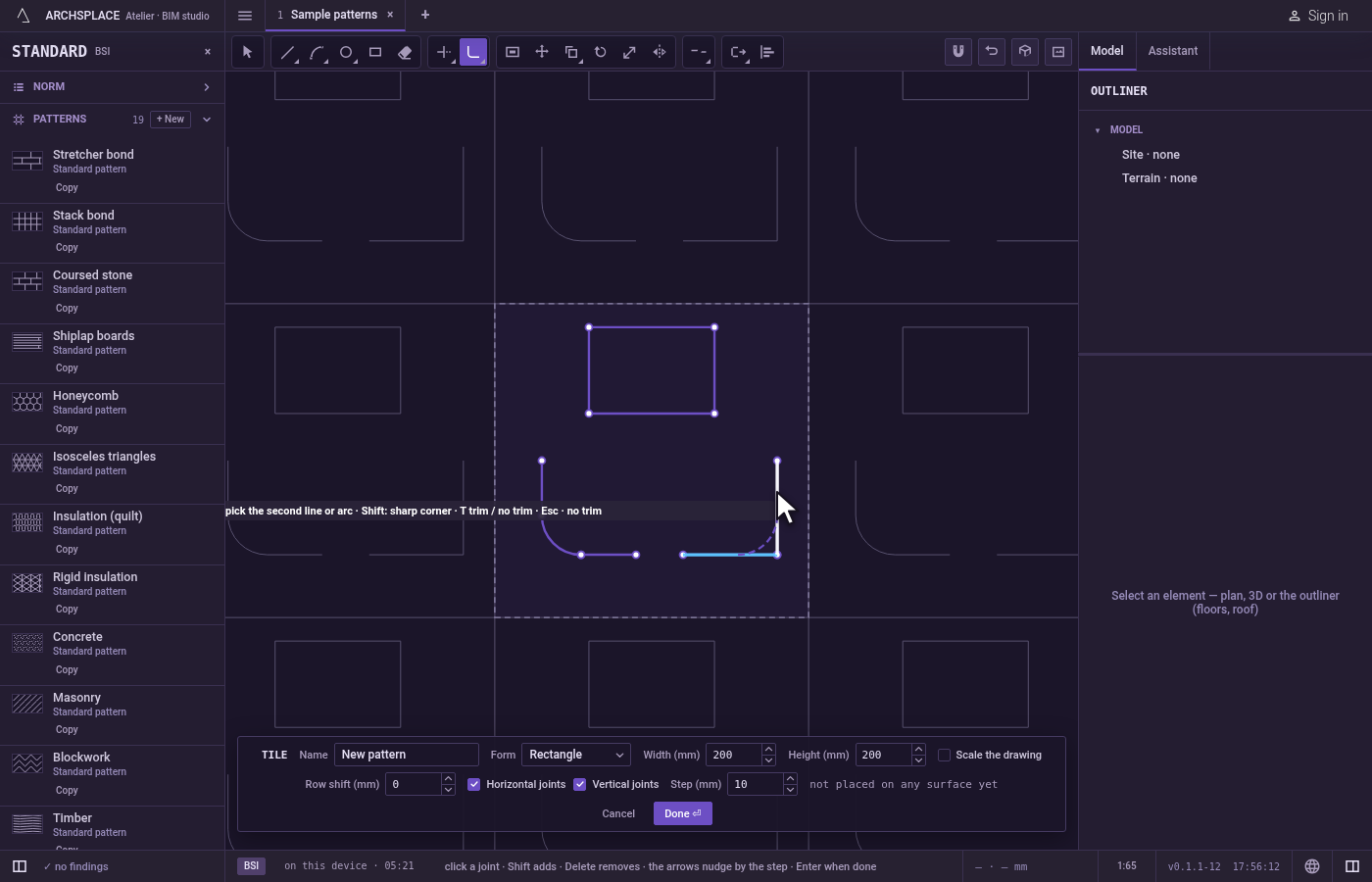
Or round every corner of a selection. Select joints before taking the tool. Type the radius and press
Enter, then pressEnteragain: every corner of the selected joints that can take the radius is rounded, and the editor says how many corners were treated and how many were left as they were.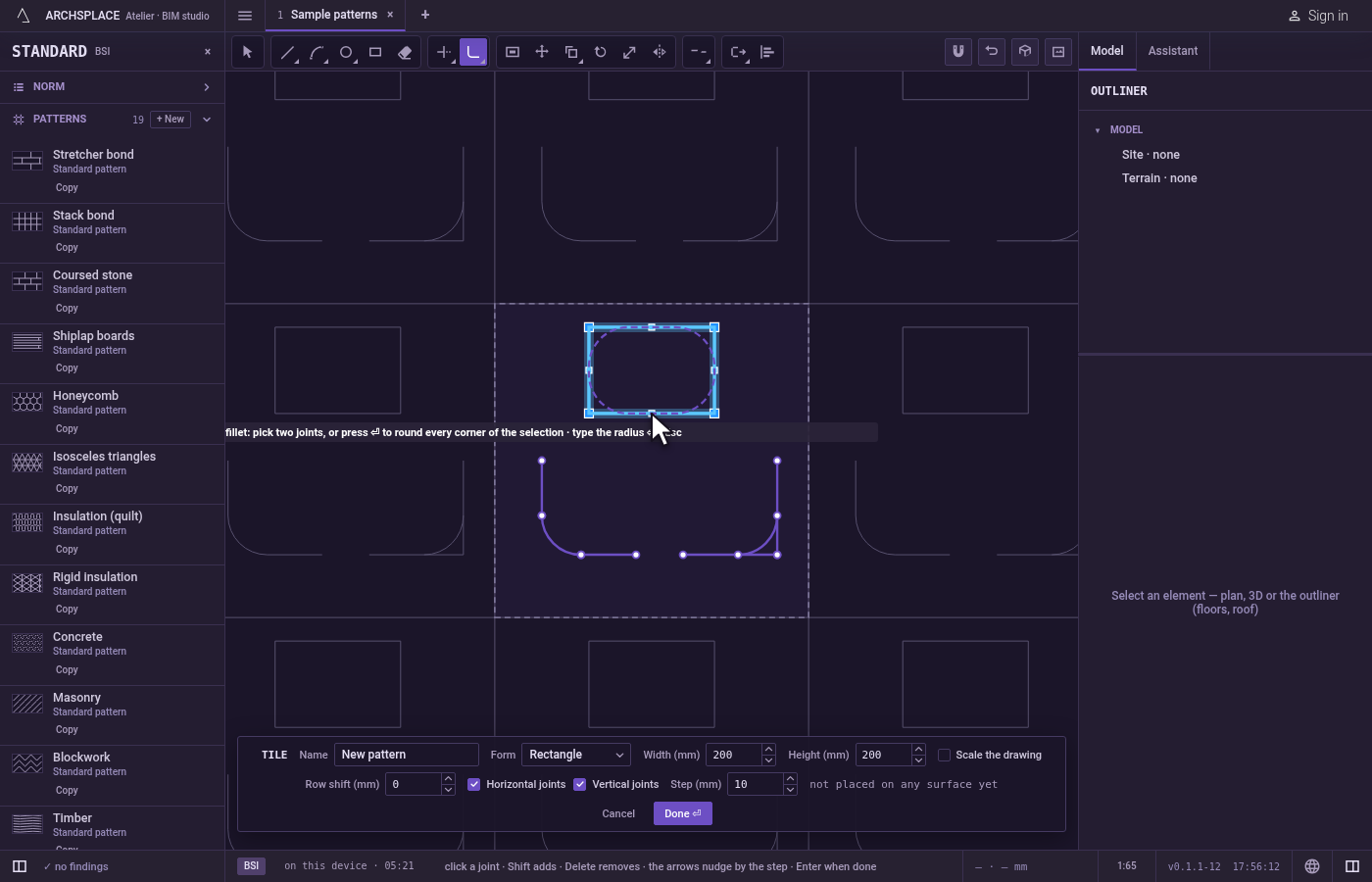
Finish.
Escapedrops the first pick, then leaves Fillet for Select.Ctrl+Zundoes the last corner. Press Done on the bar at the foot to hand the tile back.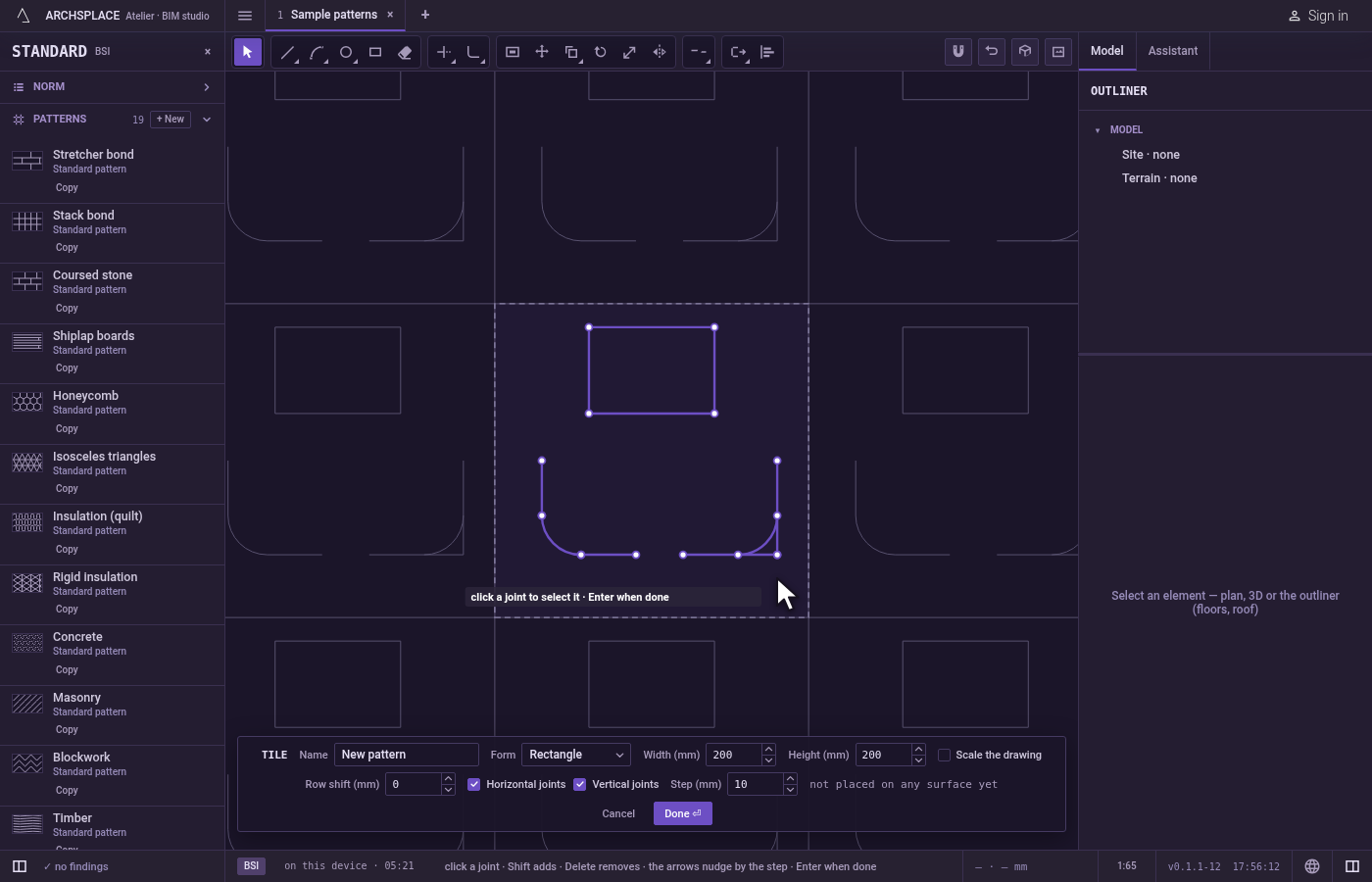
What it refuses
- A click on nothing. The hint says no line or arc there.
- The same joint twice. The second pick must be another segment: pick a second, different segment.
- Joints that never meet. Two parallel lines are refused with these edges never meet.
- A radius too big. If the arc does not fit the two joints, the hint says the corner does not fit these edges.
- A cut in the middle of a shape. Picking two sides of one polyline that do not meet at a corner is refused with this would cut a line in its middle.
- A result that leaves the tile. If the new arc or a changed joint would stand outside the tile, nothing changes and the editor says a shape must stay inside the module.
- No corner in a selection. When you press Enter with joints selected and none of their corners can take the radius, the hint says no corner of the selection takes it.
What it writes to the contract
Nothing while you work: the change stays in the tile editor, where Ctrl+Z steps back through it. When you press Done, the whole tile is written to the project's patterns in one step you can undo, every joint as its points in metres from the tile's lower-left corner, the fillet's arc kept as a true arc. A standard pattern is never changed: Done saves the project's own version of it under the same name, and every surface that lays it follows. Save as new writes a new pattern instead. Cancel writes nothing.
Related
Common questions
Why did Fillet make a sharp corner instead of a rounded one?
The radius starts at zero each time you take the tool, and a radius of zero joins the two joints into a sharp corner. Type the radius and press Enter before you pick the joints.
How do I round every corner of a polyline at once?
Select it before taking Fillet, type the radius and press Enter, then press Enter again. Every corner that can take the radius is rounded, and the editor says how many were left as they were.
Can I add the arc without shortening the joints?
Yes. Press T to switch to no trim: the arc is added and the two joints stay as they were. Press T again to switch back.